



Women and War. The Imperial War Museum, London.
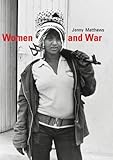
Jenny Matthews. Women and War. Ann Arbor: University of Michigan Press, 2003. 192 pp. $29.95 (paper), ISBN 978-0-472-08964-2.
Reviewed by Antoine Capet (Université de Rouen)
Published on H-Museum (February, 2004)
This winter the annual temporary exhibition of the Imperial War Museum is devoted to <cite>Women and War</cite>. As usual, the exhibit is of considerable interest, bringing pieces visitors would otherwise have needed to travel the world to see, including pieces from many private collections. <p> The exhibit begins c. 510-500 B.C. (with a Greek amphora showing two Amazons on horseback, armed with spears) and ends in A.D. 2003 (with a T-shirt worn by a sixth-form student from the Ilkley Peace Group, who took part in the anti-Iraq war march, in London, February 2003). Most pieces concentrate on the period from the First World War until the present day, with pre-1914 objects forming an "Introductory Section," documenting individual action before women's massive involvement, during the First World War. <p> The Introductory Section is in itself of great interest, and includes paintings that are rarely accessible to the public, either because they are exhibited outside of major art circuits (such as a gorgeously colored "Joan of Arc" at prayer, by Rubens' workshop c. 1618-20 from a Raleigh Museum, North Carolina), or are part of the Royal Collection (e.g. the perfect scène-de-genre picture of "Her Majesty Queen Victoria and His Royal Highness Prince Albert at Aldershot, 1859," by George Houseman Thomas). A red tunic and hat of identical design worn by Queen Victoria in the 1850s is shown next to the picture. This section is dedicated to famous British female warriors and chieftains, including: Boudica (the Boadicea of old history books, commemorated here with "Fragments of charred Roman bowls and clay from a building burned down when Boudica's forces set fire to London in A.D. 60-61"), Elizabeth I (with a coin featuring the monarch's head, four charts showing the progress of the English Fleet and the Spanish Armada by Robert Adams, 1588, an extract from Elizabeth's "I know I have the body of a weak and feeble woman, but I have the heart and stomach of a king" speech to her men at Tilbury, 1588--also part of the Audio Program, an engraving of the Queen portraying her victory over the Armada, and a contemporary copy of the famous Armada Song, a song reputedly written by Elizabeth herself), and Hannah Snell (her portrait by Daniel Williamson). <p> But foreign dignitaries are also not forgotten. The exhibit section also has Catherine the Great's uniform dress of the Preobrazhensky Life Guards Regiment, worn in 1763 (shown before an equestrian portrait of her on horseback by Virgilius Erichsen, c. 1762), and a watercolor of Rani Lakshmi Bai of Jhansi, the Indian noblewoman who fought alongside her nationalist troops during the Mutiny (1857-58) and was killed during a British attack ("having fought fearlessly on foot and on horseback," the caption tells us). Less exalted in social rank, but equally formidable, are the Dahomey women warriors, commemorated here through a "Powder horn and cartridge belt thought to have been used by Dahomey woman warriors, c. 1860s." <p> The medical aspect of war has not been forgotten. The next showcase is devoted to Florence Nightingale and some of her associates. The bust, sash, medals, and photographs, are a part of the legendary figure's "image as a romantic heroine," as the explanatory caption puts it. Nightingale's role points toward an evolution in gender roles in battle, and exhibit space is dedicated to the First Aid Nursing Yeomanry (FANY), "a band of mounted nurses formed in 1907 to ride out from field hospitals to the battlefield to aid the wounded on the spot," which became the celebrated front-line Women's Transport Service of Alamein fame. The next section illustrates how the evolution in gender roles was adumbrated by the Suffragettes' struggle. Here, explanatory captions are a great help in decoding the allusions that were transparent for contemporary militants, but are lost today to the non-specialist. For instance, the "Purple ostrich feather worn by Mrs. Pankhurst at a demonstration outside the House of Commons, 1908" would appear as just another vaguely amusing artifact if we were not told that the case contains "Items worn on 'Women's Sunday,'" the first national suffragette rally held in London on 21 June 1908, and that it was the first time that the "Purple (loyalty), White (purity) and Green (hope)" color scheme was seen en masse. Combining human interest with unobtrusive educational objectives is museography at its best. And it is no coincidence that this Introductory Section should close with a "'Boadicea' banner carried by suffragettes, 1908": the portrayal of warring women has by now run full circle. <p> In total contrast, the next showcase is devoted to charity, one of women's most publicized conventional roles. Here the emphasis is on objects connected with the First World War, such as the "50,000th silver thimble gathered by the Silver Thimble Fund which raised money for war relief' or the 'Princess Mary Gift Box," with the excellent caption: "Three months after the outbreak of war the only daughter of the King and Queen, Princess Mary, then aged seventeen, set up a public fund to pay for a small box of gifts to be sent to every soldier and sailor at Christmas." Logically, the exhibition could have next offered a large section on care and nursing, but this logical progression is deliberately interrupted by a showcase on "Recruitment," with the "Hat worn by the musical hall star, Vesta Tilley, and a postcard showing her in uniform" (caption comment: "She became known as "England's Greatest Recruiting Sergeant' when she used her popularity to aid the war effort by singing songs with a recruiting theme, often in military attire"). Also of more than anecdotal interest are the "Album with reproductions of the Jessie Pope poem, "The Call," 1915, and the Women's Active Service League pledge to persuade every man to offer his services to his country," and the logical outcome: "An original white feather of the kind given out by women to men in the street who were not in uniform" (caption comment: "This campaign caused much distress to those men who had valid reasons for not joining up"). <p> The next display, on Edith Cavell, might have started an exhibit display on traditional army nursing, but of course Cavell was no ordinary nurse, and we learn that this is in fact a special section dedicated to women who played an extraordinary role in the War. One of the most poignant objects shown is the very crude "Wooden cross marking Nurse Cavell's original grave at the site of her execution." The most intriguing piece in this section is the "Pages from a diary which she kept hidden in a cushion as it contained evidence about soldiers she had sheltered." An illustration of Nurse Cavell's transformation into a public symbol is visible from the "Commemorative medallion and postcard issued after her death." The contrast between Cavell and a neighboring display of Mata Hari is excellently brought out by a propaganda card produced during the war, showing Mata Hari on one side and Edith Cavell on the other (caption comment: "Although both women had been executed for espionage, one was portrayed as bad and the other as good"). The next showcase offers a transition toward more conventional nurses and caregivers, including the personal belongings of Dr. Elsie Inglis, who independently founded 14 Scottish Women's Hospital units in France, Serbia, Salonika, Russian, Greece and Romania and died in 1917 "exhausted by working long hours in appalling conditions," and Mabel St. Clair Stobart, who founded the women's Sick and Wounded Convoy Corps to help the movement of wounded from the battlefield. <p> The main display on First World War nurses offers a fascinating lesson in the variety of units and functions found on the battlefield and at the rear. Most British visitors will be familiar with the Voluntary Aid Detachments (a VAD uniform, with shoes is on display) and with Queen Alexandra's Nursing Services (Army and Navy--only the Army uniform is shown), but only specialists will know of the Territorial Force Nursing Service (a nurse's tippet is included). The Exhibition also has a large number of objects from American, Canadian and French nurses who served on the Western Front. A number of emotionally-loaded artifacts remind us of the peculiar nature of the nurses' relationship with the men in their care: a First World War wheelchair, First World War crutches, and wooden models of nurses made by wounded soldiers. The most unexpected and most spectacular exhibit in the room is no doubt the "First World War Clyno motorcycle" of the type used by women on the Western Front, shown here in connection with the "Women of Pervyse." These bold British volunteers "established a first aid post close to the front line in the Belgian village of Pervyse to provide immediate help for the wounded." The suggestion is that with the use of this formidable machine--no doubt a male preserve before 1914-- gender roles were being blurred and gender divisions eroded. The more percipient, or more imaginative, visitor might even see an analogy with the Amazons who opened the Exhibition. <p> Imperceptibly, therefore, one has so far been led from traditional nursing to more risky actions. This culminates in a section on "Women in the Front Line." Some women really served as combatants, outside of regular British forces. Three examples are given: one is an Irish woman who fought the British in the Irish Citizen Army, the other two are young Russian women ("The Battalion of Death") who fought the Germans, and then the Bolsheviks, during the 1917 Kerensky Government. This section also features a British woman who served as a sergeant major with the Serbian Army. The circumstances of her enlistment are connected with the underlying theme that the First World War saw many borderline cases, between the "passive" and "active" involvement of women in war operations. We are told that this British woman had gone to Serbia as a nurse with the Red Cross, "but took up arms after the Bulgarians invaded in October 1915." <p> Recognition of these blurred boundaries is reinforced by the comprehensive sections on "Women's Volunteer Organizations," "Civilians in the Front Line," "Women's Services," "The Home Front," and "War Work." The great variety of uniforms and insignia demonstrate the evident analogy with the regimentation imposed on young men (though of course female involvement remained on a purely volunteer basis, as opposed to conscription), while the militarization of civil society--incipient from the legal point of view with the introduction of compulsory identity cards--clearly appears from exhibits like the, "Special Order of the Day issued to troops from General Sir Douglas Haig, Commander-in-Chief, British Armies in France, 16 December 1916, in which he describes the commendable behavior of women munitions workers after an explosion in a shell-filling factory." The very informative captions and self-explanatory figures given by Penny Ritchie-Calder and her team vividly document the considerable involvement of British women--from almost all walks of life--in the War. As a showcase reminds us, the Imperial War Museum is of course ideally placed to provide this information since the due recognition for womens' role in the War was part of the initial remit of the Museum, when its creation was discussed in 1917. The displays on the First World War appropriately terminate with a section on loss and remembrance, drawn from the Museum's vast collection on this subject. These displays, in showcases and on the floor, are surrounded by a wealth of paintings showing women's participation in the war. Particularly of note are: Stanhope Forbes' "WRNS Ratings Sailmaking: On board HMS Essex at Devonport, 1918," Anna Airy's "Shop for machining 15-inch shells: Singer Manufacturing Company, Clydebank, 1918," and Cecil Aldin's "A Land Girl Ploughing." <p> The exhibit cases devoted to the interwar years are dominated by the Spanish Civil War. This is not unexpected, considering the high degree of female involvement, notably on the Republican side. Outside of domestic Spanish material (uniforms and a sub-machine gun), one can notably see "Items relating to Felicia Browne, a 32-year-old artist, who was the first British volunteer to be killed in the Spanish Civil War." The rise of the pre-WWII dictatorships is documented with membership cards of Italian women (Italian Fascist Party), and uniforms of German girls (Bund Deutscher Mädel). <p> With the first displays on the Second World War, which are devoted to Air Raids, it is clear that the impact of "Total War" does not discriminate between men and women when crossing the boundary beyond combat lines. The objects shown are primarily connected with survival--survival in spite of shortages in food, clothing, and fuel--but above all in spite of the bombing raids. An excerpt from Virginia Woolf's "Thoughts of Peace in an Air Raid, 1940" perfectly makes the point. The great variety of clothes displayed is connected either with the "make-do-and-mend" principle (e.g. coats and dresses made of unexpected material) or with the necessities of modern war ("Gas-proof siren suit made from oilskin fabric with wool lining" and "Examples of footwear worn in a munitions factory. The soles are made of felt to avoid sparks or friction"). Evelyn Dunbar's painting of "Putting on anti-gas protective Clothes, 1940" completes the effect. A number of showcases are devoted to the innumerable women's organizations and services of the Second World War, starting with the Land Army and the Timber Corps, and continuing with the Auxiliary Transport Service, with appropriate pictorial support taken from the Museum's extensive collection of paintings and photographs. The Exhibition of course provides it with an opportunity to show material from its vast reserves. Regular visitors of the Imperial War Museum who are familiar with the postcard sold in the shop of the Queen leaning against a military vehicle in immaculate ATS uniform in 1945 will be pleased to recognize the "ATS shoes made for HRH Princess Elizabeth and kept for the manufacturer's archive when she was commissioned into the service, shown here together with a signed receipt for footwear." <p> As one moves further into this section of the exhibit, the visitor cannot fail to be struck by the incredible variety of Wrens, Waafs, Wasps, ATA, ATS, etc. uniforms which existed. The American WAVES (Women Accepted for Volunteer Emergency Service) went so far as to provide their personnel with designer clothing ("WAVES summer white uniform designed by Mainbocher, with hat. The servicewoman to whom it was issued, Judith Nisbet, wore it as a wedding dress when she married a fellow serviceman during the war"). The caption for the "WAVES bathing suit" does not indicate whether it was couture-designed, too. American service personnel definitely seemed to be preoccupied with personal appearance, as indicated once more by the "Cap worn by women serving with the United States Marine Reserve. A lipstick produced by an American cosmetics company was called 'Marine Red' to match the cord on this cap." Naturally, as one would expect, Dame Laura Knight's celebrated picture of "Ruby Loftus screwing a Breech-ring" comes to enhance the case on the Home Front. Next to it, a monitor shows "Film footage of Ruby Loftus and Dame Laura Knight looking at this painting on display at the Royal Academy Summer Exhibition, where it was picture of the year in 1943." The women's domestic war effort outside Britain is not omitted, with a "We Can Do It!" poster, showing Rosie the Riveter" (USA) and the scorched "Jacket, trousers, hat and gloves worn by a metallurgist, F.V. Sharunova, who worked as a production supervisor at the Nizhny Tagil steelworks in Russia" (USSR). A short section also has material on two famous women pilots, Amy Johnson and Hanna Reitsch. Among the celebrities, Marlene Dietrich is not omitted, with her USO uniform, entertaining Allied troops. Pride of place goes of course to Vera Lynn, the "Forces Sweetheart," with a film of one of her open-air performances before massed British troops. <p> Less glamorous is the display on "Prisoners" (mostly in Japanese internment camps after the fall of Singapore), with pathetic objects like a "Ladle used to measure out portions of food in a camp in Yanzhou, China" or a "Bowl made from a coconut husk by Hilda Bates in a camp in Borneo." A painting of "British Women and Children interned in a Japanese Prison Camp, Syme Road, Singapore, 1945" by Leslie Cole usefully complements this section. Also grim are the exhibits connected with the German Occupation of the Channel Islands, among them the "Letter sent by the Bailiff of Jersey to the commander of the German occupying forces, 22 November 1944, asking for clemency after two Frenchwomen living on the island, Lucie Schwob and Suzanne Malherbe, were sentenced to death. They had been found guilty of trying to subvert German troops. (The plea was successful)." SOE and other covert operations behind the lines receive comprehensive treatment with personal belongings and other objects associated with a posthumous "Hero of the Soviet Union" (apparently, there is no feminine) and (among others) the well-known agents Josephine Baker, Violette Szabo, Noor Inayat Khan ("Madeleine"), Yvonne Cormeau, Mathilde Carré ("La Chatte"), and Odette Sansom. Before leaving the room, the visitor can see excerpts from a number of films connected with the Exhibition's theme ("Gone with the Wind," "Brief Encounter," "Pin-up Girl," and a trailer for "Casablanca"). <p> The "End of the War" section of the exhibit has an intriguing display of a "Wedding dress made from parachute silk, worn by Gena Goldfinger when she married Sergeant Norman Turgel of the Intelligence Corps in October 1945," with a poignant caption commentary: "They had met in Belsen six months earlier when the camp was liberated by the British Army. Gena, originally from Krakow, Poland, had spent three years in concentration camps. Norman was one of the Soldiers who liberated the camp. He returned home with his bride to Hendon, north London, in November 1945". Little information is offered on the Holocaust--the outstanding exception being Doris Zinkheisen's harrowing painting , "Belsen, April 1945." However, the Imperial War Museum has a superb permanent exhibition on the subject, which can be visited free of charge. <p> The material on "Post-War Women's Services," "The Korean War, 1950-1953," "The Cold War," "The Vietnam War 1965-1973," and "The Falklands Conflict, 1982," once more shows the characteristic wealth of units and uniforms. The caption commentaries provide a comprehensive picture of the evolution of women's forces until the Gulf War, 1990-1991. The "Gas mask, anti-nerve gas pills, decontamination kit, rubber gloves and kitbag issued to Major Annie Barker, who served with the US Army in the Gulf War" forcefully remind the visitor that joining women's forces is not always a matter of wearing fancy tricorn hats on parade grounds. <p> The Exhibition proper ends in a room largely devoted to peace protest movements (T-shirts with various inscriptions replacing starched blouses), relief organizations and war victims. The purpose of the "Body armor worn by Diana, Princess of Wales, during her visit to an area being cleared of landmines in Angola, January 1997" is not clear, since these mines primarily affect the legs--but it is still a fascinating exhibit. The room also has an expected--and welcome--showcase with couture clothing inspired by the military. Here, the ultimate in fashionable "objets détournés" is probably the "Camouflage bikini by Christian Dior, 2000." In case the reader thinks that the <cite>Women and War Exhibition</cite> ends on this frivolous note, it must be added that the final room, the Study Gallery, is in fact a quiet library/reading room, with self-service access to shelves of books on the subject of women and war. On the day that I visited, half a dozen serious-looking people were engrossed in their reading. <p> If one had to formulate reservations, the main one would be that the period of display for the exhibit (six months) is too short. Considering the wealth of material and the enormous amount of sometimes little-known information provided, with highly professional caption comments, it is practically impossible to "digest" the material all in one visit. Londoners will no doubt go several times. Others will therefore have to reserve plenty of time if they decide to go and see this fascinating exhibition, which is evidently of considerable interest to a wide public, from schoolchildren to academic historians.
If there is additional discussion of this review, you may access it through the network, at: http://www.h-museum.net.
Citation:
Antoine Capet. Review of , Women and War and
Matthews, Jenny, Women and War.
H-Museum, H-Net Reviews.
February, 2004.
URL: http://www.h-net.org/reviews/showrev.php?id=15350
Copyright © 2004 by H-Net, all rights reserved. H-Net permits the redistribution and reprinting of this work for nonprofit, educational purposes, with full and accurate attribution to the author, web location, date of publication, originating list, and H-Net: Humanities & Social Sciences Online. For any other proposed use, contact the Reviews editorial staff at hbooks@mail.h-net.org.

