



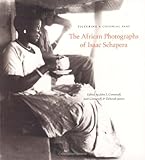
John L. Comaroff, Jean Comaroff, Deborah James, eds. Picturing a Colonial Past: The African Photographs of Isaac Schapera. Chicago: University of Chicago Press, 2007. Illustrations. xv + 224 pp. $25.00 (paper), ISBN 978-0-226-11412-5.
Reviewed by Fred Morton (retired professor of History, Loras College)
Published on H-SAfrica (August, 2008)
Seeing, Believing
Picturing a Colonial Past is a worthy and touching tribute to the legendary ethnographer Isaac Schapera, whose extensive published work on the Batswana represents, in the fitting words of Adam Kuper echoing Meyer Fortes, "the most complete individual contribution to the ethnography of an African people" (p. 35). This volume completes Schapera's contribution by bringing into view many photographs from his long-hidden collection and by illustrating the power of Schapera's artistic eye that complemented his field method of relentless asking, listening, and noting.
The volume consists of four parts: the introduction, "The Portraits of an Ethnographer as a Young Man" by Jean and John Comaroff, which is an appreciation of Schapera's photography; an exquisite biography by Kuper, "Isaac Schapera 1905-2003: His Life and Times"; Schapera's reprinted article on field method entitled "The Bakgatla Bagakgafela: Preliminary Report of Field Investigations, 1933"; and 137 photographs, most of which were taken by Schapera in the early 1930s. Apart from the two photos of Schapera seated while taking notes from informants, 135 photographs are divided into nine categories, each with an introduction by the editors. Close-ups of individuals ("Ditshwantso: Portraits") are accompanied with some biographical detail. The quality of the black-and-white photographs is exceptional.
The volume, however, is much more a testimonial to Schapera and his craft than an attempt to enhance our understanding of the photographic subjects, most of whom are BaKgatla of Mochudi, Bechuanaland Protectorate. The editors tend to tell readers what to see rather than to help us explore the significance of the person, persons, or scenes on display. What we have here is a load of excellent photographs and a bundle of missed opportunities. For example, the photograph of Peete Pilane is introduced as follows: "[Schapera's] head-and-shoulder image of the elderly Peete finds enormous repose in her wizened face" (p. 99). The editors inform us that Peete was the daughter of Moshoeshoe and was married by Kgamanyane (ruled 1849-75), which made Kgamanyane the son-in-law of the King of the Basotho. Further, "that while there is little written of her in the documentary record, she appears to have embodied the close, if sometimes troubled ties between the Kgatla and the Southern Sotho" (p. 101).
In fact, the documentary record says much more about Peete than is suggested by this toss-off line, and given that this photo was taken at least a half century after Kgamanyane's death (which occurred years after Kgatla-Sotho relations had terminated), the editors overlook a large measure of Peete's intriguing life. We know from Mmamaneele Matsuba, Peete's granddaughter, that Peete's older sister Mokgechane also was Kgamanyane's wife and that Peete joined her in the Transvaal to look after Mokgechane's children, after which Kgamanyane married Peete.[1] Mmamaneele was told that her grandmother was initiated into the Kgatla female regiment named Ntshakgosi, and the odds are that Peete was "Kgatla-ized" in this way prior to her marriage. Schapera's regimental list indicates that Ntshakgosi was formed in 1863.[2] Since she would have been roughly thirteen to fifteen years old at initiation, her estimated date of birth would be ca. 1850, her age at Kgamanyane's death twenty-five years, and her age at the time of the photograph would roughly be eighty years. Schapera's list of Kgamanyane's wives and progeny shows that two of Peete's sons (Kgabotshwene and Moshoeshoe Moshe) were initiated into regiments formed in 1901 and 1915 respectively, placing their births long after Kgamanyane's death in 1875.[3] In other words, Peete represents the many wives of Kgamanyane who continued to swell the ranks of the royal family after Kgamanyane had passed on, which is the more significant because Kgamanyane's son and successor Linchwe (ruled 1875-1920) married only thrice and divorced two of his wives with his Christian conversion in 1892. Peete's royal position influenced Kgatla relations for three generations. Peete's granddaughter Motlapele Pilane, child of her first-born son Kgabotshwene, was raised by Peete from birth and became the first wife of Tidimane Ramono Pilane, chief of the Transvaal Kgatla at Saulspoort for many years.[4] Thus, the person pictured by Schapera may have been "enormously reposed in her wizened face," but what makes her presence remarkable is her intimate link to the complex and central role played by wives in royal Kgatla households over the previous seven decades (p. 99).
Other subjects look at the camera without much introduction, and we thereby miss the considerable drama of which they were a part and that Schapera was witnessing. Three men (Isang Pilane, Kgari Pilane, and Molefi Pilane), each of whom appears in two photographs--three in the case of Kgari--were engaged in a heated conflict that erupted in repeated confrontation and occasional violence while Schapera was in Mochudi. And Schapera illustrates the level of rancor that had arisen in the community in his three photos of an armed regiment on its way, not to the public "kgotla" as the editors claim but to a "letsholo" ("a hunt"), a meeting outside of town to deal with a dispute, which in this instance took place in November 1934 between the Resident Commissioner and the Kgatla to resolve the Isang-Molefi feud (p. 181).[5] Schapera acknowledged this simmering conflict in his writings, particularly as it involved rainmaking, a topic that appears in many photographs in this collection.[6]
False impressions also abound. The editors represent the 1928 photos of initiation (bogwera) of the Tshama (Chama) regiment, which were taken by Reverend Johan Reyneke of the Dutch Reformed Church, as a formal ceremony adhering to traditional lines. Yet, traditional initiation had been abandoned by the BaKgatla after 1902, and it was retained only in symbolic form.[7] As Reyneke noted, this occasion was "a Christian circumcision school without circumcision."[8] The caption of a Mochudi street scene refers to "cattle herded," but a glance will tell you that these are inspanned oxen, a whale of a difference (p. 159). In the "Work of Production" section, sorghum and maize are captioned indiscriminately as "corn," and the impression this confusion creates is that maize was the predominate staple crop, whereas a close look at the photographs shows that drought-resistant sorghum (mabele) was invariably preferred, not surprising for the dry years of the 1930s. Many photographs depict women but only once is gender raised for comment, i.e., with reference to the homestead, and then in misleading fashion. We are told that "family life and the spaces within which it occurred" in the 1930s, as both before and since, "was thoroughly gendered. The homestead was female; its exteriors, places of public meeting and cattle enclosures were male" (p. 75). This statement is qualified, if not contradicted, by three photos that show women gathered in public places, others showing men inside the homestead and women out and about, and by Schapera's words in the reprinted article in this volume: "A typical household consists of a man with wife or wives and dependent children, together with any other relatives or dependants who may be attached to him" (p. 44). Perhaps the editors were referring to women's central role in constructing and decorating the homestead (though the photos on pages 79 and 81 show that men were taking up the construction of "modern" thatched roofs) and conducting many of their social events and economic roles within.
Left without comment are the many instances of military coats and uniforms worn by First World War veterans or others as paternal hand-me-downs. And, with no note included, one photo displays chief Molefi Pilane wearing his new Second World War officer's uniform sitting with three First World War veterans.
The close-up of a large, healthy cannabis plant goes unremarked!
These and other lesser examples, which could be included, show that a bit more spade work on the BaKgatla, paying closer attention to Schapera's work, was needed to achieve greater synthesis in this collection between the photographer and his subjects.
Notes
[1]. Interview with Mmamaneele Matsuba, Kgosing, Mochudi, December 23, 1981, in R. F. Morton, comp. and ed., "Interview Notes on Bakgatla History," bound typescript, February 1982, p. 47, Botswana Collection, University of Botswana Library. "Mokgechane Moshweshwe Makgachane" appears as wife number thirty-one on Schapera's Kgamanyane list of wives and progeny. See Schapera Papers, file PP 1/3/9, Botswana National Archives, Gaborone (hereafter cited as BNA). Mmamaneele was the daughter of Peete's second son Mosheshe.
[2]. Isaac Schapera, Handbook of Tswana Law and Custom. 2nd ed. (London: Frank Cass, 1977), 317. Schapera's date is modified to 1864 by mission correspondence: see Henri Gonin to Dutch Reformed Church (DRC), December 16, 1864, Gonin Family Letters, file 15/7/2(E), Dutch Reformed Archives, Cape Town (now at Stellenbosch University, hereafter cited as DRA). See also Schapera Papers, file PP 1/5/14, BNA.
[3]. For the list, see Morton, "Interview Notes." Mmamaneele mentions a fourth son "Mmutlane," who does not appear on Schapera's list.
[4]. Motlapele Pilane, Tlagadi, Mochudi, December 29, 1981, in Morton, "Interview Notes," 67-68.
[5]. See the photos of Kgari (pp. 102, 107, 188); Isang (pp. 104, 105); Molefi (pp. 132, 187); and the armed Makuka regiment (pp. 192-194). For the meeting, see The Star November 20, 1934, an anonymous document in the file "Bakgatla Tribal Affairs," DCM 2/7, BNA.
[6]. Isaac Schapera, Rainmaking Rites of Tswana Tribes (Leiden: Afrika-Studiencentrum, 1971); Isaac Schapera, A Short History of the Bakgatla-bagakgafela of Bechuanaland Protectorate (Cape Town: University of Cape Town, Communications from the School of African Studies New Series No. 3, 1942), 22-27. See also Fred Morton and Jeff Ramsay, The Birth of Botswana: A History of the Bechuanaland Protectorate from 1910-1966 (Gaborone: Longman Botswana, 1987), 23-29, 82-85. Fourteen photos of rainmaking appear in Picturing a Colonial Past (pp. 166-179).
[7]. Isaac Schapera, Bogwera Kgatla Initiation (Mochudi: Phuthadikobo Museum, 1978), 1.
[8]. Reyneke to DRC, Cape Town, January 3, 1928, 15/4/3/14(A), DRC Archives.
If there is additional discussion of this review, you may access it through the network, at: https://networks.h-net.org/h-safrica.
Citation:
Fred Morton. Review of Comaroff, John L.; Comaroff, Jean; James, Deborah, eds., Picturing a Colonial Past: The African Photographs of Isaac Schapera.
H-SAfrica, H-Net Reviews.
August, 2008.
URL: http://www.h-net.org/reviews/showrev.php?id=14795
Copyright © 2008 by H-Net, all rights reserved. H-Net permits the redistribution and reprinting of this work for nonprofit, educational purposes, with full and accurate attribution to the author, web location, date of publication, originating list, and H-Net: Humanities & Social Sciences Online. For any other proposed use, contact the Reviews editorial staff at hbooks@mail.h-net.org.

