



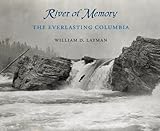
William D. Layman. River of Memory: The Everlasting Columbia. Seattle: University of Washington Press, 2006. xv + 151 pp. $24.95 (paper), ISBN 978-0-295-98592-3.
Reviewed by Abraham Hoffman (Los Angeles Valley College)
Published on H-Water (July, 2008)
Tribute to a Great River
Between April 2006 and September 2008 the exhibition River of Memory: The Everlasting Columbia is traveling to museums in Oregon, Washington, and British Columbia. The book under review, the companion volume to the exhibit, includes photographs and a text that features brief commentary, poetry, and quotations. The Columbia River has received considerable attention in recent years, much of it centered on the inundation of Celilo Falls half a century ago by the construction of The Dalles Dam. The winter 2007 issue of the Oregon Historical Quarterly was devoted to articles concerning Celilo Falls and the detrimental consequences to the river's salmon and the Native people who fished at the falls for thousands of years.
The exhibit, however, focuses on the river before Grand Coulee, The Dalles, and other dams changed it. Almost all of the black-and-white photographs were taken prior to the 1950s and date as far back as the 1880s. Famous photographers, such as Carleton Watkins, took memorable pictures that also had commercial value. The river occupies center stage as few photographs include people. In a somewhat unusual move, the book starts at the mouth of the Columbia and moves upstream to the river's source, 1,243 miles away. Contemporary maps pinpoint the location of each photograph through the use of tiny red rectangles on which the page number of the photograph is given. I would note that these rectangles could easily be overlooked as the editor, William D. Layman, does not mention this little detail in his introduction.
The book is divided into four sections: Mouth of the Columbia to Celilo Falls (0-200.5 miles), Celilo Falls to Snake River (123.5 miles), Snake River to the International Boundary (401 miles), and the International Boundary to Columbia Lake (498 miles). This adds up to 1,223 miles, not 1,243, and after several attempts at doing the math I still could not account for the twenty-mile discrepancy in the distance from mouth to source. Each of the section pages features marvelously drawn renditions of the fish that live in the river, identified even by gender. The individual fish are not drawn to scale, because they range in size from torrent scalpin (less than four inches) to the white sturgeon (up to twenty feet long).
Some readers may be disappointed by the text that does little more than provide brief comments for each photograph. The commentary comprises editorial observations, quotations from the writings of travelers who wrote about the river, and poetry by modern or contemporary poets. All of the writings share the common theme that the pre-Dalles river is more elegy than history. It is for other writers--possibly William L. Lang, Andrew H. Fisher, and Cain Allen--to justify the transformation of the Columbia from its striking rapids, banks, and surrounding landscape to a workhorse for hydroelectric power and servant to the industrial development of the region.
At first appearance, this volume may appear to be just another coffee-table book, but the photographs, eloquent in their depiction of what was surrendered in the name of progress, speak otherwise. One is left with the conundrum of whether taming the river was inevitable and necessary or done because politicians, businessmen, engineers, and government bureaucrats could not see into the future--and lacked the hindsight that this book gives to the views of a great river.
If there is additional discussion of this review, you may access it through the network, at: https://networks.h-net.org/h-water.
Citation:
Abraham Hoffman. Review of Layman, William D., River of Memory: The Everlasting Columbia.
H-Water, H-Net Reviews.
July, 2008.
URL: http://www.h-net.org/reviews/showrev.php?id=14708
Copyright © 2008 by H-Net, all rights reserved. H-Net permits the redistribution and reprinting of this work for nonprofit, educational purposes, with full and accurate attribution to the author, web location, date of publication, originating list, and H-Net: Humanities & Social Sciences Online. For any other proposed use, contact the Reviews editorial staff at hbooks@mail.h-net.org.

