



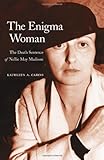
Kathleen A. Cairns. The Enigma Woman: The Death Sentence of Nellie May Madison. Lincoln: University of Nebraska Press, 2007. xi + 295 pp. $25.95 (cloth), ISBN 978-0-8032-1141-4.
Reviewed by John D. Bessler (The George Washington University Law School)
Published on H-Law (January, 2008)
'Til Death Do Us Part: A Battered Woman's Capital Murder Case Reexamined
In The Enigma Woman, historian Kathleen A. Cairns tells the story of a woman sentenced to death in California in the 1930s for the murder of her adulterous, manipulative husband, Eric Madison. A violent, abusive spouse, Eric was shot multiple times in the back and head by his wife, in all likelihood as he lay in bed in the couple's Burbank apartment, shortly before midnight on March 24, 1934. Part of the Women in the West series of the University of Nebraska Press, the book is certainly no enigma. It is a well-written, true-crime tale that provides a glimpse into the inner workings of the California justice system in the last century. Drawing on a wide variety of sources, including the appellate records of The People of California v. Nellie May Madison (1934), Cairns has exhaustively researched the life, murder conviction, and death sentence of the woman the media came to vilify as the Enigma Woman, the Sphinx Woman, and the Iron Widow.
Born Nellie Mooney in 1895 in Red Rock, Montana, the Enigma Woman grew up on a 1,600-acre sheep ranch near Dillon, Montana, had an unhappy childhood, and led an extraordinarily unconventional life, especially by the standards of the time. A childless, much-married woman who worked outside the home, Nellie's life took a turn for the worse at an early age. When she was only thirteen, Ralph Brothers, a cowboy and convicted felon eleven years her senior, took Nellie to Salt Lake City ("eloped" says Cairns) and married her--a marriage that was quickly annulled once Nellie's devastated father got wind of it. It was to be the first of several marriages for Nellie.
By 1914, Nellie, now nineteen, was married again, this time to Clarence Kennedy, a fireman in Boise, Idaho, where Nellie had gone to a business college. In less than one year, that marriage ended in a separation, and Nellie then married an automobile mechanic, Wilbert Earl Trask, just across the state line in Oregon, probably having never actually gotten divorced from Kennedy. After moving to Los Angeles, though, that marriage, too, fell apart and the couple divorced in 1924. Nellie's fourth marriage, to attorney William Brown, the brother of her divorce lawyer, also ended badly and in a separation in 1930. According to divorce records, Nellie accused Brown of hitting her and ripping up their marriage certificate. Brown, conversely, charged Nellie with hitting him over the head with a bottle. And, each accused the other of attempted murder involving guns. Nellie said Brown and his brother broke into her home and tried to shoot her and a male guest, and Brown claimed Nellie shot at him while they argued in their car.
In 1933, Nellie made a fateful decision in tying the knot with Eric Madison, a Danish-born, divorced musician and coffee shop manager. The two met in Palm Springs, where Nellie then worked as a manager at the Desert Inn, a popular resort that put her in contact with celebrities, including actor Gary Cooper. Although Nellie suggested getting married in Arizona, Eric told her that he had a friend--a Lutheran minister, he said--who could marry them. Nellie was warned that Eric had an explosive temper, but she found Eric a "'most fascinating man'" (p. 29) and married him anyway. Eric quickly spent all of Nellie's money, and he only later told her that they were not actually legally married since he never obtained a marriage license.
As Cairns recounts, the murder for which Nellie was convicted took place in the couple's second-floor apartment in a building called the Sterling Arms, just over the fence from a Warner Brothers back lot where a film crew was busy filming a gangster movie called Midnight Alibi (1934). Nellie and Eric had moved in after Eric blew through Nellie's one-thousand-dollar inheritance and Warner Brothers hired the newlyweds to work for the studio--both as commissary cashiers. Only one month into the job, however, company president Jack Warner personally fired Eric, causing Nellie to lose her job, too. Later, Nellie returned home one day to find Eric in bed with a teenage girl.
After Eric savagely beat Nellie, threatened to kill her, and humiliated her by forcing her to sign a piece of paper saying that she had been living with another man, Nellie feared for her life and reputation. She bought a gun and, under circumstances that will never be fully known, ended up shooting Eric, leading to such headlines in California newspapers as "Wife Sought in Mystery Murder of Film Aide" and "L.A. Film Man Slain in Apartment." What is clear is that Eric was unreliable and had a violent temper, especially when he drank. He tried to choke a woman he had been engaged to before he met Nellie; he had been unfaithful to his first wife, Georgia Madison, and physically and emotionally abused her; and he did drugs, stole things, and twice choked Georgia as she slept and tried to set her up on a phony adultery charge.
At Nellie's two-week trial in June 1934--in which noir-obsessed reporters noted she chose to wear a black, V-neck dress--an eight-man, four-woman jury convicted her of first-degree murder and she was condemned to die. The trial included many bizarre events, among them the presiding judge, Los Angeles Superior Court Judge Charles Fricke, actually taking the stand as a prosecution witness. Fricke, as judge, overruled the defense's objection to his testimony before moving over to the witness chair. Also, instead of putting on a self-defense case, as Joseph Ryan, Nellie's attorney, had initially planned, Ryan unsuccessfully tried to convince the jury--in spite of overwhelming evidence to the contrary--that the bullet-riddled body found in the couple's apartment was that of a stranger, and not that of Eric. At trial and in the media, Nellie was relentlessly portrayed as a heartless, Lady Macbeth-like "femme fatale" who cold-bloodedly planned and carried out her husband's murder.
The rest of Nellie's story--including Nellie's subsequent confession, revelations about the spousal abuse in her marriage, and all of the efforts made to save Nellie's life in the clemency process--takes up the remainder of Cairns's well-executed book. In 1935, Nellie came within days of becoming the first woman to be hanged by the state of California. Her life was spared by California's governor, Frank Merriam, after a long, very public sympathy campaign (which highlighted Eric's abuse of her) just sixteen days before her scheduled October 4, 1935, execution. It was not until 1942 that Nellie's life sentence was commuted to a sentence of fifteen years, making Nellie eligible for parole.
Cairns's extensive notes and bibliographic essay, which follow the book's fourteen chapters, document the author's dogged research and do a good job of putting Madison's case in a broader context. However, reference is omitted to some recent academic literature on women and the death penalty, including that of law professors Elizabeth Rapaport ("Equality of the Damned: The Execution of Women on the Cusp of the 21st Century," 26 Ohio Northern University Law Review 581 [2000]) and Victor L. Streib ("Rare and Inconsistent: The Death Penalty for Women," 33 Fordham Urban Law Journal 609 [2006]; "Death Penalty for Battered Women," 20 Florida State Law Review 163 [1992]." The omission is minor, though, given the book's singular focus on one case. Indeed, Cairns's book should be read by anyone who wants a peek at how the U.S. justice system treated female killers decades ago, before the recognition of the "battered woman" defense. A lecturer in the department of history at California Polytechnic State University, San Luis Obispo, Cairns writes in crisp, engaging prose, and this book clearly deserves an audience beyond the confines of the academy.
If there is additional discussion of this review, you may access it through the network, at: https://networks.h-net.org/h-law.
Citation:
John D. Bessler. Review of Cairns, Kathleen A., The Enigma Woman: The Death Sentence of Nellie May Madison.
H-Law, H-Net Reviews.
January, 2008.
URL: http://www.h-net.org/reviews/showrev.php?id=14040
Copyright © 2008 by H-Net, all rights reserved. H-Net permits the redistribution and reprinting of this work for nonprofit, educational purposes, with full and accurate attribution to the author, web location, date of publication, originating list, and H-Net: Humanities & Social Sciences Online. For any other proposed use, contact the Reviews editorial staff at hbooks@mail.h-net.org.

