



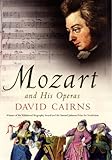
David Cairns. Mozart and His Operas. Berkeley: University of California Press, 2006. xiv + 290 pp. $29.95 (cloth), ISBN 978-0-520-22898-6.
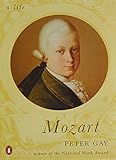
Peter Gay. Mozart. New York: Penguin Books, 2006. 177 pp. $13.00 (paper), ISBN 978-0-14-303773-6.
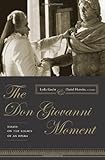
Lydia Goehr, Daniel Herwitz, eds. The Don Giovanni Moment: Essays on the Legacy of an Opera. New York: Columbia University Press, 2006. xxii + 238 pp. $40.00 (cloth), ISBN 978-0-231-13754-6.
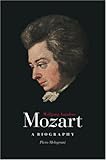
Piero Melograni. Wolfgang Amadeus Mozart: A Biography. Cochrane. Chicago: University of Chicago Press, 2007. x + 300 pp. $30.00 (cloth), ISBN 978-0-226-51956-2.
Reviewed by Celia Applegate (Department of History, University of Rochester)
Published on H-German (June, 2007)
Once Again, with Feeling
In 1991, the year of the bicentenary of Mozart's death, readers in search of something completely different about the Divine One might have picked up Anthony Burgess's On Mozart: A Paean for Wolfgang, which begins with a celestial dialogue between Ludwig van Beethoven and Felix Mendelssohn. Since arriving in heaven, Beethoven has regained his hearing but developed an unfortunate habit of saying "Ach" at the start of every sentence, and Mendelssohn has converted back to Judaism. Mendelssohn has also taken charge of organizing centennial tributes to dead composers--Burgess's sly reference, presumably, to Hector Berlioz's quip that Mendelssohn was "a little too fond of the dead."[1] As Mendelssohn/Burgess suggests, "in the sense that God can only be defined as God, so the music of Mozart can only be defined as music," and so Mendelssohn the Commemoration Tsar proposes, in recognition of Mozart's bicentenary, simply to perform "all the works."[2]
This effort to comprehend Mozart by taking stock of everything he composed has characterized the approach of any number of Mozartians since his death, from the industrious nineteenth-century botanist and mineralogist Ludwig von Köchel, the first cataloguer of the works, to New Yorker columnist Alex Ross, who recently downloaded the entire Philips label recording, another 1991 legacy, of the complete works onto his iPod and spent the next three months listening to all 9.77 gigabytes.[3] And even if one has, ultimately, to agree with Saul Bellow that "there is a dimension of music that prohibits final comprehension and parries or fends off the cognitive habits we respect and revere," commemorative years bring out these habits particularly strongly. 2006 was such a year--the 250th anniversary of Mozart's birth.[4] On the whole, it was a year less adventurous in its tributes than 1991, more sober, perhaps a little more jaded about the whole racket of commemoration volumes, recordings, and festivals than the death bicentenary. Yet it saw the publication, and re-publication, of many a useful work of scholarship or welcome piece of synthesis and interpretation. The handful of works under review here represent an arbitrary sampling of last year's offerings and have in common, besides Wolfgang Amadeus Mozart himself, only a desire to reach a readership not composed solely of musicologists.
Of these, by far the most elegant is Peter Gay's short biography for the Penguin Lives series, which is pocket-sized, pithy, and manages in its brevity to convey the character of Mozart's life, works, and times more fully than Piero Melograni's wordier but oddly jejune account of all the above. Indeed, it remains something of a mystery of this Mozart year why the University of Chicago Press saw this translation project, from the Italian, as necessary. To be sure, Melograni's style is readable and his self-representation, as a journeyman writer who happens to love Mozart and "studied piano and singing as a boy," is disarming (p. viii). He does a splendid job of working with the letters and of describing the life in terms of the many and varied relationships that helped to define it--with the father (of course), the mother, the sister, the wife, but also with the many other contemporaries on whom Mozart commented and with whom he worked. Still, one must ask what Melograni brings to the, presumably, not limitless market for Mozart biographies beyond what is already there for the reading in Julian Rushton's deeply informed biography in the Oxford Master Musicians series or Robert Gutman's more popular but still richly detailed "cultural biography."[5]
One might, for instance, have hoped for a more nuanced account of the places and circumstances of Mozart's musical world. To take one example, Melograni's analysis of Mozart and the marketplace is simple and even glib--built out of truisms like "musical compositions were considered mere entertainment" or Mozart "possessed the talent and the courage that permitted him to break with tradition" (p. 154). This is, in other words, a biography not just for non-musicologists but for non-scholars of any sort. Historians in particular will find its characterization of the late eighteenth-century world disappointingly flat. Volker Braunbehrens's Mozart in Vienna, also a work written for a commemorative year, 1991, for the non-specialist market, achieved far greater originality and depth of analysis than does this new biography, while managing to remain highly accessible.[6] And to return to Peter Gay's Mozart, while he would certainly not expect his fellow historians to pick up the book for any reason but pleasure, it is nevertheless chock full of analyses so succinct--on the relationship between art and society: "this distinctive legal definition of Bürger was at least partially subverted by men of talent and adroitness, especially by those musically gifted, since the love of music was a widespread and authentic passion" (p. 7) or by characterizations so deft (on Mozart's path from prodigy to master, compared to that of Mendelssohn or Schubert: "such inability to surmount an already high plateau was not Mozart's way" (p. 100)--that even those who know their Mozart backwards and forwards can find much to admire.
The book of 2006 that most successfully offers up the findings of musicologists to "musicians and amateurs," and I would add, to cultural historians, is David Cairns's Mozart and his Operas. Author of a definitive biography of Hector Berlioz, Cairns was long-time music critic for the Sunday Times and Spectator, and he writes with clarity and passion about this music he knows so well. His purpose is straightforward. He believes, first, that it has been the operas, more than any other of Mozart's hundreds of works, that "have transformed our perception of Mozart's art" in the past half-century, rescuing him from the depredations wrought upon his reputation by romanticism and modernism (p. 10). "Knowledge of the operas has illuminated our whole view of his art," Cairn writes, allowing musicologists and music-lovers alike to hear in the piano concertos, the string quartets and quintets, and the symphonies the expressive and technical achievements of a man who was a "dramatist through and through" (p. 10). Second, Cairns believes that in and through the composition of the operas Mozart progressed not just professionally but, more importantly, musically--in learning how to structure and shape a work, how to use tonality and counterpoint, how to develop intensity and control of the musical language, and how to achieve sheer expressiveness in tones. For Cairns, in other words, the operas stand at the center of both Mozart's greatness and our recognition of that greatness. The book, which devotes a chapter to each of the major operas (Idomeneo, Die Entführung aus dem Serail, Le nozze di Figaro, Don Giovanni, Cosi fan tutte, Die Zauberflöte, La Clemenza di Tito), conveys a wealth of information about the early and minor operas as well. Who knew, for instance, that in the course of the search for a librettist that ultimately brought him to Lorenzo da Ponte, he struggled for a while composing the music for a comic opera called L'oca del Cairo, or The Goose of Cairo --"an abortive project if ever there was one," in Cairns'd amused judgment. Several weeks into this project, Mozart began to have "serious doubts" about the appeal of the eponymous hero, a large mechanical goose whose main role in the drama was to conceal, inside it, the lover while he rescues the maiden in the tower. Cairns cannot resist commenting that by the time Mozart abandoned what he called "this whole goose business," the project was "was well and truly cooked," which does not quite work idiomatically, but with material like this, who can blame him (p. 103).
On a more serious level, the book mounts a sustained case for the utter greatness of Idomeneo, a work that suffered more than any other from a century and a half of misunderstanding and "gross mutilation" (pp. 52-53). Likewise, La Clemenza di Tito, about which the author is marginally less partisan a supporter, grows on one, according to Cairns: "the better one comes to know the score and the more one experiences it in performances, the less limited it seems" (p. 234). His chapters on both these operas are models of accessible, non-specialized critical analysis and of biographical and historical exposition. In both cases, the nineteenth century's suspicion of what it considered the outdated genre of opera seria accounts at least in part for their dismal fate. Cairns provides satisfying explanations for such changes in taste, which pay due respect to politics and ideology but remain respectful also of the relative autonomy of aesthetic judgments and the unexpected challenge that Mozart's work has always posed to listeners. His chapters on the better-known and enduringly popular operas contain much that is familiar. But the familiar is delivered along with such a wealth of contextual and musical detail and loving attention to what exactly makes these operas so extraordinary that even people who have heard them many times will be refreshed. Cairns is an unabashed lover of these works, someone who can make even what is surely verging on hyperbolic praise seem a mere statement that no reasonable person could contradict. Moreover, when he writes that Mozart's "instinct, as a human being and as a dramatist, is for reconciliation and renewal," his sense of the man and of the art is genuinely moving--a welcome reminder that one does not have to write about destruction, cruelty, and suffering in order to speak profoundly about the human condition (p. 7).
And then there is the "opera of all operas," Don Giovanni. Given the admiration this opera has aroused since its opening night and the difficulty it poses in figuring out its mesmerizing, discomforting power, an entire book devoted to its reception seems the least it deserves. The Don Giovanni Moment, Lydia Goehr and Daniel Herwitz's edited volume of "essays on the legacy of an opera," is the most demanding book of the four under review. Philosophers and literary scholars, rather than historians or opera lovers, are its intended audience and for what Melograni lacked in intellectual heft this volume more than compensates. The essays, all by highly accomplished scholars and well-known intellectuals, do not explain or even really account for the opera's reception history, but rather illuminate its resonance in subsequent works of art or interpret its meaning from an aesthetic-philosophical perspective. The "Don Giovanni moment" does not, then, refer to some actual time and place in which the opera had an impact, but to the sounding of the unforgettable D-minor chord itself, both at the opera's beginning and at the point of the Don's descent into hell. The editors' introduction suggests that this chord became the musical sounding of "fate, judgment, and learning" for subsequent generations. Yet the essays are by no means as tightly bound to that focus as the title might suggest, so this argument becomes a kind of conceit, or an unfulfilled promise.
To my mind (and every reader of this volume will find something different to praise, for it is rich in thought and wide in range of focus), the three finest essays in the volume are those by the German literary historian Hans Rudolf Vaget, the musicologist Thomas Grey, and the late philosopher Bernard Williams. Williams' essay, on "Don Juan as an Idea," was apparently the inspiration for the volume and ought to have been the volume's opening essay, perhaps even a kind of prelude before the usual editorial round-up of the volume's highlights. For Williams, Don Giovanni in the hands of Mozart becomes the principle of vitality itself, by which all characters come to life, and his defiance, which leads to his destruction, is not against God at all but "rather a splendidly attractive and grand refusal to be intimidated," "a proper and fine human reaction" not to divinity but to something "in the order of a vast and alarming natural consequence" (pp. 114-115). Williams acknowledges that "there is no actual human life that could be lived as unconditionally as his" but still insists on the human-ness of this great drama, not its demonic or transcendental nature. Vaget, in a very different but equally impressive essay, takes as his subject Eduard Mörike's novella of 1855, Mozart's Journey to Prague, and provides an extraordinarily rich account of the intellectual and historical world from which it emerged and with which it had affinities. The essay is at once an illumination of Mozart and his "most un-Wagnerian quality of Höflichkeit des Herzens," of Mörike and his affinities with Nietzsche's understanding of Mozart, and of the nineteenth century itself. It is lucid, fascinating, and wide-ranging. Thomas Grey's "The Gothic Libertine" is equally wide-ranging and insightful, a musically-focused foil to Vaget's literary-philosophical tour of the nineteenth century. Grey argues that the "Don Juan character and its variations" represented a response to "a continual, latent pressure of bourgeois domestication, just as Romantic music comes to depend, in a sense, on the foil of Biedermeier stolidity and normality in preserving its own transcendent identity and ambitions" (p. 87). He explores this dialectic in works ranging from Wagner's Flying Dutchman to Marchner's Vampyr and suggests that the nineteenth-century fascination with Don Giovanni's "Gothic potential" had worn itself out by the end of the century (p. 102). Readers primarily interested in Kierkegaard's sustained engagement with the Don will also find much to interest them among these essays, yet in the end the volume is less a coherent whole than a smorgasbord at which one can sample what one wants. Still, having tasted (this and all of these books), what one really wants to do next is not to read more but simply to listen.
Notes
[1]. Hector Berlioz, Memoirs of Hector Berlioz, trans. Ernest Newman (New York: Dover Press, 1966), 279.
[2]. Anthony Burgess, On Mozart: A Paean for Wolfgang, being a celestial colloquy, an opera libretto, a film script, a schizophrenic dialogue, a bewildered rumination, a Stendhalian transcription, and a heartfelt homage upon the bicentenary of the death of Wolfgang Amadeus Mozart (New York: Ticknor & Fields, 1991), 10-12.
[3]. Alex Ross, "The Storm of Style: Listening to the Complete Mozart," New Yorker (July 24, 2006), 66-73.
[4]. From a lecture delivered at the Mozart Bicentennial, Florence, Italy, December 5, 1991, reprinted as "Mozart: an Overture," in Saul Bellow, It All Adds Up: From the Dim Past to the Uncertain Future (New York: Penguin Books, 1995), 5.
[5]. Julian Rushton, Mozart (New York: Oxford University Press, 2006); and Robert Gutman, Mozart: A Cultural Biography (New York: Harvest Books, 2000).
[6]. Volker Braunbehrens, Mozart in Vienna, 1781-1791 (New York: Harper Collins, 1991).
If there is additional discussion of this review, you may access it through the network, at: https://networks.h-net.org/h-german.
Citation:
Celia Applegate. Review of Cairns, David, Mozart and His Operas and
Gay, Peter, Mozart and
Goehr, Lydia; Herwitz, Daniel, eds., The Don Giovanni Moment: Essays on the Legacy of an Opera and
Melograni, Piero, Wolfgang Amadeus Mozart: A Biography.
H-German, H-Net Reviews.
June, 2007.
URL: http://www.h-net.org/reviews/showrev.php?id=13351
Copyright © 2007 by H-Net, all rights reserved. H-Net permits the redistribution and reprinting of this work for nonprofit, educational purposes, with full and accurate attribution to the author, web location, date of publication, originating list, and H-Net: Humanities & Social Sciences Online. For any other proposed use, contact the Reviews editorial staff at hbooks@mail.h-net.org.

