



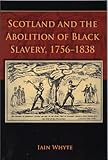
Iain Whyte. Scotland and the Abolition of Black Slavery, 1756-1838. Edinburgh: Edinburgh University Press, 2006. x + 278 pp. $120.00 (cloth), ISBN 978-0-7486-2432-4; $38.00 (paper), ISBN 978-0-7486-2433-1.
Reviewed by Larry Gragg (Department of History and Political Science, University of Missouri-Rolla)
Published on H-Albion (April, 2007)
The Power of an Ideal
The crusade to abolish the slave trade (1807) and then slavery (1833) in the British Empire is one of the epic stories of reform in the modern era. Much has been written about the critical role of the Society of Friends as well as the remarkable leaders of the movement, notably Granville Sharp, Thomas Clarkson, and the former slave Olaudah Equiano. William Wilberforce, the most celebrated of the abolitionists, is even featured in a current major motion picture. These notable figures, through speeches and lectures and the dissemination of an extraordinary number of periodicals, broadsides, books, and tracts, mobilized an impressive grassroots movement that, along with their effective lobbying of members, persuaded Parliament to implement their reforms.
The abolitionist story, however, is not without controversy among historians. Over sixty years ago, economic determinist Eric Williams challenged the notion that all this effort represented a humanitarian struggle. He argued that abolition resulted from the declining profits from sugar estates in the West Indies, which made the slave trade and slavery itself ever less viable. Seymour Drescher, among others, has countered with evidence demonstrating the vitality of the slave trade. Additionally, Michael Craton and James Walvin have reaffirmed the importance of a potent humanitarian impulse driven by religious beliefs and Enlightenment thought. Others have argued that the abolition efforts reflected a general reform movement in England, one that embraced parliamentary reform and factory legislation.
Iain Whyte, as Drescher has argued for provincial England, argues that too little attention has been paid to the role of Scotland in this extraordinary reform effort. In his clearly written and well-researched volume, Whyte explains the evolution of the movement in Scotland all the while carefully detailing the substantial stake Scots had in slavery in the West Indies. In the last quarter of the eighteenth century Scots owned over a quarter of the estates on Jamaica as well as property on many other islands throughout the Caribbean. Others were heavily involved in the trade to that region and many more found lucrative employment on the islands as lawyers, bookkeepers, physicians, carpenters, and clerks. There were many voices in Scotland that defended both the slave trade and slavery. The slave interests found support from the many petitions to Parliament from members of powerful organizations like the Glasgow West India Association, and constant editorial support from newspapers like the Glasgow Courier, as well as provocative pro-slavery books from Archibald Dalzel, James Adair, Alexander Barclay, and John Stewart. Collectively, these efforts, according to Whyte, delayed abolition.
The obstructionists, ultimately, were no match for the momentum developed by the numerous abolition societies that emerged in Scotland; the passion of so many parish clergymen who found the slave trade and slavery contrary to the spirit of Christianity; and the extraordinary efforts of anti-slavery leaders like William Dickson, James Stephens, Zachary Macauley, Henry Brougham, James Ramsey, and Andrew Thompson, the champion of immediate abolition. Their collective labors led to a wave of petitions from Scotland to Parliament. For example, more than a third of the petitions presented to the House of Commons against the slave trade in 1792 came from Scotland. Among the many petitions to Parliament in 1831 demanding abolition there was one from Edinburgh with 25,000 signatures. Whyte reveals how much the issue crossed class, social, and religious lines. Dissenting congregations, the national church in Scotland, political unions, and middle class urbanites all submitted petitions in 1830-31. Anti-slavery, Whyte reveals, had become the leading moral issue in Scotland with widespread acceptance of the proposition that slavery was a sin.
Whyte has provided an admirable account of the power of an ideal, one that defied economic considerations. He has made an undeniable case that committed anti-slavery advocates in Scotland contributed to the ultimate end to slavery in the West Indies.
If there is additional discussion of this review, you may access it through the network, at: https://networks.h-net.org/h-albion.
Citation:
Larry Gragg. Review of Whyte, Iain, Scotland and the Abolition of Black Slavery, 1756-1838.
H-Albion, H-Net Reviews.
April, 2007.
URL: http://www.h-net.org/reviews/showrev.php?id=13078
Copyright © 2007 by H-Net, all rights reserved. H-Net permits the redistribution and reprinting of this work for nonprofit, educational purposes, with full and accurate attribution to the author, web location, date of publication, originating list, and H-Net: Humanities & Social Sciences Online. For any other proposed use, contact the Reviews editorial staff at hbooks@mail.h-net.org.

