



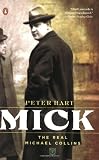
Peter Hart. Mick: The Real Michael Collins. New York: Viking, 2006. xxi + 426 pp. $27.95 (cloth), ISBN 978-0-670-03147-4; $17.00 (paper), ISBN 978-0-14-303854-2.
Reviewed by Timothy McMahon (Department of History, Marquette University)
Published on H-Albion (August, 2006)
The Big Fellow?
Peter Hart, the leading young historian of the Irish War of Independence, has produced an engaging, vivid, yet uneven biography of the revolutionary politician Michael Collins. Anyone familiar with Hart's earlier works (including the superb The IRA and Its Enemies [1998]) knows that he brings considerable gifts as a storyteller and analyst to bear on his subjects. In this instance, he eschews the tropes of prior works on Collins--most notably the tendency to portray him as an Emerald Pimpernel. The author restricts himself only to sources that are readily available (letters, police reports, cabinet and committee minutes, diaries, and newspaper accounts), thus avoiding a pitfall of prior Collins scholarship, in which authors have utilized papers that subsequently disappeared. Moreover, unlike his predecessors, he devotes substantial chapters to Collins's childhood and early adult life, detecting in them patterns of behavior that would become essential in his rise to power within the Irish republican movement.
Hart is surely correct that Collins exemplified his generation of young Irish men and women. (One might carry the point further and say that he was emblematic of a generation of young Europeans.) Better educated and more mobile than their parents, they were drawn to cities and towns, often to clerical, trade, or civil service positions, yet they were also frequently frustrated by their lack of mobility once they reached a certain point on the career ladder. For Collins, and for many hundreds of other young Irish, this point came after emigration from rural west Cork to London, where he entered with gusto into the migrant milieu, joining organizations such as the Gaelic Athletic Association, the Gaelic League, and most importantly the Irish Republican Brotherhood.
Still, the author's treatment of the Irish-Ireland movement--with its endless committees, splits, and self-appointed republican "elect"--borders on caricature. Organizational ruptures and feelings of righteous indignation toward one's rivals were the stuff of all emerging associational networks across the United Kingdom and the Continent at the turn of the twentieth century: what made this one different was that a particular faction seized control of it at an auspicious moment, i.e., in the aftermath of Easter 1916.
Hart makes clear that the success of revolutionary republicanism in those years was due, in no small part, to Michael Collins, who proved to be much more than just another Mick on the make. With his ruthless drive, his ability to encourage his fellows at moments of despair, and his determination to succeed at all costs, he separated himself from the pack of potential leaders through a formula honed in his London committee days. Linking himself to slightly older mentors, such as his cousin Jack Hurley and his IRB sponsor Patrick Belton, he made contacts that opened doors for him later in life. He also secured positions, such as secretary or treasurer, on teams and committees that enabled him to remain near the center of the action while spreading his contact and knowledge base. Most importantly, he chose wisely and acted resolutely. Hart demonstrates repeatedly that at key junctures in his life, Collins faced decisions about matters as mundane as whether to emigrate to America or to move to Dublin and as profound as whether to accept the Articles of Agreement with Britain in 1921. In each case, he left his options open until the last possible moment, when he made his decision and worked it to the best of his ability. In the former instance, for example, he moved to Dublin early in 1916, linked himself to Joseph Plunkett (a signatory of the Easter Proclamation), and gained an entrée into the movement's inner circle. In the latter, he signed the fabled "Treaty" that led to the creation of the Irish Free State at the expense of republican unity. The Collins who emerges from these pages was one whose organizational, financial, and political acumen was sharpened through experience and wielded with great effect.
All of this meant that Collins was loved and hated, cheered and reviled. Contemporaries developed differing opinions of him for a variety of reasons. As Tim Pat Coogan noted in an earlier biography (Michael Collins: A Biography [1990]), Collins drank, swore, and smoked into the wee hours, unlike many of his abstemious and devoutly Catholic fellow revolutionaries. Of course, the fact that he developed what Hart refers to as a "kind of court" of admirers, who helped him to entertain visiting guerrilla leaders at Vaughan's Hotel, suggests that he was far from alone in pursuing these more dissolute--and suspect--pursuits (p. 265). More importantly, he was difficult to work with: combative and headstrong, he bullied colleagues and, occasionally, worked around them to achieve his desired results. The revolutionary Minister of Defense, Cathal Brugha, was merely the best-known (and bitterest) co-worker with whom he crossed swords, but we learn from Hart that their feud may have originated in a clash of personalities, with Collins the initial aggressor. The Big Fellow's most important eventual antagonist was, of course, his chief, Eamon de Valera, but as presented by Hart, the two retained "a genuine partnership, with de Valera projecting a supportive and tolerant presence" until after the treaty irrevocably divided them (p. 265). Such a judgment may surprise, but it is backed up with correspondence between the two men, including examples of de Valera fulfilling his duty as mediator between Collins and other ministers in his revolutionary cabinet.
Unfortunately, not all claims in Mick appear as sure-footed, and those less familiar with the period than Hart may find it difficult to distinguish between demonstrated occurrences and the author's informed speculations. (Indeed readers must wade into the notes pages at the back and search for the apposite phrase page by page because the format of this Viking publication does not allow for footnotes in the text.) Two examples will suffice. The first is minor and relates to Collins's efforts to secure the directorship of the National Aid Association early in 1917--arguably the job from which his later successes sprang. Hart finds in his subject's application letter that Collins lied to secure the post, embellishing past work experience. But why, he asks, particularly since the IRB was using his expanding network of connections to secure the position? Hart supplies three possible explanations (the desire to impress a potential future employer, the need to protect a previously told lie, or the pleasure taken in deception), but each of these is pure speculation (pp. 116-117). The observed overstatement is certainly of interest, but without establishing a pattern of hyperbole (perhaps even through deploying examples that Hart refers to in his introduction) such speculation seems pointless.
A more important instance involves one of the central events of Collins's career as director of intelligence in the IRA, that being the attack on Crown secret service men in their homes that triggered Bloody Sunday in November 1920. According to Hart, "Collins is often quoted (perhaps apocryphally) as saying that he had to get them before they got him. In fact it was the other way around ... the hush-hush men did not begin murdering and torturing until after a dozen of them were killed in their homes by the IRA" (emphasis in original, p. 241). Technically correct, this statement splits important hairs. On the one hand, the Crown's overlapping intelligence operations were becoming increasingly more coordinated throughout 1920, and while the men working in small groups in Dublin were unique within this structure, intelligence operatives working alongside Black and Tans and Auxiliary officers throughout Ireland were engaged in identifying and killing IRA men and couriers. (Hart himself refers to one such operation that led to the killing of a Limerick Sinn Feiner in September 1920, who was reportedly bringing money to deliver to Collins.) Equally important, Collins felt the net tightening around himself and his operatives because of these men. Hart notes that the secret service men in Dublin were already involved in raids and ambushes, one of which was in the office of Collins's close associate, General Richard Mulcahy, from which they seized IRA plans for the British half of what was to have been an even more spectacular and bloodier Sunday on November 21. But if--as Hart maintain--Collins's main purpose in employing violence was to bring about peace more quickly, decisively, and on his own terms, surely it is not a stretch to recognize the validity of the sentiment that it was "them or me."
This volume will not please every reader, particularly those seeking a heroic portrait of its subject. No doubt some will wish to argue with Hart's conclusion that Collins "was not interested in sacrificing himself for others or in upholding any sacred principle so it would live on after him," particularly since his life was cut short during a civil war that maintained the "freedom to achieve" "the ultimate freedom that all nations desire and develop to" (pp. 425-426). But it is in engaging such arguments that we come better to understand the people and forces that shaped our past. As such, Hart's unsentimental and critical Mick should take its place alongside David Fitzpatrick's study of Harry Boland, and Tim Pat Coogan's and T. Ryle Dwyer's works on both de Valera and Collins, for those interested in the Irish War of Independence. [1]
Note
[1]. David Fitzpatrick, Harry Boland's Irish Revolution (Cork: Cork University Press, 2003); Tim Pat Coogan, Michael Collins: A Biography (London: Hutchinson, 1990); and, De Valera: Long Fellow, Long Shadow (London: Hutchinson, 1993). T. Ryle Dwyer, Big Fellow, Long Fellow: A Joint Biography of Collins and De Valera (Dublin: Gill and Macmillan, 1998); De Valera: The Man and the Myths (Dublin: Poolbeg, 1991); and, The Squad and the Intelligence Operations of Michael Collins (Cork: Mercier Press, 2005).
If there is additional discussion of this review, you may access it through the network, at: https://networks.h-net.org/h-albion.
Citation:
Timothy McMahon. Review of Hart, Peter, Mick: The Real Michael Collins.
H-Albion, H-Net Reviews.
August, 2006.
URL: http://www.h-net.org/reviews/showrev.php?id=12152
Copyright © 2006 by H-Net, all rights reserved. H-Net permits the redistribution and reprinting of this work for nonprofit, educational purposes, with full and accurate attribution to the author, web location, date of publication, originating list, and H-Net: Humanities & Social Sciences Online. For any other proposed use, contact the Reviews editorial staff at hbooks@mail.h-net.org.

