



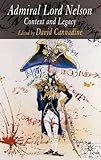
David Cannadine, ed. Admiral Lord Nelson: Context and Legacy. Basingstoke: Palgrave Macmillan, 2005. xiii + 201 pp. $32.95 (cloth), ISBN 978-1-4039-3906-7.
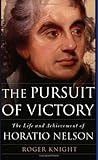
Roger Knight. The Pursuit of Victory: The Life and Achievement of Horatio Nelson. New York: Perseus Publishing, 2005. xxxv + 874 pp. $38.00 (cloth), ISBN 978-0-465-03764-3.
C. Northcote Parkinson, ed. Samuel Walters, Lieutenant RN: The Memoirs of an Officer in Nelson's Navy. Liverpool: Liverpool University Press, 2005. 154 pp. $14.95 (paper), ISBN 978-0-85323-149-3.
C. Northcote Parkinson, ed. Portsmouth Point: The Navy in Fiction, 1793-1815. Liverpool: Liverpool University Press, 2005. 156 pp. $14.95 (paper), ISBN 978-0-85323-139-4.

Edgar Vincent. Nelson: Love and Fame. New Haven: Yale University Press, 2003. xiii + 640 pp. $19.95 (paper), ISBN 978-0-300-10260-4.
Reviewed by Timothy Jenks (Department of History, East Carolina University)
Published on H-Albion (July, 2006)
Nelson and Naval History: Recent Works
Books on Horatio Nelson appear so regularly that Britain's greatest naval hero hardly needed the commemorative assist of the 200th anniversary of Trafalgar to advance his bibliographical standing. The bicentenary was an obvious moment to boost production, and thus last year saw the normally steady stream of Nelsonian titles rise to the level of a cascade.[1] The aim of the following is to assess some of these recent works in terms of their utility for a scholarly audience. Truth be told, this is not an audience that is typically addressed in the literature associated with Nelson, particularly the trade biographies, where commercial concerns frequently are privileged. The best of the recent works attempt to resolve this state of affairs, and to bring the study of Nelson and his associated naval history more firmly under scholarly auspices and into academic corridors.
For Roger Knight, former chief curator at the National Maritime Museum, London, this has meant producing a study that includes what almost every previous biography of Nelson has lacked--formal endnotes. For decades biographers of Nelson have been content to consult the extensive collections of papers at the British Library and the National Maritime Museum. Although some have ranged further, the result has been a literature where original contributions have often been limited to the individual glosses that writers have supplied in their retellings. The situation has not been improved by the reluctance of many biographers to consult primary sources in their original, query the accuracy of celebrated anecdotes, avail themselves exhaustively of the secondary literature on Nelson and naval history, or contextualize their discussions against the broader background of eighteenth-century studies. Thankfully, Knight's book does all this, and the result is less a biography of Horatio Nelson than a period history of the Royal Navy told through the organizing frame of its most successful admiral.
The strength of this authoritative and professionally researched book is the insight that Knight, who is steeped in the naval history of the period, brings to the subject. Nelson is firmly presented in the context of his times. Thus, this is a biography usefully emancipated from the heroic mode that tends to infect the genre. Everywhere it is accepted that Nelson was a naval officer of singular talent and achievement. But, as Knight shows us, these talents did not form in a vacuum. On the contrary, Nelson's professional development was informed by several important contingencies. His entry into the navy in the year 1771, for instance, placed him in a cohort that was to prove exceptionally favorable for promotion. Similarly fortuitous was the fact that much of Nelson's early career was spent aboard small ships. Their smaller crews enabled Nelson to gain more extensive experience, and more rapid promotion, than would have been the case aboard a larger vessel. Small ship service also preserved him from the factional politics that could beset larger commands. Interest and office-seeking, too, played a role in Nelson's rise, with Knight particularly identifying the significance of his being given command of the detached Mediterranean squadron (over rival, and some more senior, claimants) in 1798. This was the appointment that enabled the battle of the Nile, and it was the result of Nelson's assiduous cultivation of his patrons in the naval service.
Not that Knight's observations on naval history are limited to those moments where Nelson's career most powerfully flags them, for the context in The Pursuit of Victory is supplied at length, and given an appropriate organizational prominence. Separate chapters are titled "The Navy in 1771" and "The Navy in 1793." In this, and other respects, Knight's editors have been generous--and The Pursuit of Victory is a weighty tome. At 874 pages, it includes not only the endnotes and full bibliography that other lives of Nelson have conspicuously lacked, but also a chronology of Nelson's life; a general chronology of naval, military, and political events of the period; an appendix listing the size, armament, complement and officers of the thirty ships on which Nelson served (and three more in which, sick, he was returned to England); full biographical sketches of individuals named within the text; and a glossary. And the text itself can get very detailed indeed. In describing a birthday dinner held for one of Nelson's captains, Knight supplies not only the names of all the captains in attendance, but also the names of the ships they commanded, and their armament (p. 216). A footnote to the passage further informs us of the fate of one of these vessels, "a French prize, later burnt at Porto Ferrajo." Given this often exacting level of detail, it is pleasing to report that The Pursuit of Victory is, on the whole, a better book for it. Overall, when substantive digressions appear, they supply a comprehensiveness that is valuable, and even necessary for the arguments Knight makes.
Take, for instance, Knight's treatment of the Baltic campaign in 1801, after the battle of Copenhagen had been fought. Most writers have passed this period by--but Knight devotes a full chapter to it, a chapter in which he argues that it helped to restore Nelson's professional reputation. The command presented Nelson with problems related to diplomacy, tactics, discipline and supply. Those challenges are most effectively revealed only because Knight's narrative proceeds at a necessarily quotidian pace. In this way he is able to reveal the full extent of the challenges Nelson faced--and to show that the admiral's achievement was, truly, in the details. Similarly, Knight's account of the blockade of Toulon benefits from an analysis which appreciates that the bulk of Nelson's days were not spent in swashbuckling style, nor in composing heartfelt dispatches to Emma Hamilton. Part of Knight's achievement is to show that Nelson operated administratively as well as diplomatically and strategically--and that a talent for all three was necessary for professional success.
In many ways, Edgar Vincent's Nelson: Love and Fame is representative of the biographical genre to which Knight positions his meticulously researched work as the corrective. Fully two-thirds of Vincent's references are to one of two published works: Sir Nicholas Harris Nicolas's The Dispatches and Letters of Vice-Admiral Lord Viscount Nelson (7 vols., 1844-46) and G. P. B. Naish's Nelson's Letters to His Wife and Other Documents (1958). Vincent's subtitle is appropriate, as this is Nelson seen through the familiar heroic and romantic palimpsest. Not that Vincent lacks interesting things to say here. Two dynamics in particular are highlighted. The first concerns Nelson's indefatigable concern for self-promotion. Vincent quite properly shows how Nelson's fame was informed by Nelson's own efforts at "public relations" (to use the modern term). The second concerns the transfer of Nelson's romantic attachment from Fanny Nelson to Emma Hamilton. Vincent works to provide a relational context for Nelson's extramarital arrangement, tracing how he became progressively distanced from the emotionally mismatched Fanny, and had his vanity appeased through Emma's flatteries.
An important difference between both books concerns the interpretative frameworks that are employed. Although both have largely subjective arguments to advance about Nelson's flair for "leadership," overall Knight is the more measured in his arguments, while Vincent is less circumspect in his use of sources, and more prone to conclusions that are effectively intuited. In Nelson: Love and Fame, portraits (and one waxwork model) are read for the character insights they apparently reveal (pp. 31, 42, 489). Moreover, Vincent exhibits a tendency to dismiss or downplay evidence he finds inconvenient. Nelson's haughty treatment of the future duke of Wellington on their chance meeting in September 1805 is a well-known anecdote, often presented as a further example of Nelson's vanity. But Vincent deems it "puzzling," claims that Nelson "was simply not that kind of a fool," and suggests that Wellington "misremembered" the incident (pp. 556-557). Similarly, in responding to research by Brian Lavery which has questioned aspects of Sir Edward Berry's firsthand account of the Nile campaign, Vincent declares "it is inconceivable that Berry's recollection should be so wide of the mark" (p. 256).[2] Vincent's method for determining the veracity of several celebrated Nelsonian anecdotes is similarly uncritical. Whereas Knight declines to include incidents whose provenance could not be trusted (however famous or favored), Vincent skates over these issues. Those who find lines like "Victory or Westminster Abbey!" "too melodramatic to be true" (p. 222) ignore what he sees as the simple truth that Nelson "had the knack of saying the right thing, at the right time, in the right way" (p. 508). Consequently, many of the celebrated episodes that first appeared in James Stanier Clarke and John MacArthur's 1809 biography, The Life of Admiral Lord Nelson from His Lordship's Manuscripts, (but which are discounted by Knight) find their way into Nelson: Love and Fame. For this Vincent's book may be the more colorful, and the more familiar--but, for a scholarly audience, it is the less satisfying.
A scholarly audience is what David Cannadine's edited collection, Admiral Lord Nelson: Context and Legacy, deserves. This set of collected essays had its origins in a lecture series jointly sponsored by the Institute of Historical Research and the National Maritime Museum in 2004. Clearly part of the purpose has been to bring academic perspectives to a popular audience, and in this sense, the collection succeeds very well. Its contributions reveal that the research agenda concerning Nelson necessarily involves more than revised retellings. The "continuing appeal" of Nelson himself, and the uses to which his legend have been put, are equally subjects for historical enquiry (p. 2).
That said, some retelling is in order, and thus N. A. M. Rodger opens the collection with a thoroughly effective summary of Nelson's career, the strength of which is that it assesses Nelson's merits and demerits even-handedly, while situating his victories and achievements in context. Inevitably his chapter strikes strong chords with Knight's biography, and indeed, Rodger's chapter might be effectively recommended to students whose reading schedules do not permit an engagement with The Pursuit of Victory. Proof that fresh eyes can bring forth new discoveries arrives in Martyn Downer's essay on Nelson's friendship with Alexander Davison. Based largely on the evidence of artefacts, Downer argues that freemasonry was the glue that held together Nelson's relationship with his prize agent and banker. Considering the extent to which Downer's interesting analysis depends upon iconographic evidence gleaned from the artifacts he examines (two Derby wine coolers and a Nile medal commissioned by Davison), it is to be regretted that pictures of the items are not included. By contrast, Kathleen Wilson's contribution--in which she effectively extends arguments concerning popular politicization made in her earlier work to the Revolutionary and Napoleonic period--is lavishly illustrated, and accounts for fourteen of the thirty-two color prints in the book. Wilson explores Nelson's contemporary popularity through the prism of masculinity. In the next chapter, Kate Williams follows with a wonderfully original assessment of his meaning for the female consumers of nineteenth-century print and material culture. Williams's research has uncovered a number of late Georgian novels which referenced, to varying degrees, Nelson's heroism and his relationship with Fanny and Emma. In the pages of the sentimental novel, Nelson was re-created as a man of feeling, masculine norms were challenged, and the joint necessity of men's public and private duties were stressed. Colin White's chapter "Nelson's Apotheosis" continues to historicize the Nelson legend. He broadly surveys the participants in the construction of the legend, most usefully highlighting the deficiencies of two texts in particular--Clarke and MacArthur's Life (1809) and Nicolas's Dispatches (1844-46). (For this reason alone it should be required reading for all future Nelson scholars.) Apotheosis entails entombment, which is the subject of Holger Hoock's essay on the "tensions and ambiguities" in the development of the pantheon in St. Paul's Cathedral for the military and naval heroes of the Revolutionary and Napoleonic wars. Hoock explores a number of issues, such as why Nelson, the "Christian Hero," was monumentalized so secularly by John Flaxman in St. Paul's. A number of the authors in the collection point out the significance of Nelson's wounds--Hoock has interesting things to say about the manner in which Nelson's disfigurement was effaced at St. Paul's, as was violence more generally. This focused look at St. Paul's is followed by John M. Mackenzie's account of Nelson's global remit. His chapter has good, general points to make about the cultural practice of hero worship. These introduce a discussion of Nelson's commemoration in Scotland, and an account of the imperial dimensions attached to Nelson at the end of the nineteenth century. The volume is rounded out by John Hattendorf, who provides an examination of how Nelson has been used professionally, by naval historians interested in the science of naval tactics, and various world navies interested in constructing their own national naval traditions. The Japanese appropriation of Nelson is a particularly intriguing example of both tendencies. Biographies of Nelson taught naval tactics, while the elite of the Imperial Japanese Navy claimed Nelson as the representative icon of the naval superiority to which they aspired.
All the essays in the Cannadine collection share the recognition that the Nelson legend itself is a topic for investigation. And like the best collected essays, a major effect of Admiral Lord Nelson: Context and Legacy will be in inspiring other historians to future work--and not just on Nelson. For this reason the work is relevant for students in areas beyond naval and British history.
C. Northcote Parkinson was a noteworthy contributor to British naval history during the mid-twentieth century. In recognition of this, Liverpool University Press has seen fit to reprint two books he published while teaching there from 1946 to 1949. Ultimately both remind us how much the task of academically editing primary sources has developed over the last fifty years.
The fundamental problem is that both works--Samuel Walters, Lieutenant RN: The Memoirs of an Officer in Nelson's Navy and Portsmouth Point: The Navy in Fiction, 1793-1815 have been merely reprinted. No new commentaries, notes, or even corrections, grace the page of either book. This is particularly to be regretted in case of Walters's memoirs, since Parkinson's language, tone, style, and general commentary is dated in the extreme. Students of naval history might, indeed, have much to gain in reading the memoirs of a Napoleonic era naval officer. But Samuel Walters, Lieutenant RN: The Memoirs of an Officer in Nelson's Navy is not the one to recommend. In terms of content, Walter's account rarely rises beyond the level of straightforward operational descriptions. And no effort has been made to square the content's of Walter's diary with the naval history that has appeared since 1949. For the modern reader, Parkinson's notes are not terribly useful. (Moreover, the decision to merely reprint the work has replicated the pagination errors in the notes of the original edition!) Instructors seeking to provide students with a firsthand account of the British navy in this period should direct them towards A. Beckford Bevan and H. B. Wolryche-Whitmore eds., A sailor of King George: The Journals of Captain Frederick Hoffman, RN, 1793-1814 (1998). Originally published in 1901, the Naval Institute Press edition helpfully includes an introduction and notes by Gerald Jordan. Even better, Hoffman's reminiscences are denser and more detailed than those of Walters--making for a both a better read and a more useful primary source.
The second of Parkinson's reprinted works is of even less scholarly value than the first. Portsmouth Point: The Navy in Fiction, 1793-1815 is a title that promises far more than it delivers. Given current trends towards the investigation of literary and cultural evidence in naval history, it is possible that this book might be mistaken for an academic exploration of naval stereotypes and images. It is not. Parkinson wrote the book for entertainment, and those who are not familiar with it should be aware that it is a miscellany of literary snippets, arranged in the style of a commonplace book. Taken in the spirit Parkinson intended it, Portsmouth Point is an amusing divertissement. But Parkinson never meant it for scholarly use, and it should not be employed as such. The purpose of its reprinting by a university press in 2005 strikes this reviewer as a bit of a mystery.
When it comes to the naval history of Britain in the period, then, what should students and researchers be reading? Roger Knight's The Pursuit of Victory is to be recommended to every graduate student of eighteenth-century Britain. Its discussions inform not only an understanding of Horatio Nelson, but also of the society, institutions, and navy from which he sprang. Truly authoritative, it will soon be spoken of in the same breath as John Ehrman's Pitt (1969) and Ian Kershaw's Hitler (2000). Doctoral students whose studies lean towards international political, foreign policy, and strategic concerns should read Knight alongside N.A.M. Rodger's The Command of the Ocean: A Naval History of Britain, 1649-1815 (2004), a work whose appearance does not remove them from the obligation of reading the same author's The Wooden World: An Anatomy of the Georgian Navy (1986), as well. The latter is further to be recommended to students of the social history of the period, who will also find selected chapters of The Command of the Ocean crucial to an understanding of the navy as an eighteenth-century institution. In order to carve out their particular niches, prospective specialists in Nelson and naval history have a lot of reading to do.[3] But to make their work of interest to the widest possible audience, to avoid repeating common methodological errors, and to inject the most recent perspectives into their work, they should become fully conversant with those works which do the most to clarify the mythical trappings of the Nelson legend. Along with the above-reviewed Admiral Lord Nelson: Context and Legacy, this list would include Marianne Czisnik's Horatio Nelson: A Controversial Hero (2005), and Colin White's Nelson the Admiral (2005). While White's study hews quite closely to the subject of Nelson himself, Cannadine's collection raises broader issues about commemorative politics and national identity, and its essays should be consulted by those with similar research agendas, whatever the national area. In classroom settings there may be much to be gained by capitalizing on the enduring popular interest in naval history, and channelling it into an educational direction. This may take the form of an encounter with primary sources, such as diaries and memoirs. At this level, most biographies of Nelson are perhaps best avoided. Czisnik's, though, is a possible exception. Its digestible length (192 pages) is one advantage, but more importantly, its strong historiographical awareness makes it suitable for undergraduate study. The second half of the book is devoted to the question of how Nelson's image has been manipulated and massaged in the years since his death, and it could easily generate discussions on how historians practice history and how history can be submitted to particular national agendas.
Two hundred years after Nelson's death, historians today are more concerned with exploring the appeal of the "Immortal Memory" than in stoking the embers of that memory itself. That development was some time in coming, and it reflects general trends that have emerged in the historical profession since the 1990s. Between the wider public's perennial interest in Britain's age of sail, and academe's concern for the practice of history, there is a dialogue, as several of these works attest. Those who have taken this dialogue as an opportunity have succeeded in producing some very interesting scholarship, worthy of notice in the profession at large.
Notes
[1]. Titles which have appeared include, Max Adams, Trafalgar's Lost Hero: Admiral Lord Collingwood and the Defeat of Napoleon (London: Weidenfield and Nicholson, 2005); Mark Adkin, The Trafalgar Companion (London: Aurum, 2005); Roy Adkins, Nelson's Trafalgar: The Battle that Changed the World (New York: Viking, 2005); Laurence Brockliss, John Cardwell, and Michael Moss, Nelson's Surgeon: William Beatty, Naval Medicine, and the Battle of Trafalgar (Oxford: Oxford University Press, 2005); Marianne Czisnik, Horatio Nelson: A Controversial Hero (London: Hodder Arnold, 2005); Adam Nicholson, Seize the Fire: Heroism, Duty, and the Battle of Trafalgar (London: Harper and Collins, 2005); John Sugden, Nelson: A Dream of Glory, 1758-1797 (London: Jonathan Cape, 2004); Colin White, Nelson the Admiral (Stroud: Sutton, 2005); Colin White, ed., The Nelson Companion, 2nd ed. (Stroud: Sutton, 2005); and Colin White, ed., Nelson: The New Letters (Woodbridge: Boydell, 2005).
[2]. Lavery's research was presented in Nelson and the Nile (London: Chatham, 1998), p. 156. The most recent verdict on this point is presented in White, Nelson the Admiral, pp. 25-26.
[3]. There is a published bibliography, Leonard W. Cowie, Lord Nelson, 1758-1805: A Bibliography (Westport: Meckler, 1990).
If there is additional discussion of this review, you may access it through the network, at: https://networks.h-net.org/h-albion.
Citation:
Timothy Jenks. Review of Cannadine, David, ed., Admiral Lord Nelson: Context and Legacy and
Knight, Roger, The Pursuit of Victory: The Life and Achievement of Horatio Nelson and
Parkinson, C. Northcote, ed., Samuel Walters, Lieutenant RN: The Memoirs of an Officer in Nelson's Navy and
Parkinson, C. Northcote, ed., Portsmouth Point: The Navy in Fiction, 1793-1815 and
Vincent, Edgar, Nelson: Love and Fame.
H-Albion, H-Net Reviews.
July, 2006.
URL: http://www.h-net.org/reviews/showrev.php?id=12084
Copyright © 2006 by H-Net, all rights reserved. H-Net permits the redistribution and reprinting of this work for nonprofit, educational purposes, with full and accurate attribution to the author, web location, date of publication, originating list, and H-Net: Humanities & Social Sciences Online. For any other proposed use, contact the Reviews editorial staff at hbooks@mail.h-net.org.

