



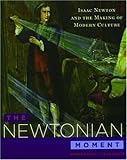
Mordechai Feingold. The Newtonian Moment: Isaac Newton and the Making of Modern Culture. New York and Oxford: Oxford University Press, 2004. xv + 218 pp. $23.95 (paper), ISBN 978-0-19-517734-3.
Noel Malcolm, Jacqueline Stedall. John Pell (1611-1685) and His Correspondence with Sir Charles Cavendish: The Mental World of an Early Modern Mathematician. New York: Oxford University Press, 2005. 657 pp. $299.50 (cloth), ISBN 978-0-19-856484-3.
John A. Taylor. British Empiricism and Early Political Economy: Gregory King's 1696 Estimates of National Wealth and Population. Westport and London: Praeger, 2005. x + 193 pp. $84.95 (cloth), ISBN 978-0-313-31306-6.
Reviewed by Roger Hainsworth (Honorary Research Fellow, Department of History, University of Adelaide, South Australia)
Published on H-Albion (June, 2006)
Philosophers and Measurers
I well recall the publication of Charles Webster's The Great Instauration thirty years ago.[1] (Like many others, no doubt, I had to haul my Oxford dictionary from the shelf to find out what an "instauration" was.) It opened a new world for me, as obviously it did even far more so for those who were prepared to labor in that particular vineyard on their own account. The vineyard being, of course, the extraordinary surge in scientific enquiry and scientific achievement during the seventeenth century, for if that century saw the birth of the modern world it also saw the birth and lusty growth of modern science. Early in the century loomed Galileo, Descartes, and Bacon. Later in the century followed an efflorescence of scientific enquiry in Western Europe, and especially in England where labored such luminaries as Robert Hooke, Robert Boyle, Edmund Halley, John Flamsteed, and Christopher Wren (until his king snatched him from mathematics and scientific enquiry and imprisoned him in architecture). Towering above all, of course, was Isaac Newton. Certainly Webster's book really deserves to be termed "seminal." During the past quarter of a century, book after book has addressed some aspect of this scientific revolution, as some have termed it. In addition to a plethora of articles and edited manuscripts, non-specialist readers interested in the history of science have been enlightened by a number of writers, Lisa Jardine prominent among them.[2] Now Noel Malcolm and Jacqueline Stedall have given us a volume comprising a biography of John Pell (by Malcolm), a study of Pell's mathematical enquiries (by Stedall), and an edition of Pell's correspondence with a patron who increasingly became his friend, Sir Charles Cavendish (Malcolm again). This last section amounts to 115 letters dating from July 1641 to September 1651. By the standards of many of his contemporary savants Pell is today an obscure figure, although he would be better known if he had not been compulsively bashful, indeed secretive, about acknowledging his role in various writings, even when these were only in manuscript. As for publishing, he was so reluctant to appear in print that when Malcolm remarks that it might seem surprising that Pell had not published any of his work during a period of six years in Breda, the academic reader will probably groan that it is not surprising at all but only to be expected. We have all known scholars with much to contribute who hang fire for years on the very edge of publishing--but never do! Judging from Malcolm's own account, Pell was a classic case.
His career can be briefly summarized. He was born at Southwick in Sussex in 1611 and entered Trinity College, Cambridge, in 1624, at the precocious age of thirteen. After Cambridge, he soon became a member of Samuel Hartlib's circle, and acquired a considerable reputation at home and abroad, although he had a long struggle to find a suitable patron to finance his research and maintain his growing family. Sir Charles Cavendish, younger brother of the Earl (subsequently Duke) of Newcastle, finally fulfilled this role until the Civil War ended this source of supply. Happily in 1643 he was chosen to be professor of mathematics in Amsterdam, a position from which in 1646 he removed, on the invitation of the Prince of Orange, to accept a professorship in a new institution in Breda, which he held until the threat of war between England and the Netherlands drove him back to England. During these years his former patron, Cavendish, was also living on the Continent, a royalist exile. From 1654 to 1658 Pell enjoyed the support of a more powerful patron: Oliver Cromwell. The Lord Protector appointed him his political agent (ambassador in all but name) to the Protestant cantons of Switzerland. He returned to London in 1659 where the Protector's death left him unemployed. During his later life he was supported by clerical patronage (Archbishop Seldon) and by Sir William, third Baron Brereton. Throughout he was very active in mathematical research but as niggardly a publisher as ever. He was an active and much respected member of the Royal Society and died in 1685. Malcolm's biography is so well done it is hard to imagine it will need to be done again for at least a generation. Pell was, as Malcolm demonstrates to perfection, in communication with or touched by the activities of virtually all the intellectually gifted Englishmen of his day and of many savants abroad. The biography is in itself a fascinating introduction to the world of enquiry in which Pell lived.
I am not qualified to comment on the section on Pell's mathematical manuscripts beyond saying that organizing them into some approximation to a logical, and indeed chronological sequence, must have been a nightmare. The subsequent analysis of the data, which allowed her to peer into the mind of a seventeenth-century mathematician, must have required all the skill that Jacqueline Stedall possesses in full measure.
The edition of the letters is simply first class, as indeed one would expect from the editor of Hobbes's correspondence.[3] They occupy 248 pages out of the 586 pages of text, almost exactly the length devoted to the biography. As one who has edited seventeenth-century letters for publication, including a volume by the same publisher, I can only envy in retrospect the space Malcolm was allocated for his letters and for his voluminous footnotes. The latter will be indispensable reading for researchers into the publishing and circulation of printed works and manuscripts on mathematics during this period, and the movements and activities of a host of scholars. They reflect the profound scholarship of the editor and, at a more mundane level, his skills as a detective. The letters enrich our understanding of a wide variety of topics, while the book as a whole is a major contribution to seventeenth-century studies.
John A. Taylor's British Empiricism and Early Political Economy consists of ninety-four pages of discussion of the work of Gregory King, his methodology and its significance, divided into eleven brief essays. They are followed by seventy-one pages of appendices devoted to an edition of King's autobiography; George Chalmer's manuscript life of King; King's analysis of the naval (that is, maritime) trade of England (1688); King's better known "Natural and Political Observations and Conclusions upon the State and Condition of England" (1696); and King's letter about Queen Anne's Bounty (1710). The essays concern primarily, as the subtitle suggests, King's estimates of England's wealth and population of 1696, and the degree to which his methods were effective, objective or (as some have alleged) too simple, too speculative, or too tailored to suit the concerns of the government he served. Taylor sets out to defend King, whose work he admires and whose methods he believes were remarkably effective considering the limitations and unreliability of the data on which he could draw. While studies of a statistical pioneer do not usually suggest a lively text, readers may find Taylor's short study surprisingly stimulating and enthralling. This is partly due to the enthusiasm Taylor brings to the topic and his very genuine admiration for Gregory King. Although far from uncritical, and well aware of the limitations of King's results, he cogently argues that King was hampered not so much by his methodology as by the data he had to work with. King had remarkably advanced mathematical tools available to him, tools developed and refined in late-seventeenth-century England. One of John Pell's rare publications, his heavily revised English edition of Branker's Introduction to Algebra (1668), had made that mathematical tool available to a much wider circle of scholars and amateur mathematicians. Nevertheless King eschewed such sophisticated branches of higher mathematics, preferring to employ the shop arithmetic he had learned from his father. He recognized that he could thus present his findings to Robert Harley and other ministers who were familiar with this simple arithmetic from their oversight of their personal accounts and of their estates. He was a government servant and had to work within the context of his employers' capacities. King's arithmetic was, however, well able to cope with the statistical tasks he had set himself and Taylor finds no evidence that King fudged his results to please his masters. Along the way Taylor is perhaps too critical of Francis Bacon, Lord Verulam, and Sir William Petty, accusing them of having very dubious priorities: first, personal advancement; second, personal wealth; and, reform based on scientific enquiry a long way third. Lord Verulam can look after himself; however, it is perhaps worth pointing out that the considerable literature about Petty has recently been reinforced by a splendid and thorough account of Petty's many achievements in pioneering demography and methods of framing government policy on the basis of statistics.[4]
Alexander Pope's best-known couplet is probably "Nature and Nature's laws lay hid at Night / God said, 'Let Newton be!' and all was Light." And it is the association with the name of Newton that makes it so. No scientist enjoyed the fame, indeed the glory, of Sir Isaac Newton, before or after, not even Archimedes, until Albert Einstein burst on the scene at the beginning of the twentieth century. Not even Einstein, however, despite his originality and despite the huge cosmological significance of the general theory of relativity, was able to match Newton's giant stature after his death in 1727. Many of his successors felt the despair which Brahms felt as he strove to compose symphonic works in the shadow cast by Beethoven's overpowering genius: there was nothing left to do which was really worth doing! The post-Newton scientists need not have despaired. Newton had transformed our view of the universe, but more than ever there were great questions to pose and to answer, more problems to discover and wrestle with, more glory to be won. Robert Clarke Maxwell in the nineteenth century and Einstein in the twentieth are Everests, but they loom in a long chain of lofty scientific achievement. Newton's huge legacy was a gateway to the stars and an empirical, scientific and mathematical methodology, which other brilliant and original thinkers would employ to explore the universe. As Edmund Halley wrote: "We now have the secret keys to unlock the obscure truth; and we know the immoveable order of the world." Much has been written about Newton, but there is always room for more. Feingold's book explores cogently and in detail just how overpowering, even Godlike, Newton's reputation was and how it came to be so, despite the hostility to his ideas by many foreign, and some homegrown, scientists and competitors. The Newtonian Moment was published to coincide with a magnificent exhibition devoted to Newton, held at the New York Public Library during the northern winter of 2004-05. This book is not a catalogue raisonée of the exhibition, although it draws richly on its exhibits for its two hundred illustrations, many of them in color. Rather it is a companion volume by the exhibition's curator, a professor of history at the California University of Technology. His book demonstrates why the Library subsequently deemed his appointment an inspired choice. Feingold has mastered his subject, which is not simply Newtonian physics and its impact on physics as a science, but its impact on the culture of Western Europe, then and throughout succeeding centuries. Newton's revolutionary Principia was written for fellow savants--and not even all of them could understand its abstruse language and taxing mathematics. Feingold examines the impact of the writers who made its ideas more accessible to thousands during the eighteenth century and later; he devotes a whole chapter to the proselytizing labors of Voltaire. Initially cynical and sceptical, Voltaire became a total convert to Newton. Although he never met Newton he was privileged to attend the great man's funeral and was awestruck to discover that two dukes, three earls, and the Lord Chancellor were the pallbearers. It was inconceivable that a commoner could be so honored in France, or have been buried in state in a national monument equivalent to Westminster Abbey. (Newton was the first scientist to be entombed there.) Voltaire's encomium was brief but to the point: "Newton lived honored by his compatriots and was buried like a king who had done well by his subjects."
Notes
[1]. Charles Webster, The Great Instauration: Science, Medicine and Reform 1626-1660 (London: Duckworth, 1975).
[2]. Lisa Jardine, Ingenious Pursuits (New York: Nan A. Talese, 1996); and The Curious Life of Robert Hooke (New York: Harper Collins, 2004). See, Lesley B. Cormack, "Review of Lisa Jardine, The Curious Life of Robert Hooke: The Man Who Measured London," H-Albion, H-Net Reviews, January, 2005 <http://www.h-net.org/reviews/showrev.cgi?path=226631113599329>.
[3]. Noel Malcolm, Hobbes: the Correspondence, vol. 1. 1622-1659; vol. 2, 1660-1679, (Oxford: Clarendon Press, 1994).
[4]. Sabine Reungoat, William Petty, Observateur des Isles Britanniques (Paris: Institut Nationale d'etudes demographiques, 2004). Petty's priorities may have been more self-interested than those of King, the discreet public servant. That is arguable, but both men were giants in their own spheres.
If there is additional discussion of this review, you may access it through the network, at: https://networks.h-net.org/h-albion.
Citation:
Roger Hainsworth. Review of Feingold, Mordechai, The Newtonian Moment: Isaac Newton and the Making of Modern Culture and
Malcolm, Noel; Stedall, Jacqueline, John Pell (1611-1685) and His Correspondence with Sir Charles Cavendish: The Mental World of an Early Modern Mathematician and
Taylor, John A., British Empiricism and Early Political Economy: Gregory King's 1696 Estimates of National Wealth and Population.
H-Albion, H-Net Reviews.
June, 2006.
URL: http://www.h-net.org/reviews/showrev.php?id=11896
Copyright © 2006 by H-Net, all rights reserved. H-Net permits the redistribution and reprinting of this work for nonprofit, educational purposes, with full and accurate attribution to the author, web location, date of publication, originating list, and H-Net: Humanities & Social Sciences Online. For any other proposed use, contact the Reviews editorial staff at hbooks@mail.h-net.org.

