



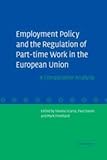
Silvana Sciarra, Paul Davies, Mark Freedland, eds. Employment Policy and the Regulation of Part-time Work in the European Union: A Comparative Analysis. Cambridge: Cambridge University Press, 2004. xviii + 368 pp. $95.00 (cloth), ISBN 978-0-521-84002-6.
Reviewed by Don Jones (Department of History, University of Central Arkansas)
Published on H-German (May, 2006)
The Evolution of Employment Policy in the European Union
Since the 1980s, part-time work has become an issue on the national level, as well as throughout the entirety of the European Union (EU). The most recent figures provided by the authors are from the year 1996 and reveal why the topic has become a "hot button" issue. In 1996, the percentage of part-time workers within the fifteen-member European Union stood at 16 percent. The Netherlands recorded the highest percentage at 38 percent and Greece the lowest at 5 percent.
Consequently, the authors undertook a comprehensive joint research project that delves into the origin and evolution of EU policy. The authors pursued a number of objectives, but one of the more interesting sought to uncover the connection between employment laws and policies generated by the EU and those enacted within the member states. The authors employed two methods. The first was to conduct an in-depth review of part-time employment policy in seven individual EU member nations. Because of certain constraints, the review was limited to France, Germany, Italy, the Netherlands, Spain, Sweden and the United Kingdom. Next, the data gleaned from the national studies was analyzed, and the results reported in three chapters that might be called the heart of the book.
Several of the revelations are not surprising. For example, the explosion of part-time workers in the workforce reflects to a large degree married women and/or working mothers returning after a period of absence. In addition, part-time workers most often fall into the category of lower-paid workers and have little chance of advancement. Part-time work can no longer be described as "atypical" because it has entered the mainstream of labor law vocabulary. Moreover, since the early 1980s, part-time work has become progressively "demarginalized." Simply put, in the past, part-time work was most often relegated to the fringes of employment policies. Now however, part-time work has become a central feature of employment policy within the EU.
Another finding of this impressive research project suggests that comparatively, the seven national states developed similar policies in confronting the part-time work problem. Although there were "significant divergences" among the policies adopted by the seven, there were "significant parallels" as well. Furthermore, the comparison shows that each state developed its own response independently of the EU and each other, yet reflects a commonality. For example, comparisons indicate that the seven showed little interest, for varying reasons, in regulating part-time work in the 1970s. However, by the early 1980s, most had recognized the problem and the need for enacting regulatory rules.
Using the outcomes of the national studies, the authors recommend that future policy regarding part-time work should be guided by three sets of objectives. First, policy should guarantee the quality of life for workers; second, it should increase employment rates by actively encouraging the unemployed to return to the work force. At the same time, current workers must be convinced to remain in the work force on a part-time basis. Finally, such policy should create a program to assist businesses and manufacturers in matching the supply of workers to the demands of employers
A noteworthy conclusion rejects the assumption that the EU has been "pro-active" in the area of worker protection. This revelation contradicts the conventional view of an aggressive bureaucracy in Brussels. The study argues persuasively that often employment laws (the "Part-time Work Directive" of December 1997 regarding employment and part-time work is cited specifically) are enacted nationally, then linked to EU goals. Later, these "soft law mechanisms" are adopted and applied to all members. The authors view the aforementioned as a positive development and suggest that future regulations follow this model.
This complex but readable book written by experts in the field of labor/employment law may occasionally prove challenging for those unfamiliar with the inner workings of labor law and employment policy. Nonetheless, readers in a variety of disciplines who wish to understand how policies originate and are implemented within the framework of the EU will find the book enlightening.
If there is additional discussion of this review, you may access it through the network, at: https://networks.h-net.org/h-german.
Citation:
Don Jones. Review of Sciarra, Silvana; Davies, Paul; Freedland, Mark, eds., Employment Policy and the Regulation of Part-time Work in the European Union: A Comparative Analysis.
H-German, H-Net Reviews.
May, 2006.
URL: http://www.h-net.org/reviews/showrev.php?id=11801
Copyright © 2006 by H-Net, all rights reserved. H-Net permits the redistribution and reprinting of this work for nonprofit, educational purposes, with full and accurate attribution to the author, web location, date of publication, originating list, and H-Net: Humanities & Social Sciences Online. For any other proposed use, contact the Reviews editorial staff at hbooks@mail.h-net.org.

