



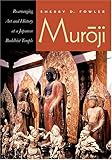
Sherry D. Fowler. Murōji: Rearranging Art and History at a Japanese Buddhist Temple. Honolulu: University of Hawaii Press, 2005. xiv + 293 pp. $50.00 (cloth), ISBN 978-0-8248-2792-2.
Reviewed by Yui Suzuki (University of Maryland, College Park)
Published on H-Buddhism (May, 2006)
Based on the author's 1994 dissertation, this book is a study of the remote mountain temple complex, Mur?ji, in modern day Nara prefecture. Aside from the fact that the temple is located in a breathtakingly beautiful mountain environment, Mur?ji has always been a topic of great importance to Japanese art history due to the temple's collection of some of the finest examples of ninth- and tenth-century Buddhist wood sculptures, many of which have been granted Important Cultural Property and National Treasure status. In the book, Sherry Fowler expands her focus on the origins of the Heian period images to encompass a multiplicity of issues pertaining to Japanese religious, artistic and cultural practices found within the sacred microcosm of Mur?ji. In each of the five chapters, the author examines the factors, motivations and complex processes that have contributed to the making of Mur?ji, arguing that it is a site marked by accretions of variegated and often contesting meanings, which are thoroughly analyzed in each chapter. It is particularly successful in illustrating how a sacred site is produced, recognized and maintained.
The first chapter sets the tone of the entire book by discussing geographical features, local legends and practices which coalesced there and made the area ideal for establishing a mountain temple complex. The temple was built in a deep mountainous terrain with abundant water sources which have long been regarded as a sacred dwelling place of local water deities, mainly the "Dragon King" (Ry??) believed to reside in the many caves that are found in the region. Consequentially, the Dragon King was revered at the Mur?ji site for his rain-making abilities, and prayers and rituals were frequently offered by experienced ascetic practitioners to entice the dragon to bestow rain.
Another factor contributing to the numinous nature of the Mur? region was the belief from early times of Buddhist relics buried and hidden in the mountains. Relics were commonly associated with dragons and jewels (p. 21) and according to one legend, the Shingon master K?kai (774-835) had brought back relics from China which he buried on Mt. Mur?. Though no longer frequently practiced at the temple today, relic veneration was of great importance to Mur?ji throughout the medieval period and undoubtedly enhanced the sacred power of the site. Of particular interest is Fowler's discussion on momit?, small wooden st?pas with rice grains inserted inside. Over thirty-five thousand of these wooden st?pas, dated to the fifteenth century, were discovered beneath the main altar of the Maitreya Hall during the 1953 repairs. They were closely linked to the rituals for controlling rain for the purposes of securing bountiful harvests.
Chapter 2 explores the temple's complicated history (or histories) by focusing on its shifting religious affiliations since its founding in the mid-eighth century, reminding us that politics and human intentions have as much influence in the construction of a sacred site as natural circumstances. Though Mur?ji was established by two K?fukuji monks, Kengy? (714-793) and Sh?en (769?-835), as a sub-temple (betsuin) of K?fukuji, during its early history the temple attracted religious figures from various schools such as Hoss?, Tendai, and Shingon. It was the constant flux of these monks from different religious affiliations that contributed to the "plurality of practice" (p. 2). The monks came to reside at Mur?ji to train in mountain asceticism and esoteric Buddhism, which was also the chief reason why it attracted many Shingon practitioners in the later periods.
The fourteenth century was the time of a key transitional phase for the temple, as K?fukuji began losing some of its control over its sub-temples and Shingon Buddhism came to play a much greater role at Mur?ji. For the next few centuries, Shingon factions came to exert considerable influence over the temple, culminating in a dispute between K?fukuji and T?daiji Sonsh?in, over who would succeed as head of Mur?ji. Though the 1658 ruling granted K?fukuji the right to control Mur?ji, this decision was overturned in 1694, and in 1700 Mur?ji became a sub-temple of Gokokuji of Edo, a Shingon Buzan branch temple. Through an analysis of the eighteenth-century temple origin tale, Mur?ji engi, Fowler demonstrates how contesting histories of Mur?ji were fashioned by different religious factions (represented by K?fukuji and Shingon) to win control over the site. The frequent appearance of K?kai in many of the post-thirteenth-century historical documents on Mur?ji, for example, was due to the effective tactics used by Shingon factions to claim legitimacy over Mur?ji.
The next chapter continues to explore this idea of shifting sectarian affiliations by focusing on four central buildings at Mur?ji--the pagoda, the Maitreya Hall (Mirokud?), the Main Hall and the Founder's Portrait Hall (Mied?)--as well as the icons that are enshrined inside them. While the Maitreya Hall built in the thirteenth century and the hall's principal icon--Maitreya Bodhisattva (Miroku Bosatsu)--was indicative of K?fukuji's close ties to Mur?ji, the Founder's Portrait Hall dedicated to K?kai and the Abhisheka Hall (Kanj?d?, also known as the Main Hall) demonstrated "practical endeavors to visibly construct Shingon presence at Mur?ji" (p. 123). Fowler's detailed account describing the restoration project of the five-story pagoda that was severely damaged in a 1998 typhoon is particularly fascinating. The pagoda enshrines secret images (hibutsu) of Gochi Nyorai (Five Wisdom Buddhas) which were most likely installed in the late eighteenth century, around the time Shingon factions were gaining increasing control over Mur?ji.
Chapters 4 and 5 best reflect Fowler's central ideas of the fluidity and plurality of practice at Mur?ji, and how they are concretely manifested in Mur?ji's material culture, through a careful discussion of the Golden Hall (along with its main icons), which was one of the earliest buildings to be constructed at the site. The building is dated to the mid- to late ninth century, but underwent substantial alterations over the centuries, including changes in its appellation from "Yakushi Hall" to "Main Hall" to "Golden Hall" which simultaneously reflected changes in Mur?ji's sectarian affiliations that Fowler discusses in chapters 2 and 3.
Along with these external changes, the main icons housed inside also went through shifts in their identities and their display configuration at the altar. Five wood statues are displayed in the inner sanctuary altar and are currently identified, from right to left, as Jiz? Bosatsu, Yakushi Nyorai, Shaka Nyorai, Monju Bosatsu and J?ichimen Kannon Bosatsu. Fowler relies on a rigorous stylistic analysis to demonstrate that this present pentad was not the original configuration. Fowler's analysis reveals the surprising fact that the central Shaka statue in the middle of the pentad was in fact initially a Yakushi Buddha enshrined in the Yakushi Hall as its principal icon. Interestingly, a Heian Yakushi is more frequently displayed on the altar by itself or as a triad flanked by its bodhisattva attendants Nikk? and Gakk?, rather than by Jiz? and J?ichimen Kannon. Fowler aptly demonstrates that this rare triad configuration of Jiz?, Yakushi and Kannon was devised in the Heian period following Chinese and Korean practices of combining and worshiping the three deities together for their triply reinforced powers to facilitate childbirth and ensure healing.
The notion of fluidity is also demonstrated by exploring the reasons temple icons are often subject to shifting identities and other changes. Fowler explains that the original triad (Jiz?, Yakushi and J?ichimen Kannon) was later modified to form a pentad, by adding two more images (another Yakushi and Monju) and then shifting the identity of the original Yakushi to that of Shaka. This new grouping of J?ichimen Kannon, Monju, Shaka, Yakushi and Jiz?, was deliberately re-assembled to concretely represent the medieval honji suijaku belief where Buddhist deities as "original ground" (honji) were believed to have alternative incarnations as native gods (kami) or "traces" (suijaku).
At Mur?ji, the five Buddhas were matched to correspond to the five main deities of Kasuga Shrine, which was in turn located adjacent to K?fukuji and comprised a vast shrine-temple complex throughout medieval times. It is also a powerful reminder that temple icons can often be manipulated to accommodate the political agendas of those in control. Fowler contends that this pentad grouping was also K?fukuji's "final effort to assert Kasuga/K?fukuji heritage" in the second half of the seventeenth century (p. 196). Even after the Shingon faction succeeded in taking control over the temple at the end of the seventeenth century, this pentad configuration was kept intact and preserved until the present.
Some critics may question the appropriateness of focusing an entire book on one specific site. As the author herself acknowledges, within the last decade there has been a number of studies on specific sites or regions by art historians--Zenk?ji, Hiraizumi, and more recently, Chikubushima.[1] Nevertheless, an in-depth study of Mur?ji is a welcome contribution for a number of reasons. As noted earlier, the temple has impressive architecture and Buddhist images from the Heian period. Mur?ji is also unique in ways not taken up in past art historical studies on sacred sites. Unlike Zenk?ji, it did not give rise to a powerful icon that was replicated over and over and spread throughout the country, nor was its artistic production defined by the patronage of local political rulers, as in Hiraizumi (?sh? Fujiwara) and Chikubushima (Toyotomi Hideyoshi). What was so incredibly attractive about Mur?ji was its richly forested locale that inspired local beliefs in water deities and attracted religious practitioners who wished to procure some of this numinous power by undergoing ascetic and esoteric practices there.
In sum, this volume is a well-prepared and clearly articulated study of a renowned mountain temple with a long history, drawing on a large body of both textual and visual materials to offer an insightful case-study of how a sacred site is created and developed, and how its sanctity is perpetuated by various legends, practices, religious affiliations and political motivations and embodied in its architectural structures and icons. I highly recommend this book to both undergraduates and graduates as well as those in the disciplines of Asian art history, religious studies and history.
Note
[1]. Donald F. McCallum, Zenk?ji and Its Icon (Princeton: Princeton University Press, 1994); Mimi Hall Yiengpruksawan, Hiraizumi: Buddhist Art and Regional Politics in Twelfth-Century Japan (Cambridge: Harvard University Press, 1998); and Andrew M. Watsky, Chikubushima: Deploying the Sacred Arts in Momoyama Japan (Seattle and London: University of Washington Press, 2004).
If there is additional discussion of this review, you may access it through the network, at: https://networks.h-net.org/h-buddhism.
Citation:
Yui Suzuki. Review of Fowler, Sherry D., Murōji: Rearranging Art and History at a Japanese Buddhist Temple.
H-Buddhism, H-Net Reviews.
May, 2006.
URL: http://www.h-net.org/reviews/showrev.php?id=11708
Copyright © 2006 by H-Net, all rights reserved. H-Net permits the redistribution and reprinting of this work for nonprofit, educational purposes, with full and accurate attribution to the author, web location, date of publication, originating list, and H-Net: Humanities & Social Sciences Online. For any other proposed use, contact the Reviews editorial staff at hbooks@mail.h-net.org.

