



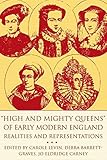
Carole Levin Carney, Debra Barrett-Graves, Jo Eldridge, eds. "High and Mighty Queens" of Early Modern England: Realities and Representations. New York: Palgrave Macmillan, 2003. xii + 271 pp. $65.00 (cloth), ISBN 978-1-4039-6088-7.
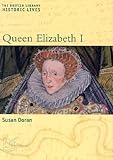
Susan Doran. Queen Elizabeth I. New York: New York University Press, 2003. 144 pp. $21.95 (cloth), ISBN 978-0-8147-1957-2.
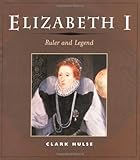
Clark Hulse. Elizabeth I: Ruler and Legend. Urbana and Chicago: University of Illinois Press, 2003. vii + 158 pp. $25.00 (paper), ISBN 978-0-252-07161-4.
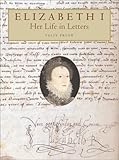
Felix Pryor. Elizabeth I: Her Life in Letters. Berkeley: University of California Press, 2003. 144 pp. $34.95 (cloth), ISBN 978-0-520-24106-0.
Reviewed by Claire Schen (Department of History, State University of New York at Buffalo)
Published on H-Albion (October, 2005)
Elizabeth I, Real Woman and Legendary Queen
Kirilka Stavreva, one of the contributors to "High and Mighty Queens", edited by Carole Levin, Debra Barrett-Graves, and Jo Eldridge Carney, observes that "witches and royalty were a sure thrill for the theater-going crowds of Jacobean London" (p. 151). Exhibitions, films, scholarship, undergraduate classes, kitsch like Churchill's candy tins adorned by Elizabeth, and the peculiar fascination of many in the United States with the monarchy suggests that the thrill is not gone. When I began my teaching career I was reluctant to focus on Elizabeth I, a reflection of my training as a social historian and my predilection to show students something "new." Within a few years, however, particularly as the film Elizabeth (Shekhar Kapur, 1998) took dramatic license, I revisited this decision. As these books demonstrate, one can teach what is familiar about Elizabeth I to many an educated reader and cinema-goer, yet still add to the understanding of and the scholarship about the queen and her time. Although the books are different in their scope and aims--with a set of scholarly essays, an exhibition catalog, a well-illustrated and selective collection of letters, and a biography--they share a concern with balancing the "real" queen and her legend, and assessing her impact on her own society and on successive rulers and generations. As Dror Wahrman has recently shown, her example resonated in gender and politics long after her death.[1]
"High and Mighty Queens", unlike the other books here under review, is a scholarly, specialized collection of essays by established and new scholars that goes beyond the subject of Queen Elizabeth I. In the introduction, the editors set out themes that are echoed not only in the essays, but in the books that follow. They label the sixteenth century the "fault line" (p. 1) between the medieval and the modern and highlight sixteenth-century debate over the legitimacy of female rule and the nature of womankind. Part 1 covers the nature of Renaissance queens. Timothy Elston tests Judith Bennett's argument that women's changing experiences did not signify transformation of their status. Although Catherine of Aragon supported humanism and the humanist education of Mary, the purpose of that education was preparation for marriage, not the rule of England. Juan Luis Vives, "a man of his season" (p. 23), offered a "reinforcement of patriarchy" (p. 22). Judith Richards recaps the negative historiography on Mary Tudor before reappraising her role as a Renaissance queen and the accomplishments of her mother. The hallmark of Mary's reign, and the legacy of her humanist education, was that she introduced humanist Catholic reform, "not simply conservative" Catholicism (p. 39). Louis Roper identifies how Anna of Denmark became an "autonomous political figure" (p. 47), especially through support of George Villiers and for the colonization of Virginia. Karen Nelson calls Elizabeth of Bohemia and Henrietta-Maria "successful politicians" (p. 73) who relied on family alliances and experienced difficulties because of their religious difference, although Henrietta-Maria ignored local custom and provoked the expulsion of her priests and much of her household.
Part 2 considers living queens, but branches further into literary images of ruling or at least ennobled women. Matthew Hansen analyzes the comparisons made between Catherine of Aragon and the famously patient Griselda. By contrast, Susan Dunn-Hensley concentrates on the preoccupation with unruly women noted by social historians, with the sexually transgressive Mary Stuart as historical example and Shakespeare's Gertrude and Cymbeline's queen as literary ones. James's ascension paralleled the death of literary queens and the restoration of proper patriarchal order. Carney and Sid Ray each take up the problem of female authority. Carney notes that Amazons might be portrayed positively by dramatists, but were more often treated as a "violation of the natural order" (p. 117). Ray, on the other hand, noted Shakespeare's "subtle undermining" (p. 134) of early modern political and social orthodoxy in portrayals of Desdemona (Othello) and Miranda (The Tempest). Stavreva suggests that foreign queens in drama before the 1590s tended to break apart society, while the Jacobean ones used witch-speak to hold it together.
The last part, "Cultural Anxieties and Historical Echoes of Renaissance Queens," is the most closely linked to the other books. These essayists most skillfully and fruitfully bridge literary and historical studies, a noticeable divide earlier in the collection. These essays expand on key problems of the nature of women and female rule and the "afterlife" of historical figures in the nineteenth and twentieth centuries.
These writers also appeal to an audience broader than the one that attends a tightly focused conference panel and do not assume highly specialized knowledge of the texts and authors under discussion, a problem in some of the earlier essays. Levin's contribution compares Katherine Parr and the "shrew," arguing that Katherine's strong will and sense of religious independence was "tamed" by an orchestrated threat of arrest. The threat of force plays in the comedy of the taming of Kate, but Levin emphasizes the un-comic history of wife-beating gleaned from prescriptive sources. The remaining essays move between contemporary events and persons and their later imagining in modern literature and film. Joy Currie highlights the self-portrayal of Mary Queen of Scots as a pious and legitimate monarch, before turning to Wordsworth's fascination with the outcast, tragic figure. Georgianna Ziegler studies Victoria and Lord Melbourne's exchanges about Catherine of Aragon, whom Victoria considered "'ill-used'" by Henry (p. 203). While Victorians looked back to Elizabeth, Ziegler argues, Victoria herself became Catherine and thereby ruled "without compromising what were considered the traits of her sex" (p. 206). Elaine Kruse notes that the Black Legend of Catherine de Medici, "evil incarnate," was regurgitated whenever a woman was in power. Her interest in the "gender codes of the period in which the myth is revived" is one shared by other authors (p. 223). Retha Warnicke plots the transformation of portrayals of Anne Boleyn: from "politically innocent" in nineteenth-century plays to "ambitious plotter" in twentieth-century drama.
The primary audience for the remaining books is not a specialist one. Felix Pryor's Elizabeth I: Her Life in Letters can accompany Susan Doran's biography. His collection is "an exercise in kleptomania," a "treasure-cabinet," or a "market stall" (p. 6). Out of the queen's "two selves, the public self and the private" came manuscripts in her hand and written by others that she signed; he includes examples of each (p. 7). The treasure-cabinet is arranged so that the left page shows a photographic copy of each letter and the right offers an analysis of the content and the letter's context, with transcriptions of excerpts of the texts. The "Notes and References" at the end of the book provide the sources of translations and additional readings or sources. In the "Further Reading" section it is surprising not to see works by Levin, Doran (besides the exhibition catalog listed), or Susan Frye. His lively description of writing utensils, paper production, and handwriting inspires a fresh appreciation for our archival sources. He reproduces a series of her signatures across her reign, one of which adorns his cover and that of Doran's biography. As both authors make clear, the stock of images of Elizabeth include the signs of her private and public selves, like that iconic "Elizabeth R."
Susan Doran renders Elizabeth's life and rule in vivid hues. Queen Elizabeth I, as part of the British Library Historic Lives series, keeps company with political (Winston Churchill, Oliver Cromwell), naval (Horatio Lord Nelson), and piratical (Francis Drake) subjects. Beautifully reproduced portraits, maps, engravings, and manuscript sources are integrated into her text, arranged in chronological chapters. The later questions about women's rule are predated by questions about Elizabeth's very legitimacy. Doran describes Elizabeth's personal relationships without succumbing to twentieth-century pop psychology, for instance noting that Elizabeth was not yet three when her mother died and her nurse remained the same. In adulthood Elizabeth rarely mentioned her mother, perhaps being relatively unaffected by her death, although she adopted her mother's motto for her own. Pryor includes Elizabeth's first surviving letter, written to her stepmother Queen Katherine (Parr) whom she would join at court while Henry was fighting in France. Pryor conjectures that it is "perhaps fitting that her first experience of court life should have been during a woman's rule" (p. 17). The "fault line" between early modern and modern remains visible here: as we read about her early life and education we sense the strangeness of the past and of the royal family.
Doran then focuses on the "challenge" of Mary's reign, seen most clearly in matters of religion and concerns about sedition. As she had done in distinguishing between evangelical and Protestant, Doran guides the reader through complex topics. She explains Nicodemism to show how Elizabeth avoided converting to Catholicism or provoking a rupture with her sister. Elizabeth similarly avoided implication in Wyatt's plot by the absence of documented communication. "If, as seems likely, she had been in contact with the conspirators," Doran writes, "she covered her tracks well" (p. 41). Pryor uses Elizabeth's letter to Mary at this critical moment to highlight the danger and her skills: it "is all about timing; or rather prevarication and mistiming, arts for which the mature Queen was to become notorious" (p. 25). The reproduction, with lines drawn through blank space to prevent forged additions, illustrates Elizabeth's caution. By 1556, Doran argues, the uncertainty of the succession helped Elizabeth to remain free despite the Dudley conspiracy.
Doran's next chapters work nearly the same ground (1558 to 1565 and 1569), but divide "regime" and "marriage." Doran remarks on John Dee's service in choosing a propitious coronation date and on Elizabeth's clearing out of past councilors and members of household. The pageants of 1559 "implicitly represented the refutation of the view recently expressed by the Scottish Calvinist John Knox that women had no right to rule, and explicitly coupled the queen 'with the Gospel and verity of God's holy word', in other words the Protestant religion" (p. 54). The Knox letter in Pryor's volume makes oblique mention of the Monstrous Blast; Knox warns Elizabeth that Mary Queen of Scots seeks a meeting with her and desires to suppress his offending book. Religion tested the woman who was "Supreme Governor" rather than "Head" of the church. Diplomacy and military actions provided her next challenge, also complicated by Knox's presence in Scotland. The military experience in Scotland shaped Elizabeth's refusal to send troops to Europe before 1585, despite William the Silent's letter asking for action against a "common enemy" (Pryor, p. 79).
Elizabeth's unmarried status shapes her legend. In her fourth chapter, Doran lists the real suitors and confronts the "Robert Dudley problem," exacerbated by film romances. Great risks to Elizabeth's reputation were bound up in this relationship since all women's honor depended upon sexual purity, her mother was Anne Boleyn, and sexual slander had already been uttered in connection with the peculiar relationship with Thomas Seymour. Pryor shows us the Earl of Leicester's "Last lettar" (p. 101), found in a casket by her bed when she died. Her courtships and her advisors' pressure on her to marry are brought to life in Pryor's selections: Cecil's plea for her to marry, her 1563 response to Parliament on the subject of marriage and her loathing to provide a potential rival to her own rule by naming a successor, the speculation that Ivan the Terrible had proposed to her through an intermediary, and her correspondence with the Duke of Anjou in the late 1570s. Elizabeth's last wooing with the Duke of Anjou, her "frog," writes Doran, divided her council and showed her "curiously out of tune with public opinion" (p. 95). Pryor's postscript, Raleigh's undated poem, possibly written when he was in disgrace after his 1592 marriage, highlights his status as the last surviving favorite.
Speculation about courtships and favorites, however, does not distract either author from the plots and religious troubles that marked her later reign. Mary Stuart and plots and rebellions between 1568 and 1588 shaped Elizabeth's actions and policies. The Northern Rebellion and the Ridolfi Plot helped to convince Elizabeth that Mary undermined her security. The conspiracies also led to harsher measures against Catholics and a defensive alliance with France against Spain. Doran remarks, Catholics "were gradually frozen out of political life"(p. 84). (Richard Young's letter to Elizabeth about Catholics he had uncovered appears in Pryor's collection.) After the mid-1580s Throckmorton and Parry Plots, the Bond of Association was instituted and pressure to execute Mary mounted. Despite the repeated threats, only a later plot would help Elizabeth overcome her "horror at the prospect of authorising the public execution of a kinswoman and anointed queen" (p. 103). Alongside these anti-Catholic measures and fears, Doran analyzes Elizabeth's religious conservatism and the development of the "alienated godly people who were nicknamed 'puritans' by their enemies" (p. 109). Pryor includes a few documents relating to the Ridolfi Plot: the warrant permitting the torture of Norfolk's two servants "suspected of complicity" (p. 61); Thomas Howard, Duke of Norfolk's letter, "wrytten by the wofull hand off a dead mane" (p. 63); and Elizabeth's staying of the execution in April, before the eventual June execution. Documents covering the murder of David Riccio, the implication of Mary in her husband's murder, and her imprisonment and sentence in England shed light on the festering problem posed by the Scottish queen. A long one from Mary to Elizabeth in November 1582, Pryor argues, is "quite consciously written with posterity in mind, and projects into the future an image of Mary as a suffering queen held captive by the cousin she trusted, a martyr for the true faith" (p. 81). As Currie demonstrated, posterity absorbed that self-portrayal.
Doran finishes with triumph, the defeat of the Armada, and "declines." Before discussing the zenith of the victory over the Armada, however, Doran analyzes the ways that Elizabeth used propaganda, paintings, progresses (seen in person and in pamphlets), speeches, and a sense of theatricality to shape her public image. The awesome queen also had a gift for putting people at ease, leading Doran to compare her briefly and illustratively to Diana, the late princess of Wales, for the ability to "relate directly to adoring members of a crowd" (p. 112). After 1578, Doran argues, Elizabeth's virginity and her identification with chaste classical goddesses became increasingly central to representations of the queen. The preoccupation with the succession weakened her reputation late in her reign.
Doran's conclusion juxtaposes today's critical and skeptical historiography and popular approval of her legendary reputation. "It is becoming increasingly fashionable," she contends, "to marginalise the queen in accounts of her reign and instead to give credit to William Cecil for its most significant outcomes such as the Elizabethan Church settlement." Doran instead sees a "charismatic and hands-on ruler, who proved a steady pair of hands during a period of political and religious ferment and helped save England from the religious civil wars that plagued her neighbours" (p. 137). The common thread between Doran's study and "High and Mighty Queens" is the agency of queens and royal women, although Doran and Levin may not agree on the importance of the analytical category of gender itself to the sixteenth- and twentieth-century interpretations and representations of her rule.
Hulse's Elizabeth I: Ruler and Legend is the companion to the exhibitions organized by the Newberry Library and the American Library Association for the four-hundredth anniversary of the death of Elizabeth, for which Levin was senior historical consultant. Organized thematically and chronologically, it includes a chronology of Elizabeth's life and reign and a tree of the Tudor royal house. The "Suggested Reading" is a more inclusive list than that provided by Pryor. As with the other books intended for a wider and non-specialist audience, the illustrations are lavish and include diverse visual materials and even music. Hulse includes film in assessing the "Ruler and Legend," as many modern people know Elizabeth anew from film and television characterizations. The portrayal of the aging Elizabeth by Quentin Crisp in Orlando (directed by Sally Potter, 1992) should be added. In addition to the main text, sidebar discussions by Carla Zecher and Jonathan Walker illuminate facets of Elizabeth's life and rule and of the Elizabethan era.
Hulse begins with the description of Elizabeth's birth in Henry VIII, when the "reality of Elizabeth and her reign ... [was] here already completely replaced by the Elizabeth of legend" (p. 5). "But always, we must remember," Hulse argues, "there is one thing more interesting than the clear outline of the legend, and that is the shadowy complexity of the ruler herself." Without ignoring that legend, Hulse attempts to show more of the woman who ruled, but who is, as Doran lamented in her conclusion, often overshadowed by her myth. In "Princess," Hulse develops the web of royal connections in Elizabeth's early life and the complexity of her relationships with her relatives, more so than in the letters selected by Pryor. Further, the matter of Elizabeth's "personal religious beliefs" are deemed unknowable, yet broached, before Hulse states that Elizabeth "belonged to the religion of monarchy" (p. 54). The matter of her virginity, and what virginity is, falls under the direct question, "Did Elizabeth have sex?" (p. 78).
The preceding question exemplifies another pedagogical purpose, to show that "both the good and the bad of her life and time speak to the present, because they resonate with our abiding concerns" about the nature of leadership and of "the tolerable limits of debate and dissension" in a country. At the same time, Hulse acknowledges the "differences of time and place" (p. 3). The question of Elizabeth's sexual behavior might be the question on many minds, but perhaps it is not the right question to ask of the past. As Hulse points out, Elizabethans did ponder her actions, but those allegations floated in the midst of seditious speech and sprang from the common practice of ascribing non-normative sexual practices to one's political and religious enemies in early modern Europe. Modern categorizations and questions may sidetrack us from the remembrance that the "past is a foreign country; they do things differently there."[2]
On the matter of Elizabeth's legitimacy, Hulse describes the elaborate coronation activities intended to bolster her right to rule, as a woman and as the daughter of Henry VIII and Anne Boleyn. We have seen the crafting of legitimacy in the other books under review, but Hulse pays more attention to the problem of gender and John Knox's attack on female rule. The challenge to Elizabeth from Mary Queen of Scots is mentioned briefly in connection with Elizabeth's ascension, but further developed in "Sedition and Succession." A sidebar on "How to Survive in Tudor England" runs through a list of sixteenth-century casualties of royal fears about political and religious legitimacy. An Essex woman was hanged in 1577 "simply for claiming that Elizabeth was illegitimate and that Mary Queen of Scots should rule in England" (p. 35). The claims repeated fundamental challenges to Elizabeth's occupation of the throne, however odd it may seem to some modern audiences that "simply" dissenting speech brought death. This example contradicts the later chapter, where Hulse elucidates why Mary was imprisoned and why Elizabeth's councilors urged aggressive action against sedition.
The scholarly collection of essays raised twin themes, of the early modern period as a fault line between medieval and modern and of the problem of the legitimacy of female rule and the nature of womankind. The resonance and dissonance between the past and the present raised by Hulse's exhibition catalog indicate the instability of that zone, and its importance for a number of historical topics, including Elizabeth I. Pryor's retelling of a BBC reporter's discovery of an Elizabethan shilling in a dish of coins in a bazaar in Peshawar evokes the possible connections. For teaching, whether that takes place in classrooms, museums, or popular literature and drama, the books are valuable contributions. As these readings exemplify, Elizabeth was a woman of her time who has remained one of our own, although what we draw from her person and her legend changes over time. While these books tread familiar ground and crisscross each other--and it would be a fault if they did not do so--they nevertheless provoke further debate about the place of this remarkable woman and her kin and fellow-travelers in history. They also inspire questions about how historians approach the past and interpret it for an audience composed not simply of other scholars.
Notes
[1]. Dror Wahrman, The Making of the Modern Self: Identity and Culture in Eighteenth-Century England (New Haven and London: Yale University Press, 2004), pp. 16-17, 63, 81.
[2]. L. P. Hartley quoted in David Lowenthal, The Past is a Foreign Country (Cambridge: Cambridge University Press, 1985), p. xvi.
If there is additional discussion of this review, you may access it through the network, at: https://networks.h-net.org/h-albion.
Citation:
Claire Schen. Review of Carney, Carole Levin; Barrett-Graves, Debra; Eldridge, Jo, eds., "High and Mighty Queens" of Early Modern England: Realities and Representations and
Doran, Susan, Queen Elizabeth I and
Hulse, Clark, Elizabeth I: Ruler and Legend and
Pryor, Felix, Elizabeth I: Her Life in Letters.
H-Albion, H-Net Reviews.
October, 2005.
URL: http://www.h-net.org/reviews/showrev.php?id=10927
Copyright © 2005 by H-Net, all rights reserved. H-Net permits the redistribution and reprinting of this work for nonprofit, educational purposes, with full and accurate attribution to the author, web location, date of publication, originating list, and H-Net: Humanities & Social Sciences Online. For any other proposed use, contact the Reviews editorial staff at hbooks@mail.h-net.org.

