



Randolph Bradham. Hitler's U-Boat Fortresses. Westport: Praeger, 2003. xxii + 196 pp. $39.95 (cloth), ISBN 978-0-275-98133-4.
Reviewed by Allen Cronenberg (Department of History, Auburn University)
Published on H-German (July, 2005)
Unpenning the U-Boats
The old adage about not judging a book by its cover or its title holds particularly true with Randolph Bradham's Hitler's U-Boat Fortresses. A reader assumes from the title that the author will be writing about the role of German U-boat bases in World War II in perhaps Kiel or Hamburg, perhaps the Scandinavian ports, and certainly the vital bases Lorient and St. Nazaire on France's Atlantic coast. Instead, Bradham's book is mostly about Allied efforts to destroy the U-boat threat emanating from the French ports.
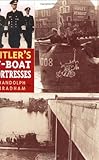
The cover, a stunning composite of three illustrations, certainly suggests a book about U-boat operations at French ports: Admiral Doenitz with two U-boat officers in train, one of whom wears his Iron Cross, reviewing naval troops; a U-boat with a damaged conning tower sailing triumphantly into Lorient; and a type VIIC boat easing into a bunker at St. Nazaire.[1]
Like other works on U-boat bases in France, Hitler's U-Boat Fortresses briefly points out the strategic significance of having ports with easier access to the Atlantic. As for the U-boat bunkers themselves, Bradham's account briskly describes their appearance, dimensions, and fortifications, but pays scant attention to the work of the Todt organization in transforming the French ports into German U-boat bases. The book includes neither any discussion of the command structure organized by Admiral Doenitz in Paris and Lorient nor how the French ports fitted into Doenitz's overall strategy.
Contrary to expectations judged from the title and cover, Bradham's emphasis shifts largely to Allied operations and French resistance activities before and especially after D-Day to destroy or render useless Germany's Atlantic U-boat bases. His detailed, sixteen-page treatment of Operation Chariot, the brazen British effort to incapacitate the giant Normandie dock at St. Nazaire in 1942 by sailing HMS Campbelltown into it, sheds no new light on this vain and costly endeavor. The bulk of the book deals with the pursuit of German troops retreating from the Normandy beaches and their subsequent entrapment in pockets at St. Nazaire and Lorient.
Written for a general audience, Hitler's U-Boat Fortresses reflects the wartime experiences of its author, Ralph Bradham, a retired South Carolina surgeon who was a staff sergeant in the 66th Infantry Division. The mission of the 66th was not to liberate Lorient and St. Nazaire, but to prevent the trapped German forces from breaking out, while other Allied divisions, bypassing the Brittany ports, drove through France into Germany in late 1944 and early 1945. The Brittany ports would be the last areas in France to be liberated.
Bradham's documentation is weak and oftentimes confusing. The bibliography is thin and devoid of German sources with the sole exception of an essay in English translation by the Reichswehr commander of the Lorient pocket. Endnotes following each chapter provide supplementary information or asides, not references to sources.
Bradham's research, however, is suggestive. Revisiting Brittany where he fought some sixty years ago, he utilized useful written and photographic sources, including a significant collection at the Grand Blockhaus Museum in Batz-sur-Mer. Using memoir accounts, interviews, and local sources, Bradham stitches together the dramatic story of the resistance in Brittany and the impact of the horrific Allied bombings of the port cities.[2]
Bradham tracked down and interviewed several residents of the French ports that fell to the Germans. One of these, Robert Fleury, a sixteen-year-old naval cadet in the summer of 1940, described the hellish conditions at Lorient as it fell to the Germans, the mad scramble of naval, merchant, and fishing vessels to escape amidst the confusion of tank shelling and aerial bombardment, and the personal humiliation of participating in the ceremony in which the tricolor was lowered and replaced by the swastika as the cadets sang the "Marseillaise." Another lad, eleven at the time of German occupation of Lorient, described traveling to the countryside by bicycle to forage for food and fuel and fashioning soles for his shoes from worn automobile tires.
He reminds us that the war against U-boats took place not only on the high seas, but in the ports as well, and that the civilian inhabitants of those ports paid a high price. Allied air raids on Lorient and St. Nazaire inflicted great damage on the civilian population but did scant harm to the submarine pens. At the height of the bombing campaign in early 1943, municipal authorities in St. Nazaire ordered the evacuation of everyone who did not have an essential job. Beginning with children and pregnant women, some 33,000 residents took refuge outside the city. Apparently relying on anecdotal documentation, Bradham claims that three-fourths of Lorient lay in ruins from percussion and incendiary bombs during the course of the first three months of 1943, causing some 40,000 residents to flee the city. Ironically, the German bunkers and fortifications were not seriously damaged. Without providing documentation, Bradham contends that the Allies launched 177 bombing missions against St. Nazaire through 1943, killing nearly 500 civilians and leveling 3,600 homes. Lorient was similarly devastated.
Seemingly unaware of the debate that continues to rage about Allied bombing of continental targets, Bradham questions the purpose of the raids, especially in light of the use of incendiary and delayed fuse bombs, but then shrinks from offering his own conclusions.[3]
Bradham's knowledge of the U-boat war is shaky. Painting the U-boat force as a key player in Hitler's offensive wartime strategy, Bradham greatly underestimates the many frustrations Doenitz faced in gaining Hitler's support for a U-boat force large enough to deliver a knockout blow to Allied shipping (pp. 9-10).
Elsewhere, Bradham claimed that declining rate of sinkings of Allied vessels off the United States Atlantic coast led Doenitz to shift the locus of U-boat operations to shipping lanes approaching Russia's Arctic coast ports (p. 46). While it is true that, by April and May 1942, sinkings along the U.S. coast from New England along the mid-Atlantic decreased compared to the early weeks of Operation Drumbeat, Doenitz compensated by not only stepping up attacks in North Atlantic waters but, more importantly, by shifting U-boats sailing from the French ports farther south against shipping along the Florida coast and in the Gulf of Mexico and Caribbean.[4]
Bradham erroneously claims U.S. aircraft joined RAF bombing raids on German U-boat bases at St. Nazaire and Lorient in early 1942 (p. 29). B-17s of the Eighth Air Force, however, only began arriving in Britain in July, and with Paul Tibbets at the controls of the lead plane, flew their first sortie against a continental target, the marshaling yard at Rouen on August 17.[5]
More careful editing would have caught some of the more egregious errors that all too frequently mar this book. To cite only two examples, the head of the German navy is identified as Admiral Straeder (p. 55) and Charles Martel is called the "Prince of the Francs"(p. 59).
In recent years, several books describing U-boat bases, including those in France, have been published.[6] In addition to giving a brief overview of the strategic significance of the French ports, especially Lorient and St. Nazaire, these works tend to emphasize the technical aspects of the bunkers, how solidly they were built, whether they were wet or dry bunkers, and the nature of the defenses. None of these accounts in English, including Bradham's, provide insights, however anecdotal, into the rhythms of daily life. What were the routines of the German naval personnel stationed in the ports? What were the relations between German naval personnel and French civilians and municipal authorities? How much fraternization existed? What amenities were available for departing or returning U-boat crews? Nor do we learn how U-boats were prepared for war cruises. How were they provisioned and fueled? What measures were taken for port security? How frequent were acts of sabotage?
Despite its shortcomings, Bradham's Hitler's U-Boat Fortresses suggests new areas of research. The story of the defeat of the U-boat menace in World War II is about more than cracking codes, introducing carrier-based aircraft, and developing improved anti-submarine warfare technologies, but also includes the war against U-boat ports with the attendant "collateral" damage to civilians.
Notes
[1]. Although Bradham does not identify the damaged U-boat, it is U-46, commanded by Engelbert Endrass, sailing triumphantly into Lorient in the late summer of 1940 after his successful second war patrol during which his conning tower and attack periscope were badly damaged. A clue of the boat's identification is the roaring bull on its conning tower, an emblem adopted by Endrass from his hero, Gunther Prien, commander of U-47, who famously sailed into Scapa Flow and sank the British battleship HMS Royal Oak. Flotilla 7 at St. Nazaire adopted the roaring bull emblem.
[2]. Unfortunately, the bibliography is not always clear whether some materials are printed books or brochures, or unpublished manuscripts. Some of the printed sources bear the imprint of local French printing firms, not the large national publishers, suggesting that these works would be difficult to find outside Brittany. For example, a quick search for these local sources in the online catalogue of the Bibliotheque nationale de France was unrewarding.
[3]. Jak P. Mallmann Showell, who has also written about the U-boat bunkers in France, however, is highly critical of the Allied bombing campaign against the French port cities. He claims eighty-some bombing raids on Lorient and an equal number on St. Nazaire wreaked havoc on the civilian populations, but inflicted little damage on the U-boat pens. It was not until August 1944, when a Tallboy bomb was first dropped on a German U-boat bunker at Brest, that the Allies had a bomb that was capable of damaging the heavily reinforced U-boat pens. According to Showell, there is "ample evidence to suggest that there was a deliberate cover up to hide the futility of the bombing campaign and to steer historians away from the moral issue of 'atrocities' committed by the Allied air forces." See Jak P. Mallmann Showell, Hitler's U-Boat Bases (Annapolis: Naval Institute Press, 2002), p. 127.
[4]. In his magisterial and very early account of U.S. naval operations in World War II, Samuel Eliot Morison correctly pointed out that the Gulf Sea Frontier, stretching from southern Florida into the Gulf of Mexico, had "the melancholy distinction" of being the most dangerous place in the world for shipping in the late spring and early summer of 1942. See Samuel Eliot Morison, The Battle of the Atlantic, September 1939-May 1943 (Edison: Castle Books, 2001), p. 142. More recently, Clay Blair calculated that, between December 18, 1941 and August 31, 1942, ships sunk by German U-boats in American waters represented about 25 percent of all Allied shipping sent to the bottom during World War II. In terms of "sinkings achieved in a relatively brief time period for effort expended," Blair concluded, the campaign in American waters in the spring and summer of 1942 was "the high water mark of the U-boat war." See Clay Blair, The Hunters, 1939-1942_ (New York: Random House, 1996), p. 694.
[5]. Flying borrowed RAF planes, a handful of Eighth Air Force crews participated in British bombing raids on targets in the Netherlands and France in July.
[6]. The most detailed, and not cited by Bradham, is Soenke Neitzel's Die deutschen Ubootbunker und Bunkerwerften, (Koblenz: Bernard & Graefe, 1991), regrettably not yet translated into English for non-scholars. Among the works in French included in Bradham's bibliography, but not cited in his notes, is Jean-Paul Pallud, La base sous-marine de Lorient (Bayeux: Editions Heimdal, 1997). Among the slender volumes in English, the best is Jak P. Mallmann Showell, cited above. Two other useful volumes are Gordon Williamson's U-Boat Bases and Bunkers 1941-45 (Oxford: Osprey, 2003) and Karl-Heinz and Michael Schmeelke's German U-Boat Bunkers: Yesterday and Today (Atglen, Schiffer, 1999), translated from the German edition.
If there is additional discussion of this review, you may access it through the network, at: https://networks.h-net.org/h-german.
Citation:
Allen Cronenberg. Review of Bradham, Randolph, Hitler's U-Boat Fortresses.
H-German, H-Net Reviews.
July, 2005.
URL: http://www.h-net.org/reviews/showrev.php?id=10758
Copyright © 2005 by H-Net, all rights reserved. H-Net permits the redistribution and reprinting of this work for nonprofit, educational purposes, with full and accurate attribution to the author, web location, date of publication, originating list, and H-Net: Humanities & Social Sciences Online. For any other proposed use, contact the Reviews editorial staff at hbooks@mail.h-net.org.

