




Mike Marqusee. Chimes of Freedom: The Politics of Bob Dylan's Art. New York: The New Press, 2003. 327 pp. $24.95 (cloth), ISBN 978-1-56584-825-2.
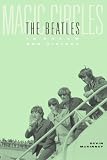
Devin McKinney. Magic Circles: The Beatles in Dream and History. Cambridge: Harvard University Press, 2003. xii + 420 pp. $19.50 (paper), ISBN 978-0-674-01636-1.
Reviewed by Michael Kramer (History Department, University of North Carolina-Chapel Hill)
Published on H-1960s (June, 2005)
Listen, Do You Want to Know a Secret? When the Subterranean Went Pop
Riding his motorcycle across the Louisiana delta in the late 1980s, Bob Dylan felt disconnected from the groundbreaking music he had created twenty years earlier in the 1960s. Stopping in a strange-looking trinket shop called King Tut's Museum, deep in bayou country, he noticed, "the radio was on from behind a wall and the sound was coming through in static. The Beatles were singing, 'Do You Want to Know a Secret.' They were so easy to accept, so solid. I remembered when they first came out. They offered intimacy and companionship like no other group. Their songs would create an empire."[1]
Mike Marqusee and Devin McKinney explore this "empire" of song that Dylan recognized in the music of the Beatles, and that we might also perceive in Dylan's songs. Chimes of Freedom and Magic Circles are incisive, sometimes revelatory works of cultural criticism by two independent scholars and journalists. The books are worth taking seriously by historians of the 1960s since they are not so much conventional biographies as they are contextual explorations. Indeed, the books use popular music to conduct a kind of biography of the 1960s itself. Marqusee and McKinney do not celebrate the exceptional artistic genius of Dylan and the Beatles. Rather, they attempt to tease out the zeitgeist of meanings, desires, mysteries, hopes, fears, fantasies, and nightmares that flowed through the creative outputs and mass-mediated existences of Dylan and the Beatles. The books demonstrate that the production and consumption of popular culture in the 1960s must be taken seriously--music and revolution were in the air, to borrow from a Dylan lyric--and the complexities of living in this atmosphere of both pop culture and historical rupture demands careful investigation and analysis.
Though Marqusee's and McKinney's approaches, writing styles, and arguments differ, crucial to both these books is the way that a cultural underground erupted to the surface of American and global consciousness during the 1960s. Bob Dylan and the Beatles played key roles in the explosion of subterranean energies. As Dylan himself noticed in his memoir, their music altered feelings of "intimacy and companionship" by pushing previously marginalized forms of sound, style, and attitude up to the surface. By doing so, Dylan and the Beatles unleashed new modes of collective affiliation and self-identification. They spread secrets far and wide. But they simultaneously preserved a sense of initiation and belonging that miraculously defied the openness of their chosen medium of mass communication. As messengers of an odd sort of open secret, Dylan and the Beatles both announced and concealed a kind of cultural citizenship in their empire of song.
"One of the lessons of Dylan's art in the sixties is that under the right circumstances, the producers and consumers of popular culture engage in the most lively and contentious manner in the making of discriminations and judgments," Mike Marqusee writes in the introduction to his book (p. 4). Thinking of Dylan as a maker of popular art who drew upon and responded to the progressive mass movements of the era, he positions Dylan's music and lyrics as critical responses to the times. "The thread that binds Dylan's art to its rapidly shifting environment is this book's primary purpose," Marqusee explains. "In reading the songs in their musical and political context, I don't see them as transparent reflections of the times but as expressive objects fashioned by an individual in response to those times. Dylan was not a passive lightning rod, an impersonal conductor of great historic currents. Rather, he was a navigator of those currents" (p. 3).
Gone in Marqusee's study are the claims that Dylan was the "spokesman" for his generation; Marqusee also resists more cynical interpretations of Dylan as a crass commercial artist eager to exploit progressive political movements for his own fame. Instead, at the heart of Bob Dylan's art, Marqusee discovers nothing less than a radically deconstructionist epistemological politics, a continual repudiation of stable categories of knowledge, a repeated chiming of the bells of freedom. To Marqusee, Dylan's music settled for nothing less than an impassioned pursuit of the dynamic openness that lurked, dangerously but tantalizingly, behind any mask of certainty. The insistence on flux, and the resulting fear of entropy and anarchy, made Dylan at once a participant in the progressive mass movements of the 1960s, and a reactor against them.
As a member of a progressive bohemia with roots in the early twentieth-century alliance of leftists and artists (think New Masses and the Popular Front), Dylan spread the secrets of this underground culture--its utopian hopes for a more equal and fulfilling society--but he also critiqued its dogmas and condemned its limitations, from its romanticization of "the folk" to its own authoritarian hierarchies and doctrinal rigidities. He helped bring submerged desires for equality and liberation (and also for power and domination) to the masses through the mechanisms of consumer society. Then he turned to exploring the limits of inscrutability wrought by the combination of these subterranean energies with mass culture.
Over the course of four chapters, Marqusee draws many new inferences and connections, returning often to a focus on "the aesthetic in the political and the political in the aesthetic" (p. 2). He insists on placing Dylan in a wide and sometimes surprising context, not only the folk music revival and domestic leftist milieu, but also, among other factors, international progressive politics, the socially-aware soul music of Curtis Mayfield, and the mass-culture theories of Theodore Adorno. His first chapter, "The Whole World Is Watchin'" examines Dylan's associations with, and critiques of, the civil rights and Students for a Democratic Society (SDS) movements. Marqusee draws out the links between the spirit of songs such as "Blowin'in the Wind" and texts such as SDS's "Port Huron Statement." To Marqusee, both "paraded their innocent openness" (p. 58). Chapter 2, "Not Much is Really Sacred," focuses on Dylan's departure from the protest music of his early years. Marqusee honors, even celebrates, Dylan's refusal to make over-simplified, jingoistic art. Dylan's "apostasy," Marqusee claims, resonates for any political activist on the left who has had to confront the shortcomings and failures of the very movement that he or she has joined. Marqusee is also keen to demonstrate how even though Dylan himself disavowed his first "finger pointin'" songs, there are continuities between his early efforts and his later incarnations as a polka-dotted, pop poet maudit in the mid-1960s and as an outlaw country squire in the late-1960s.
By Marqusee's third chapter, titled "Little Boy Lost," Dylan has entered the radical terrain of identity politics--not the assertion of a stable identity, but the deconstruction of identity through strange word associations, cryptic storylines, multiple characters, and what Dylan himself called the "thin, wild mercury sound" of bluesy electric guitar rock. Placing this Dylan of the mid-1960s in dialogue with Adorno's theories of mass culture, Marqusee examines how Dylan's efforts were at once part of the emergence of a new consumer market that reinforced the existing social order, yet also could spark a generation's critical capabilities. By creating a poetic space on the commercial jukebox, to paraphrase Allen Ginsberg's insight into Dylan's mid-1960s songs, the music on albums such as Bringing It All Back Home, Highway 61 Revisited, and Blonde on Blonde emphasized the multifaceted levels on which participants felt themselves to have entered a revolutionary moment. Marqusee calls this a "year zero" feeling in which utopian dreams, transformed gender relations, new understandings of race, and fresh interpretations of the self and of community seemed suddenly to arrive. Dylan's music provided a means for both the singer himself and his listeners to grasp, process, and address the fundamental changes that they sensed around them. The music provided an emotional context and the striking images of the lyrics a discursive vocabulary to cope with the shifting times of the 1960s.
The changes at hand were dangerous as well as promising. Marqusee wants to insist that no matter how far Dylan strayed from the "social protest" songs of his early years, his music remained protest art because it always responded to the enduring problems as well as the hopeful dreams of the 1960s. The early songs, according to Marqusee, were "not only an immense achievement in their own right, they are the foundation of Dylan's subsequent evolution" (p. 49). Because they were efforts to hear the "chimes of freedom," perhaps even efforts to strike them himself, Dylan's songs always challenged whatever norm or certainty anyone attempted to assert. By the mid-1960s, this led to a profound questioning of the nature of reality itself. "What is it that's 'all over now'?" Marqusee asks of Dylan's 1964 song, "It's All Over Now, Baby Blue."
"Whatever you believe has sustained you--the movement, folk music, your lovers, home, reputation, bank balance. In 'Baby Blue,' Dylan seems to whisper a prophetic reminder of the transience of social status, the flimsiness of the nooks and niches we cling to. Freedom here isn't a social aspiration or static utopian condition. It's a reality that must be seized, the bedrock of our lives that we hide from ourselves" (p. 128).
Marqusee argues in his fourth and final chapter, "The Wicked Messenger," that Dylan continued this project of radical inquiry even after the musician's turn toward more secluded, elliptical, private music. To Marqusee, Dylan's late-1960s songs on the bootlegged Basement Tapes and the album John Wesley Harding engaged the oscillating mood of despair and breakthrough in the 1967 Summer of Love and the violent confrontations in 1968. When The Basement Tapes appeared, surreptitiously circulated in 1967 and 1968, Dylan had supposedly retreated from popular music, the victim of a mysterious motorcycle accident. Critics such as Greil Marcus hear this "basement" music as a turn toward the past, an attempt to discover the history of a more authentic, vanishing, rural, small-town America.[2] Marqusee challenges the retrospective essentialism of Marcus's interpretation. He compares Marcus to the very Popular Front folklorists such as Alan Lomax who Marcus himself dismisses as overly romantic. According to Marqusee, Marcus's vision may be "darker, more fatalistic than anything Lomax ... would have endorsed," but it remains an effort to limit and reduce what America is and has been (p. 214).
With an internationalist politics and a cosmopolitan sensibility, Marqusee dislikes any attempt to turn Dylan's music into exceptionalist, nationalistic, patriotic Americana; he wants to hear The Basement Tapes as resolutely in its moment during a period of widespread social and political upheaval. "The songs might even be interpreted as a running critique of the ephemeral delusions of the summer of love," Marqusee writes. "They are delicately balanced between absurdity and grandeur, laughter and terror, brooding fatalism and the lingering taste of freedom" (p. 212). On The Basement Tapes, Marqusee believes, "Dylan is once again writing against the times, though also very much from within them" (p. 212). The best songs on The Basement Tapes and the folksy John Wesley Harding album speak to Marqusee of the feelings circulating through an increasingly global atmosphere of revolutionary potential and reactionary violence. The music might have emanated from the margins, the basement, the private, the outlaw fringes of the imagination. The music might even have articulated a bleak theory of history as implacably cyclical and beyond human control. But Marqusee builds a good case for how the "invisible republic" (Marcus's term) that was summoned into being through Dylan's late-1960s music did not revolve around an "old, weird America," as Marcus argues. Rather, the music confronted its contemporaneous historical moment. Those were not ghosts of a nation's folk past arising on the bootlegged spools of The Basement Tapes or in the stripped-down grooves of John Wesley Harding; they were the dizzying spirits and demons of current events.
There is a crucial shortcoming in Marqusee's book. To make his case, he relies almost exclusively on lyric analysis rather than giving more careful consideration to Dylan as musician to make this point. Nonetheless, Marqusee offers a rich, new picture of Dylan's role in the 1960s. As he expanded the dimensions of the political through commercially-marketed aesthetic efforts, Dylan's music of inquiry began to outline an empire of song in the 1960s, a kind of secret community that participants could, paradoxically, easily join. Arising from and sustained by a powerful dialogue between Dylan and the marginalized undergrounds of the political left, bohemian culture, and artistic avant-garde, Dylan's empire of song raised subterranean dreams (and fears) to the surface of popular culture and mass society. Marqusee's insight is to notice how Dylan struck a bell of liberty, noticed that it was cracked, and sought to map out the fissures. Entering Dylan's empire of songs, listening to these chimes of freedom, Americans especially had to question even the truths they held most self-evident.
As a baby boomer who lived through and participated in the progressive causes and aesthetic experiences of the 1960s, Mike Marqusee provides a surprisingly measured, clear-eyed perspective on the times. By contrast, Devin McKinney is a son of baby boomers. Amazingly, however, his book reads like a memoir. Magic Circles is a feverish, dense, bloody, pulsating, pounding clot of reflections, speculations, connections, and insights. As essayistic cultural criticism, his book works by metaphor, uncanny linkage, and odd resonance rather than closely traced archival evidence. It is too multifaceted to be reduced to a simple argument, but McKinney's overarching narrative is that from the underground "holes" and "bogs" of postwar culture, the Beatles spread "magic circles" of inclusion and participation around the world. Yet the darker impulses and desires that lurked within their music never left, no matter how innocent and hopeful the group appeared; there was something monstrous and "mutant" in the Beatles'sound and image, projected upon them by dark collective psychic dreams and myths that always drew the band and their audience back toward nihilism and frustration.
At the core of the "magic circles" of the 1960s that danced around the Beatles, McKinney argues, was a dark abyss, a hole they were trying to fix. Or, to put his argument in the terms of Bob Dylan's Delta motorcycle ride, at the center of the "empire of song," which offered such "intimacy and companionship," was an ominous subterranean energy that breached the glossy, smooth, pleasurable surfaces of popular culture in the 1960s. This is quite different than the usual portrayal of the Beatles as "Love-Is-All-You-Need" mop-tops. So too, it paints the underground world of bohemia as a much bleaker, sinister place than the usual, hopeful portrayal. We come to understand the Beatles as artists who dared to bring the muck, pain, and garbage of the Cold War underground's most abject bottom-dwellers to the top of the pops. In the process, the group became caught in a kind of quasireligious ritual sacrifice played out in a criss-cross of emotional and erotic energies--manic love and envious hate. These energies flooded through their music, into and out of their bodies, around and in their images during a historical moment of both immense utopian desire and deeply conspiratorial paranoia.
And you thought they just wanted to hold your hand! They did, according to McKinney, but they also dared to wonder whether, in what McKinney declares their best song, "Happiness is a Warm Gun." This combination of innocence and experience, love and hate, vulnerability and violence, art and trash, active interaction with audiences and passive celebrity, is key to McKinney's new interpretation of the Beatles and the 1960s. The Beatles matter to the decade because their music and their image was "amalgamated of secret madnesses, hidden torments, the bogs of the Western world in the years of war and after-war; they became dwellers in toilets, hinterlands, undergrounds. They then had the monumental audacity to attempt to bring that buried force to the surface" (p. 48). The Beatles, treated as warped symbolic mirror on which cultural fantasies played out, present a much darker vision of the 1960s pop world than historians usually grant. Beatlemania was, to McKinney, literally a mania, a sped-up drive toward breakthrough, one that came crashing down quickly into reactionary violence, countercultural cover-up, and strange, scary paranoia.
In his first chapter, "Rude Noises from the Bog," McKinney concentrates especially on the Beatles' time in the underground world of the Reeperbahn in Hamburg, where the group arrived to perform as a bar band in 1960. Viewing footage of Hamburg's strange, seedy underworld from a 1962 film, Mondo Cane ("It's a Dog's World"), McKinney makes particular note of the lingering effects of World War II and the Holocaust on this red-light district world. Not yet two decades removed from the carnage, Hamburg's underground culture met the Beatles to operate in what McKinney calls a "laboratory of bog aesthetics," a raw, edgy space of extremes, from the most disgusting kinds of abjection to the most intense thrills and kicks, a dancing and music-making compressed into powerful ecstasy by the desperate need to escape the aftereffects of the war's destruction.
Chapter 2, "Ascension/Sacrifice," traces the Beatles' eruption to the surface of mass culture by drawing out careful, multidimensional interpretation of the films A Hard Day's Night and Help! In these films, mere publicity devices, a lurking mood of violence always haunts the Beatles, as if, no matter how innocent they appear, how witty and charming, the audience is also beginning to play out darker fantasies upon them. The films stumble into deeply symbolic territory, as the Beatles ascend to the heavens like gods in a helicopter at the end of A Hard Day's Night or are pursued in order to be sacrificed to a giant female god, Kali, in Help! As McKinney takes pains to point out, the films are not quite able to own up to their symbolic weight. But read as "dream"--as expressions of a stormy collective psychic drama--they help to deepen our understanding of the kind of cultural work the Beatles wound up conducting in relation to the 1960s. Crucial to this cultural work was the relationship between the Beatles and their young female fans, who, in a harbinger of the coming women's liberation movement, displayed taboo sexualities, desires, and sheer power in public (p. 53).
In chapter 3, "Meat," McKinney utilizes the infamous retracted Beatles cover of the band surrounded by mutilated dolls and hunks of raw meat (one could discover the "butcher cover" beneath certain copies of the album Yesterday and Today by steaming off the innocuous replacement photograph that had been pasted on top in response to protests that the original cover was in poor taste). McKinney's larger argument in the chapter is to link this Surrealist dream imagery of the butcher cover to the Beatles' continual mutation in 1966 from innocence into something more challenging, difficult, complex, brooding, violent, and downright scary: from daydream to nightmare. The chapter contains wonderful interpretations of the Beatles' new music on albums such as Rubber Soul and Revolver, placed into context with other music of 1966 by Dylan, the Rolling Stones, and James Brown. So too, the chapter takes us with the Beatles to the roiling political atmosphere in Japan, the Philippines, and back to the United States, where, suddenly, an angry, chaotic mood of rejection and reaction followed the Beatles on tour (this was the year of John Lennon's famous comment that the Beatles had become more popular than Jesus). McKinney ably demonstrates how an odd, highly-charged feedback loop came to exist between the "mere" pop entertainment of the Beatles and unstable political milieus.
In a remarkable historical revision in chapter 4, "The Unintelligible Truth," McKinney argues that the counterculture of the late 1960s, with the concept album Sgt. Pepper's Lonely Hearts Club Band reverberating in the air, was a kind of cover-up. To McKinney, Sgt. Pepper, like the counterculture as a whole, was an attempt to conceal, through myth, the dangerously powerful, violent energies that the Beatles had brought up from the "bog" to the spectacle of pop culture. During 1967 and 1968, the Beatles tried to sustain the dream that "All You Need Is Love," sending this message out across the ether in the world's first worldwide satellite broadcast. But unruly nightmares kept rearing their heads--mutants and monsters kept poking through the cover-up. To the author, the 1968 record The Beatles, better known as the White Album, is in fact the Beatles' greatest concept project. Unlike Sgt. Pepper, which McKinney hears as a falsification, as cover-up, the White Album attempted to represent, respond to, and shape the fury of rebellion and revolt, conflict and turmoil that marked the later years of the 1960s. The album displays:
"an awareness not just of the Vietnam war, and certainly not in the sense of a coherent social critique of issues plaguing the progressive mind of 1968; but awareness expressed in the decision to take on chaos as subject, animus, fuel, and fire--the arching of chaos over the span of a massive work, the transformation by chaos of every sound and emotion. The White Album is the concept album that Sgt. Pepper thought it was and wasn't. It seeps chaos, breathes it and voices it; fights it, exemplifies it, is overwhelmed by it, finally seeks a battered refuge from it. It tries to escape--tries hard--but can't. Like 1968, it screams, laughs wickedly, kills, cries, sighs, and dies" (p. 225).
To McKinney, strange paranoias, sinister madnesses, and brutal insanities played out across the myth and symbol of the Fab Four toward the end of the 1960s. We have traveled far here from Bob Dylan's musings on "Do You Want to Know a Secret?," when the Beatles sounded so innocent and solid, offering intimacy and companionship. To McKinney, by the end of the decade, the group's empire of songs had extended into distant realms that the Beatles themselves would never have sanctioned or approved. Chapter 5, "O.P.D./ Dues Est Vivius," chronicles these in the bizarre story of Charles Manson searching for a hole to another realm in Death Valley, obsessed with the Beatles' White Album, descending toward the murders he and his "Family" would ultimately commit, supposedly inspired by the White Album song, "Helter Skelter." Manson's was merely the most extreme of a series of darkly twisted turns in Beatlemania. Others were the "Paul is Dead" hoax and various rumored bootleg recordings that crackled with tawdry, unconfirmed mystery. From these terrible endings, McKinney concludes Magic Circles with a chapter, "Fantasy into Flesh," in which he reflects on his own coming-of-age in the 1980s and 1990s. McKinney discovers in his own life that the Beatles' empire of songs lives on, transporting the dreams and history of the 1960s into the present.
Magic Circles raises methodological and historiographical issues for cultural historians of the 1960s. At its best, it is a stunning book that attempts to unmask and analyze a level of mass cultural experience that defies quantitative study or even the normal types of qualitative historical evidence. Unlike Mike Marqusee, who criticizes Greil Marcus, McKinney draws inspiration from Marcus's mode of pop culture inquiry. As Marcus's Dead Elvis attempted to do with Elvis Presley, McKinney's Magic Circles is a compendium that includes hunches of connections, moments of serendipity, odd confluences of synchronicity, collisions of chance. Clues arise in Beatles ephemera--scraps of newspaper reports, odd photographs, offhanded interactions, bootleg recordings, fleeting rumors--as well as in tangentially-related quotations from a vastly disparate group of figures and texts (Jean-Luc Godard, Milan Kundera, Norman O. Brown, Kurt Vonnegut, the Bible, Ihab Hassan, Charles Manson, physicists studying black holes, Hugh J. Schonfield's The Passover Plot, Baudelaire, Dickens, Hopi Indians, Joseph Campbell). There is an obsessive quality to the book, and one might dismiss it as loony. But there is a humor and honesty to Magic Circles, a willingness to pursue lines of inquiry to lengths that are, at first glimpse, inscrutably ridiculous, and, at closer investigation, potentially profound. The book is enriched by a fan's arcane knowledge, but McKinney's story about the Beatles and the larger 1960s has much to offer beyond minutiae.
By tracing the wide ripples of the Beatles, both the group's music and its role as cultural symbol, McKinney shows how their empire of song unleashed powerful energies, both positive and negative, fostering a "public configuration" that was also strangely intimate--a shared secret whispered across the mass communications networks of the 1960s. "What the Beatles touched was dreamlike in particularly deep and intricate ways. Their mania became a huge, open arena for the unregulated discharge of submerged energies--their own, and the audience's," McKinney argues (p. 87).
But it was not only dreamlike; as McKinney's subtitle emphasizes, the Beatles were also historically significant. It is worth quoting McKinney at length on this topic, for he has an important point that historians of the 1960s (indeed, all historians) should confront: "There is no way of quantifying the changes the Beatles catalyzed in private lives," he writes. "The affairs begun or ended to one of their songs; the career paths and passionate avocations inspired by their creative example; the spiritual inquiries spurred by one Beatle's famous blasphemy; the filial bonds deepened by a common love of their music. Because they don't move mountains, such things fall into the vast wastebasket of unrecorded history. Are we to consider them unimportant for that reason? I think we may consider them as important as any history ever recorded. They are the changes that determine how people live within history, day to day--as opposed to how populations live because of history, era by era" (p. 305).
Marqusee and McKinney's books both address the subterranean energies that rose up in the pop culture explosion of the 1960s. But, they differ in their orientations toward this phenomenon. This is partially because Dylan and the Beatles were themselves quite different figures. Though he had some pop success, Dylan tended to be for the hip and initiated. He never quite assembled as enormous and wide-ranging an audience as the Beatles. But the contrasts between Chimes of Freedom and Magic Circles also have something to do with each author's ultimate goal. Marqusee, a participant, wants to sum up the strange, unkempt, windblown history of popular music in the 1960s; he wants to put the decade and its music in their historical place. McKinney, coming of age après les deluge, remains eager to dive into the decade's ecstatic, terrifying, and still-powerful currents; he would not even mind if the unruly tides of the 1960s overflowed once again. In the end, Marqusee wants to stress the underlying sanity in Dylan's seemingly insane 1960s pop songs. McKinney, by comparison, wants to demonstrate the lurking insanity within the Beatles' ostensibly sane music.
As Marqusee's and McKinney's books suggest, we continue to move through the empire of song that the Beatles and Dylan spread across the 1960s. Usually calm and placid, at times growing stormy again, their music still circulates on radio static or in repackaged digital regalia, reaching the most mundane aspects of our lives, penetrating our dreams, connecting us to history, fostering a kingdom (and queendom) of unconquered possibilities. Dylan and the Beatles sing the official anthems of an unofficial country: what Peter Braunstein and Michael William Doyle have aptly labeled the counterculture's "Imagine Nation," a fragmented, sprawling 1960s dreamland whose fantasies still beckon and whose nightmares still haunt.[3] Until we come to full terms with this expanse of secrets and dreams and dark desires--this vast cultural terrain of bells still chiming, revolvers still smoking, stones still rolling, holes still in need of fixing--the history of the 1960s will continue to require study. Marqusee and McKinney, listening carefully to Dylan and the Beatles, eager to trace the faded outlines of enchanting images and ghostly specters, willing to follow the words and music to unlikely destinations, set us on our way.
Notes
[1] Bob Dylan, Chronicles: Volume 1 (New York: Simon and Schuster, 2004), p. 204.
[2] Greil Marcus, Invisible Republic: Bob Dylan's Basement Tapes (New York: Henry Holt, 1997). Republished in paperback as That Old, Weird America: The World of Bob Dylan's Basement Tapes (New York: Picador, 2001).
[3] Peter Braunstein and Michael William Doyle, eds. Imagine Nation: The American Counterculture of the 1960s and 70s (New York: Routledge, 2002).
Copyright (c) 2005 by H-Net, all rights reserved. H-Net permits the redistribution and reprinting of this work for nonprofit, educational purposes, with full and accurate attribution to the author, web location, date of publication, originating list, and H-Net: Humanities & Social Sciences Online. For other uses contact the Reviews editorial staff: hbooks@mail.h-net.msu.edu.
If there is additional discussion of this review, you may access it through the network, at: https://networks.h-net.org/h-1960s.
Citation:
Michael Kramer. Review of Marqusee, Mike, Chimes of Freedom: The Politics of Bob Dylan's Art and
McKinney, Devin, Magic Circles: The Beatles in Dream and History.
H-1960s, H-Net Reviews.
June, 2005.
URL: http://www.h-net.org/reviews/showrev.php?id=10585
Copyright © 2005 by H-Net, all rights reserved. H-Net permits the redistribution and reprinting of this work for nonprofit, educational purposes, with full and accurate attribution to the author, web location, date of publication, originating list, and H-Net: Humanities & Social Sciences Online. For any other proposed use, contact the Reviews editorial staff at hbooks@mail.h-net.org.

