

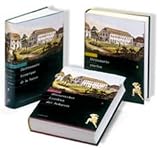
Marco Jorio et al, eds. Historisches Lexikon der Schweiz; volume 1: Aa-Basel (Fuersbistum). Basel: Schwabe and Kompanie AG, 2002. xxxix + 754 pp. EUR 208.50 (cloth), ISBN 978-3-7965-1901-7.
Reviewed by Beat Kümin (Department of History, University of Warwick)
Published on H-German (May, 2005)
The History of a Nation of Will (in 40,000 articles)
October 31, 2002 was a red-letter day for Swiss historiography. After over two decades of preparations, volume 1 of the Historical Dictionary of Switzerland appeared in print. Two further tomes have since been published (taking us up to letter "D"), nine more are scheduled to come out in yearly intervals, and a very large number of entries--over 37,000--are now freely and permanently accessible on the dictionary's website (http://www.dhs.ch), where detailed information about the project is also available. The realization of this ambitious undertaking is a cause for celebration for each and everyone interested in any aspect of Switzerland's past.
The long tradition of Swiss historical encyclopedias started in the seventeenth century, reaching a first climax with the Leu-Lexikon (1747-65) and extending to the Historical Biographical Dictionary published by Victor Attinger in the 1920s and 1930s. After a few decades, however, the latter was dated and out of tune with changing research priorities. The need for a new reference work became ever more pressing. Learned societies, academics, independent scholars and even politicians then embarked on a Herculean national initiative. For once, proverbial Swiss particularism and frugality gave way to a genuinely collaborative venture and--at least initially--generous financial backing from central and local authorities. A team of some thirty full-time editors based in Bern recruited 100 thematic experts (including internationally renowned scholars like Jean-Franois Bergier for preindustrial social and economic history and Christian Pfister for environmental and climate issues), who in turn drew on the expertise of about 2,500 authors--effectively involving the entire Swiss historical community. A former federal councillor (that is, a former member of the national government) became the first chair of the foundation established to supervise the venture in 1988, and the President of the Confederation contributed a preface to the first volume, in which he stresses that Switzerland's identity--as a "nation of will"--has always been built on its past rather than obvious geographical boundaries, a homogeneous cultural framework, or a common religion. The dictionary is explicitly meant to represent the country's heritage at home and abroad--a more "official" project is hard to imagine. In many ways, it provides a fitting conclusion to a period of intense and highly emotional engagement by the Swiss with their history, focused in particular on the 700-year anniversary of the first surviving federal alliance of 1291, and the soul-searching regarding Switzerland's position in World War II.
In a wise move, information technology was given high priority from the outset, facilitating the production process and (from 1998) providing the general public with a most welcome online search opportunity. Perhaps the most distinctive feature of the project, however, is its multilingual character. The printed dictionary appears in three parallel versions (German, French, and Italian) of twelve volumes each, as well as in an abridged Rumansch format, and the website also offers a trilingual service. This laudable and quintessentially Swiss decision entailed a string of problems and complications, from the need to employ a small army of translators to the fact that the various versions present their contents in dramatically different sequences. Arsenal, to cite an extreme example, appears in volume 1 of the French edition, but as Zeughaus in the last tome of the German version. Countless entries, furthermore, acquire more or less distinct semantic meanings when translated into other languages, requiring the development of an intricate glossary for cross-referencing purposes. Reflecting the relative strength of the linguistic community, some 70 percent of articles were originally commissioned in German.
The Dictionary aims to provide an academic reference work on all aspects of human experience (rather than the natural and physical environment) since Paleolithic times, with two deliberate biases: first towards lesser known figures, rightly assuming that users can locate information on the most notable protagonists elsewhere, and second towards more recent periods, with 40 percent of entries allocated to the best-documented era of the nineteenth and twentieth centuries. Users will eventually find about 40,000 articles of four basic types: entries for individuals (including, remarkably, living persons born before 1936), families/dynasties (if they achieved particular social prominence over at least three generations), places (including all cantons, dioceses and political communities as well as foreign locations and nations with notable links to Switzerland) and specific topics (alliances, antisemitism, anthropology, Arbeiter, asylum, Auswanderung and so on--standard themes of general history viewed from a Swiss perspective). All contributions in each category are structured in a similar fashion, written by one or more named experts in the field (in the case of Aufklrung, for instance, the late Ulrich Im Hof, author of the classic Das gesellige Jahrhundert) and almost invariably supplemented by bibliographical references, including titles in English and works published as late as 2000. The volume also brims with a wide spectrum of illustrations, highly professional maps, graphs and tables, all with full credits and most of them reproduced in color.
The majority of biographies are just a few lines long, but texts for cantons (as for example, "Appenzell" in this volume) or historic landscapes (Alps) can extend over more than thirty pages. The latter entry, for example, is divided into an introduction and sections on "natural features and early history" (including Roman times), "social history" (covering settlement, government, and social structure), "economic history" (including tourism), and finally "cultural history" (discussing religion, architecture, and ideology). The article features thirty-five illustrations, ranging from a twelfth-century reliquary from the Abbey of Saint-Maurice (Valais) and an ingenious graph illustrating seasonal migrations of cattle, to population charts and a billboard supporting a popular initiative to protect the Alps from excessive volumes of transit traffic in 1994.
Taken together, the contributions represent an authoritative survey of the state of research at the start of the new millennium (the final deadline for modifications was December 31, 2001). Social and cultural aspects feature prominently. Major companies such as Asea Brown Boveri (ABB) have separate entries, gender issues receive due attention, sport and early TV celebrities (like Heidi Abel) are included, and important findings of the recent public inquest into Switzerland's role in World War II could also be accommodated. Some of the articles are perhaps a little short (for example, for a place of outstanding art historical significance like Amsoldingen), others might have benefited from further research (a task admittedly beyond the remit of a stock-taking exercise), the electronic version currently lacks a multimedia dimension, and there may be the odd gap in coverage (the legendary footballer Xam Abegglen from the 1920s and 1930s comes to mind), but it would be petty to dwell on such details. Editors, authors, translators, and sponsors should simply be congratulated on a magnificent achievement. The completed work will present researchers with an outstanding reference tool. This reviewer knows of no similarly comprehensive and up-to-date historical encyclopedia, although such ambitious projects may of course only be feasible for countries with relatively small territories. The volumes are not cheap, but are attractively produced and readers will find the temptation to browse hard to resist. If they do so, the rewards will include nuggets of information--the first documented Bishop of Chur was Asinio in 451--and insights into the drama of everyday life--as in a striking color drawing of a drunken husband killing his pregnant wife in 1561 (illustrating the article on alcoholism).
Where should future generations of historians move from here? Will they, in turn, feel the need for an updated version at the end of the twenty-first century or are we looking at the last attempt to produce a histoire totale in alphabetical order? Do postmodern societies require new forms of arranging their collective knowledge? These are some of the questions that naturally remain unanswered. Yet the dictionary is well on course to meet its principal objective: to become the first point of call for any inquiry into the country's past for many decades to come.
If there is additional discussion of this review, you may access it through the network, at: https://networks.h-net.org/h-german.
Citation:
Beat Kümin. Review of et al, Marco Jorio, eds., Historisches Lexikon der Schweiz; volume 1: Aa-Basel (Fuersbistum).
H-German, H-Net Reviews.
May, 2005.
URL: http://www.h-net.org/reviews/showrev.php?id=10540
Copyright © 2005 by H-Net, all rights reserved. H-Net permits the redistribution and reprinting of this work for nonprofit, educational purposes, with full and accurate attribution to the author, web location, date of publication, originating list, and H-Net: Humanities & Social Sciences Online. For any other proposed use, contact the Reviews editorial staff at hbooks@mail.h-net.org.

