



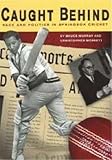
Bruce Murray, Christopher Merrett. Caught Behind: Race and Politics in Springbok Cricket. Johannesburg: Wits University Press, 2004. xiv + 256 pp. $28.50 (paper), ISBN 978-1-86914-059-5.
Reviewed by Goolam Vahed (School of Anthropology, Gender and Historical Studies, University of Kwazulu-Natal)
Published on H-SAfrica (May, 2005)
More than a Pastime: Cricket, Culture, and Society in South Africa
Until 1990, the literature on South African cricket focused primarily on White cricket.[1] This reflected not only White political, social, and economic dominance, but also the fact that only Whites were seen to constitute the "nation" and represented South Africa in international competition. The advent of non-racial democracy changed this. During the apartheid years, most historians of South Africa focused on resistance politics, racial consciousness, and class formation. South African historiography has become more diverse since the end of apartheid, with scholars turning their attention to the history of sport, environment, science, technology, culture, education, and so on. This shift from a White ethnocentric approach is advancing our knowledge of the previously neglected histories of Black South Africans.
The literature on South African cricket has been given impetus by the growing academic interest in the relationship between sport, society, media, and popular culture. In the case of South African cricket, this has been further encouraged by the policies of the United Cricket Board of South Africa (UCB). Tensions around race, merit, and transformation resulted in the UCB adopting a Transformation Charter in 1999 to address redress and representation, and establish a culture of non-racialism. The Charter called for the history of Black cricket to be recorded to heal the "psychological" wounds of Black cricketers, and "make known the icons from communities previously neglected." KwaZulu Natal, Western Cape, and Gauteng have already completed their histories.[2] There has simultaneously been a surge in general works on the politics of sport in South Africa.[3]
The latest addition to this historiography, Caught Behind, falls into the latter genre. It provides an excellent synthesis of the politics of South African cricket from the origins of the game to the end of apartheid. The book examines how cricket contributed to, and was the result of, divisions among the people. It covers broad themes like colonization and imperialism; ideology and popular culture; race, class, ethnicity, social ideology, and political economy; and nationalism and liberation. As such, it deals with not just the history of cricket, but the history of South Africa in the nineteenth and twentieth centuries as well, the role of key players and administrators, and events and matches, all rolled into one. Caught Behind focuses primarily on developments beyond the boundary and offers insightful historical interpretation as it examines cricket as a microcosm of South Africa's national history. There is mention of key matches, major innings, and important players, but no protracted descriptions of matches. By keeping it concise, the authors are able to concentrate on themes of race and politics in South African cricket, and they consequently provide an excellent analysis of issues like land and space, race and class, and politics and resistance, always using cricket as the nucleus.
This is not to suggest that the book lacks interesting information for the cricket aficionado. There is absorbing material on Pietermaritzburg-born Colored cricketer Charles Llewellyn who played fifteen Tests for South Africa, which was not written about previously; we learn that if it had not been for the Anglo-Boer War (1899-1902), South Africa would have played the West Indies at Lord's cricket ground in 1900; Colored cricketer C. J. Nicholls regularly hit the middle stump of English batsmen in the early 1900s when he bowled to them in the nets; Malay spinner Taliep Salie once dismissed three Springboks on his way to taking ten wickets in an inning. Notwithstanding this interesting information, the main focus is on the politics of South African cricket. The book's central theme is that South African cricket has always been subject to political intervention by governments. In 1894, for example, "colored" fast bowler "Krom" Hendricks was nominated for the first South African team to tour England but was omitted because of his race at the request of Cecil Rhodes, Prime Minister of the Cape. Over seven decades later, Prime Minister B.J. Vorster refused to allow Basil D'Oliveira, the South African-born "colored" cricketer who played for England, to tour South Africa with the Marylebone Cricket Club (MCC), resulting in the cancellation of the tour. Government interference still remains central to South African sport in the post-apartheid period.
Christopher Merrett and Bruce Murray have excellent academic and sporting credentials. Merrett is Director of Administration at the University of KwaZulu-Natal, Pietermaritzburg, while Murray is Emeritus Professor of History at the University of the Witwatersrand, Johannesburg, and president of the Croxley Wits Cricket Club. The book is a product of their academic interest in South African history and involvement in cricket. Merrett was involved in non-racial cricket for many years. He immigrated to South Africa from England in 1974. He was attracted to cricket as a youngster and took up umpiring after completing school. He umpired under the auspices of the non-racial Maritzburg District Cricket Union shortly after arriving in South Africa, and was its secretary during the early 1980s. This was a politically volatile era, with townships rendered ungovernable, and visits to South Africa by "rebel" cricket tours outside the fold of the International Cricket Council (ICC) triggering political protest. Merrett also was involved in human rights issues and contributed a chapter on Black sport to a book on the history of Pietermaritzburg (John Laband and Robert Haswell (editors) Pietermaritzburg, 1838-1988: A New Portrait of an African City (Pietermaritzburg: University of Natal Press, 1988). Murray is a distinguished historian. His publications include The People's Budget 1909/10: Lloyd George and Liberal Politics (1980), which he followed with two important books on Witswatersrand University: Wits, the Early Years (1982) focused on the period 1896 to 1939, while Wits: the "Open" Years (1997) concentrated on the years 1939 to 1959. Murray's familiarity with the social, economic, and political transitions during these decades is reflected in the manner in which this is interwoven with the development of cricket. His research into the Basil D'Oliveira affair, which led to England's cancellation of its cricket tour to South Africa in 1968, got him thinking about the historical role of cricket in South African society, and he collaborated with Merrett to produce Caught Behind. Their association was mutually beneficial. Merrett contributed much of the material for the period until the 1960s, with Murray focusing on the more recent years. He visited archives in Australia (where he met the late Sir Donald Bradman), England, and South Africa to examine government records, whereas Merrett relied largely on published sources.
Caught Behind is divided into two parts. Part 1 (chapters 1-3; pp. 1-60), "The Making of an Apartheid Game," examines the establishment of cricket in South Africa and the process whereby it became divided along racial lines. Cricket was introduced by the British in the Cape in 1806. By the second half of the nineteenth century it was well established in the British colonies of Natal and the Cape, and the inland mining towns of Kimberley, Bloemfontein, and Johannesburg. All the "races" into which South Africa's people were divided played cricket from the beginning, but they did so separately. British imperialism shaped the way in which cricket developed in South Africa. The racial division mirrored the game in the "mother country" where distinctions were class-based between "gentlemen" and "players." From the 1860s cricket ceased being a social sport and was played on the basis of "inclusivity" and, by implication, exclusivity. An 1862 game between the "Home Born" and "Colonial" teams was a defining moment because it raised the question of who was and was not a South African. Cricket was used as a means of social distance between British settlers and locals in most parts of the Empire (p. 13). This took on a racial form in South Africa where it became part of the official policy of segregation. Sport promoted White unification and national identity. White South Africa was included in test (international) matches, which started in 1877 between Australia and England, countries with whom they were seen to embody common values. After an English team toured South Africa in 1888, Whites began competing for an inter-provincial competition called the Currie Cup after its sponsor, the shipping magnate Sir Donald Currie. Significantly, White sporting unity preceded political unity by almost two decades.
Cricket was divided by race by the time of Union in 1910. This division was cemented between 1910-1948 when segregation was introduced systematically on land, in cities, in the workplace, and in government. South Africa continued to play against England and Australia, with whom they had an unwritten agreement that teams would consist only of Whites. Thus K. S. Duleepsinhji was omitted from the England team during South Africa's tour of England in 1929, and excluded from the English touring party to South Africa the following year (p. 39). A cricketing hierarchy formed along racial lines within South Africa. Whites saw Coloreds as ideal net bowlers during practice, Indians were seen as making good assistant groundsmen, and Africans as laborers (p. 36). By the time the National Party (NP) came to power in 1948, race was already deeply entrenched in South African sport, initially through social choice and then through government policy. In this regard, the "Black"/"White" division is too simplistic. Blacks played cricket as "Africans," "Indians," "Coloreds," and "Malays." Ethnicity, caste, class, and religion further divided cricketers. They had participated briefly under the Barnato Board, formed in 1898. However, Coloreds broke away in 1926 to play in their own inter-provincial tournament; Africans started an inter-provincial tournament in 1932, and Indians in 1941, thus completing "the racial atomization of cricket" (p. 39).
The NP made segregation in sport government policy through the application of apartheid laws. Ironically, as chapter 3 shows, when government policy began entrenching separation, Black cricket began moving towards integration. This mirrored developments politically as the African National Congress (ANC), South African Indian Congress, and South African Communist Party (banned after 1950) participated jointly in political campaigns, most notably in the 1950s. The 1950s were a "golden age" of Black cricket. Great players like Frank Roro, Basil D' Oliveira, and Ben Malamba graced the cricketing fields. A Kenyan Asian team toured South Africa in 1956/57, while a "non-white" team toured East Africa in 1958/59. This softened boundaries among Black cricketers and paved the way for the formation of a non-racial South African Cricket Board of Control (SACBOC) in 1961. The Malay and African cricket boards did not join this body immediately although many of their players did. In the apartheid period, conservative Black leaders who did not have access to political power often clung to leadership positions for selfish reasons (p. 58). Apartheid legislation such as the Group Areas Act also made racial unity difficult. Whites continued to dominate cricket. They enjoyed superior facilities, ignored the accomplishments of Blacks, and monopolized the right to play for South Africa. Part 1 mostly covers familiar ground. While the narrative is well-known, it provides a succinct backdrop against which to examine developments from the 1960s.
Part 2, "Exclusion from Test Cricket," consists of six chapters (4-9) which examine South Africa's expulsion and re-entry into international cricket. The Sharpeville massacre of March 1960 increased international criticism of South Africa. The leaders of the ANC and Pan Africanist Congress (PAC) in exile were buoyed by support from newly independent Third World countries, which pressured for South Africa's exclusion from international sports. "Sports became the soft underbelly of the apartheid regime." It was easier to target than the might of international capital or military alliances; further, South African Whites were fanatical about sport (p. 64). While South Africa was suspended from international soccer in 1961 and the Olympic Games in 1964 as a result of pressure from Communist and Third World countries, cricket and rugby were dominated by England and Australia, who continued to play against South Africa. This threatened to split international cricket along race lines because Pakistan, the West Indies, and India rejected South Africa's involvement.
White cricket administrators were not blameless. They were not "the helpless victim of the political intervention of the apartheid regime but a willing collaborator with the government in enforcing segregation on the cricket field. White cricket generally showed no interest in promoting black cricket or in pursuing the notion of non-racial cricket" (p. 65). Government and administrators faced a major test when Basil D'Oliveira, a Colored South African who had emigrated from South Africa to England and represented the country with distinction, was chosen to tour South Africa. The D'Oliveira affair of 1968 was an important turning point in South Africa's relations with the international cricket fraternity and the authors devote an entire chapter to it (chapter 5; pp. 89-116). They examine material only made available recently in Britain and South Africa. Dolly, as he came to be known, was omitted from the original team when it was announced in August 1968. This caused a huge outcry because of his match-winning century against Australia shortly before the team was announced. However, when an English player was injured, Dolly was chosen to replace him. Vorster, Prime Minister of South Africa, rejected the team because the NP was not prepared to "receive a team thrust on us by people whose interests are not the game but to gain political objectives" (p. 89). This resulted in the cancellation of the tour. More important, it gave momentum to the anti-apartheid movement. The opening of government records shows that Vorster would not have accepted Dolly's original selection and that he conveyed this to Arthur Coy of the South African Cricket Association, and through him to the MCC. The MCC had originally bowed to apartheid pressure and only selected Dolly because of the public outcry.
Despite international criticism, the government refused to yield on the race issue. After defeating Australia 4-0 in 1970, fielding arguably the greatest team to represent the country, South Africa was cast into the wilderness. Chapter 6 (pp. 117-145) examines how pressure from African, Asian, and Caribbean countries who threatened to boycott the Commonwealth Games in Edinburgh in 1970, together with a forthcoming general election, led to Harold Wilson's Labor Government formally requesting the MCC to call off the 1970 South African tour on "grounds of broad public policy." South Africa's isolation was complete when its tour of Australia in 1971/72 was cancelled because of the threat of militant protest action. This is examined in Chapter 7 (pp. 146-158). The Australian Cricket Board (ACB) under the leadership of Sir Donald Bradman ignored the political situation and invited South Africa. It was only after witnessing violent demonstrations against the visiting Springbok rugby team that they cancelled the tour. The refusal of the ACB to allow public access to its archives meant that the authors were unable to unravel its judgments. Chapters 6 and 7 nevertheless show that South Africa's expulsion from international cricket was the result of pressure from below rather than any action from conservative cricket authorities. The cancellation of these tours marked an end to the tradition of governments not interfering in sports. Politicians increasingly "proved more powerful than sportsmen in determining sporting relations with South Africa" (p. 144).
This was a huge blow to White cricket in South Africa. White attempts to "normalize" cricket lacked "motivation, content and timing" and this is explored in chapter 8 (pp. 159-190). These changes must be seen against the backdrop of wider changes in Southern Africa. In the period 1974 to 1977, economic prosperity gave way to deep recession, the fascist regimes of Mozambique and Angola collapsed, while the Soweto uprising ushered in a new era of Black protest. While Prime Minister Vorster and his successor P. W. Botha, and their Minister of Sport Piet Koornhof were keen to preserve South African involvement in international sport, they were afraid of provoking Afrikaner conservatives. The result was that reform always fell short of Black expectations. The "experiment in normal cricket exposed many of the fault-lines and pathologies of late apartheid South Africa" (p. 185). Blacks found that "normal" cricket was filled with racism when it came to utilizing clubhouses and change rooms. White administrators failed to understand the political dynamics in South Africa and the need for cricket to move beyond the playing fields to the sphere of political change sweeping the country. The boycott movement was driven by the South African Council on Sport (SACOS). It had initially wanted to eradicate apartheid in sports; from 1977 it called for the total destruction of apartheid (p. 162). In the words of its leader, Hassan Howa, there could be "no normal sport in an abnormal society." By the late 1970s, the prerequisite for South Africa's readmission into international cricket were no longer multi-racial cricket but the total dismantling of apartheid.
When this became clear, White cricket organized "rebel tours," starting with a visit by the English in 1981. There were eleven such tours in all. White supporters argued that they were necessary to maintain playing standards and public interest (p. 205). Tours were made possible by the commercialization of the sport, which resulted in major companies contributing large sums of money and government tax subsidies to sponsors and players. Whites hoped that the threat of the cricket world splitting would force the ICC to reconsider South Africa's position. The result was the contrary: rebels "alienated any vestige of friendship we had in World Cricket." There was no way back for South African cricket until apartheid was abolished. This happened more rapidly than anticipated. It was during a tempestuous tour of South Africa by the English that new president F. W. de Klerk announced on 2 February 1990 the impending release of Nelson Mandela and his readiness to start negotiations with the ANC. South Africa was readmitted to international cricket when the United Cricket Board of South Africa, formed during negotiations facilitated by the ANC and the National Sports Congress (NSC), was admitted to the ICC on 10 July 1991. To symbolize the break with the past, South Africa's team did not return under the traditional name of the "Springboks" but now as the "Proteas." The return to international sport before elections had taken place due to the ANC using the issue of sports to reassure Whites about their future lifestyle. This has created resentment among many Blacks that the team remains unrepresentative of the "nation" as a whole. This continues to provide "politicians with a ready agenda for intervention" into the post-apartheid period (p. 215).
While Caught Behind adds significantly to our comprehension of South African cricket, there are some limitations to the book. "Rebel" tours were highly controversial; they divided South African society and threatened to split international cricket. Despite the fact that these tours dominated South African cricket during the 1980s, the authors devote no more than a few pages to this important subject. This notorious epoch in South Africa's cricket history awaits greater research and analysis. There needs to be greater accountability among those who now cloak their past collaboration with apartheid. The same applies to the process that led to unity. The authors rely on well-known accounts, though one feels that the inner story of why some Black cricket administrators joined in the process and how others were sidelined remains to be told. There surely will be, for example, twists in the story of how Ali Bacher, who tried so hard to destroy non-racial cricket through rebel tours and clandestine tactics in apartheid South Africa, came to lead post-apartheid cricket. And, given the serious problems that South African cricket has faced since 1990, the epilogue could have reflected briefly on race and politics during the past decade, even though this falls outside the scope of the book. This would have illustrated the continuity with the past. Many of the individuals who shaped South African cricket during the 1980s and early 1990s are alive, and this study would have been enhanced if their perspectives had been sought through oral history. The tensions and sagas that fill this book remain alive even if now manifest in different forms. Given the problems that South African cricket has faced since 1990, the statement "yet until recently it has not served as a point of identification between all communities" (p. 3) is arguable. Cricket has failed to draw both spectators and participants to a common nationhood, and remains a site of contestation. Many South Africans still do not identify with the national team. Finally, the book would have benefited from better quality photographs.
Despite these minor quibbles, Caught Behind is an excellent account of political machinations in South African cricket. It provides the social, historical, and political context of the racially exclusive Springbok teams that represented South Africa in international cricket between 1888 and 1970. It puts the history of South African cricket into its proper historical context at a time when the game is ravaged by discord at an administrative level, which has had a spill-over effect with team performances plummeting to new lows. This overview will enlighten readers as to why cricket officials consider it necessary to implement race-based quotas and why ANC politicians seem to "interfere" in the sport. It will edify those who look at South African cricket in 2005 and make judgments without understanding its past. Merrett and Murray have produced a fine book that will be useful to scholars seeking to familiarize themselves with the historical divisions of South African cricket. Their account is easily readable and highly absorbing, and an important contribution to the scholarship on cricket and society in South Africa.
Notes
[1]. The division of people into biological groups differentiated by color ("race"), to which we can attribute specific features, has no scientific validity or explanatory value in the social sciences. However, the categorization of South Africans according to race was a legal and "social fact" in apartheid South Africa, and this remains the case in the post-apartheid period. "Indian" is used to describe those whose ancestors arrived from South Asia over a century ago; "African" is used to describe individuals whose mother-tongue is a language indigenous to Africa; "White" refers to the descendents of European settlers; "Colored" refers to people of mixed White and African heritage; "Malays" refers to Muslims who were officially defined as Colored under apartheid.
[2]. M. Allie, More Than a Game: The History of the Western Province Cricket Board, 1959-1991 (Cape Town: Western Province Cricket Association, 2001); A. Khota, Across the Great Divide. Transvaal Cricket's Joys, Struggles, and Triumphs (Johannesburg: Gauteng Cricket Board, 2003); A. Desai, et al., Blacks in Whites: A Century of Sporting Struggles in Colonial Natal, 1880-2002 (Pietermaritzburg: University of Natal Press, 2002).
[3]. Douglas Booth, The Race Game. Sport and Politics in South Africa (London: Frank Cass, 1998); Jon Gemmel, The Politics of South African Cricket (London: Routledge, 2003); J. Nauright, Sport, Cultures and Identities in South Africa (Cape Town: David Philip, 1997).
If there is additional discussion of this review, you may access it through the network, at: https://networks.h-net.org/h-safrica.
Citation:
Goolam Vahed. Review of Murray, Bruce; Merrett, Christopher, Caught Behind: Race and Politics in Springbok Cricket.
H-SAfrica, H-Net Reviews.
May, 2005.
URL: http://www.h-net.org/reviews/showrev.php?id=10533
Copyright © 2005 by H-Net, all rights reserved. H-Net permits the redistribution and reprinting of this work for nonprofit, educational purposes, with full and accurate attribution to the author, web location, date of publication, originating list, and H-Net: Humanities & Social Sciences Online. For any other proposed use, contact the Reviews editorial staff at hbooks@mail.h-net.org.

