



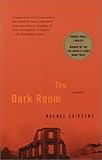
Rachel Seiffert. The Dark Room: A Novel. New York: Vintage Books, 2001. 278 pp. $13.00 (paper), ISBN 978-0-375-72632-3.
Reviewed by Bryan Ganaway (Department of History, Presbyterian College)
Published on H-German (March, 2005)
Rachel Seiffert's novel The Dark Room offers readers a psychoanalysis of the German soul from 1933 to the present via three interrelated novellas. The author clearly intended to explore German guilt and complicity in the crimes of the Holocaust. I have doubts, however, that her conceptualization of Nazi supporters, sympathizers, bystanders, and descendants encompasses the true complexity of individual responses to German history since 1933.
Literary critics alternatively loved and hated the book. Seiffert won the Los Angeles Times Book Prize in 2002 and was short-listed for the Booker Prize. She was long-listed for the Orange Prize and the Guardian First Book Award. Reviewers for the New York Times, the Washington Post, the Economist and the New Statesman lauded The Dark Room as a work of sparse prose that illuminated truths about the German experience of the twentieth century in a compelling, sober fashion. On the other hand, Martin Chalmers (who translated the Klemperer diaries) wrote "the individual parts of The Dark Room are so dreadfully thin that they do not add up to anything significant." Carole Angier of the Spectator accused Seiffert of bald revisionism by presenting the victimization of German children as equivalent to Jewish suffering. The TLS found the novel obtuse.[1]
Trained as an historian, I am more interested in the ways this novel helps us understand German and Western attempts to cope with crimes against humanity, and less concerned about the possibilities or pitfalls of Seiffert's prose. Furthermore, I do not believe the author intended to create a moral equivalency between Jewish and German suffering from 1933 to 1945, as some of her critics assume. Rather I think that the Freudian and Lacanian literary techniques she employs to collectively make sense of the German psyche simply do not hold up. One did not have to be brutalized, disenfranchised, hysterical or otherwise in need of individualized therapy, as her characters are, to become a Nazi. Seiffert's failure to recognize that millions of well-adjusted Germans became Nazis between 1933 and 1945, and then happily jettisoned fascism for democracy after 1949, doomed her attempt to plumb the German soul for new insights. We mostly get old stereotypes.
We can see these problems by taking a brief look at two of the three novellas. The first focuses on Helmut, an unhappy boy in Berlin with a physical disability who is able to create meaning in his life after the Nazis come to power. He works as a freelance photographer amorally documenting the city between 1939 and 1945. Seiffert writes "Helmut likes the darkroom" (p. 11) because it is a safe, controlled space where he can be in charge and express himself. Speaking of the NSDAP, in this text Hitler's party enjoys a monopoly on agency and accomplishes things in the passive voice: "To the east, new land is found; old land is found again" (p. 12). Unfortunately, there is very little evidence that Seiffert intended sentences like this about the Eastern Front ironically. Helmut certainly does not have an ironic bone in his body as he impassively watches the deportation of Gypsies and brutal bombing raids. In fact, as things get worse he increases in social stature. So when "Zhukov ... with the vast Soviet army and the Mongol hordes" (p. 45) surrounded Berlin, the boy "is standing high on his rubble mountain, over which Soviet tanks will roll with ease, and he is smiling" (p. 47). At the end of the novella we are left to ponder Helmut, the disabled, unloved, working-class boy who could not get a date and whom the Nazis empowered to fight the "Mongol hordes" as a representative figure of the German soul. I feel this argument collapses beneath the weight of stereotypes.[2]
The most interesting and frustrating part of the book was the last and longest novella. Set in 1997, it deals with Micha, an Everyman schoolteacher. He learns that his grandfather likely participated in atrocities while serving with the SS in the former USSR. Unable to get any information from his family, who simply want to move on, he begins his own search and ends up in Belarus. Micha progressively alienates his pregnant, Turkish girlfriend who understandably wants him focused on fatherhood. Cohabiting with a non-German provides Micha with good multi-cultural credentials, but Seiffert's prose effectively presents his indecisive and incompetent soul-searching as he tries to come to grips with his familial and national past. Micha cries all the time (pp. 201, 219, 221, 256) about the Holocaust, but he has a hard time achieving any profound insights. His search to understand his grandfather takes him to Jozef Kolesnik, a Soviet citizen who collaborated with the Germans. The two fail to connect for months until a breakthrough finally comes. Seiffert has Kolesnik open up on his own because Micha's own repressed descendant guilt makes him incapable of asking the right questions. She presents Kolesnik as another Everyman whose family the Bolsheviks destroyed. He took out his rage on the Jews in 1944. Clearly in debt to Christopher Browning, Seiffert uses Kolesnik to tell the reader how the Germans shot at the base of the spine for a quick kill, that officers allowed men to excuse themselves from duty, and that alcohol represented a prime coping mechanism. Unfortunately, she skips the part that the men of Reserve Battalion 101 were average guys with well-adjusted family lives who happily went back to normal life after the war with little sense of guilt. They would have continued to live quietly if the Federal Prosecutor's Office in the BRD had not gone after them in the 1960s. Taking a different tack, Seiffert has Kolesnik tell Micha, "[The Communists] killed my father. I was angry and hungry, my whole family, and then the Germans came, they told me the Jews were to blame" (p. 245). Trauma begets trauma in this conceptualization, and allows us to maintain the illusion that well-adjusted people do not become perpetrators. I do not find that convincing; Kolesnik kills Jews as therapy for losing his father in 1945, and then fifty years later speaking with Micha provides a new kind of individualized therapy just before he dies. At the end of this novella we see Micha happily carrying his daughter to see his grandma, his relationship with her somehow rebuilt after his trips to the former Eastern Front.
To make clear what I mean about a failure to deal with complexity, as I read this book I kept thinking of an event from the early post-war period in my home state of South Carolina. The last recorded lynching of a black man there took place on February 17, 1947 when a mob of angry cabbies lynched Willie Earle on the suspicion that he killed a white driver during a robbery. The state put thirty-one men on trial, all of whom were summarily acquitted in a show trial. Many of the defendants were in their twenties at the time. Most still live happily in the high country, go to church on Sunday, donate their time and money to charity, and visit with their families over the holidays. There is no evidence that these men, like then-governor Strom Thurmond, had any trouble whatsoever adjusting to post-Jim Crow America in 1964. The only difference is that while the German government eventually convicted the men of Battalion 101, the U.S. government has declined to use federal hate crimes laws against lynchers in the state of South Carolina. We need a conceptual framework that tells us how well-adjusted fathers can do terrible, evil things and then live happily, unremorseful and unpunished for decades in a democratic society. If Seiffert had done that, then the book really would have given us universal insights into the human soul, as the reviewer for the Economist claimed.
Notes
[1]. David Sacks, "Sins of the Fatherland, New York Times, May 13, 2001, p. 30; Adam Kirsch, "Blow-Up, Washington Post, July 29, 2001, p. T07; "White on Black," Economist, May 12, 2001, p. 5; Vicky Hutchings, "The Bush of Ghosts," New Statesman, October 22, 2002 (130:4560), p. 56; Martin Chalmers, "One Reich, one Volk, one Dimension," Independent, June 29, 2001, p. 5; Carole Angier, "The Dark Room," Spectator, September 29, 2001, p. 36; Maren Meinhardt, "At a Safe Distance," Times Literary Supplement, August 17, 2001.
[2]. In the second novella teenage Lore leads her three siblings from Bavaria to Hamburg at the end of the war after both parents have been arrested as Nazis. Soldiers shoot her young brother (not the Americans--the evil, Mongol, Russian hordes working for Zhukov) but the rest of them make it with the help of an escaped convict who is trying to reinvent himself as a decent human being in the chaos of post-WWII Germany. In this story we get too much information about Russian foibles ("Americans are better than Russians. Russians steal and burn and hurt women, shame them. The Americans come with clipboards and don't even look in the house," p. 61) and not enough about their German equivalents. Sentences such as the one quoted above might have worked if they had been presented ironically, but they are not. Lore, clearly an innocent at thirteen years old, has a chance to put Russian crimes into context when she sees pictures of Holocaust victims in the British Zone, but all she can think about is how hungry she feels. Seiffert could have used this moment to plumb the difficulties Germans had in coming to grips with their own crimes in 1945, but instead the focus remains on Lore's victimization.
If there is additional discussion of this review, you may access it through the network, at: https://networks.h-net.org/h-german.
Citation:
Bryan Ganaway. Review of Seiffert, Rachel, The Dark Room: A Novel.
H-German, H-Net Reviews.
March, 2005.
URL: http://www.h-net.org/reviews/showrev.php?id=10311
Copyright © 2005 by H-Net, all rights reserved. H-Net permits the redistribution and reprinting of this work for nonprofit, educational purposes, with full and accurate attribution to the author, web location, date of publication, originating list, and H-Net: Humanities & Social Sciences Online. For any other proposed use, contact the Reviews editorial staff at hbooks@mail.h-net.org.

