



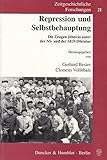
Gerhard Besier, Clemens Vollnhals. Repression und Selbstbehauptung: Die Zeugen Jehovas unter der NS- und der SED-Diktatur. Berlin: Duncker & Humblot, 2003. 421 S. EUR 26.00 (broschiert), ISBN 978-3-428-10605-9.
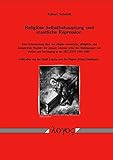
Robert Schmidt. Religiöse Selbstbehauptung und staatliche Repression: Eine Untersuchung über das religiös-vermittelte, alltägliche und konspirative Handeln der Zeugen Jehovas unter den Bedingungen von Verbot und Verfolgung in der SBZ/DDR 1945-1989. Fallstudien aus d. Berlin: Logos Verlag Berlin, 2003. 332 S. EUR 40.00 (gebunden), ISBN 978-3-8325-0215-7.
Reviewed by John S. Conway (Department of History, University of British Columbia)
Published on H-German (January, 2005)
State Repression and Religious Self-Assertion: The Case of the Jehovah'sWitnesses
For several decades, a dearth of scholarly treatments of Nazi persecution of the Jehovah's Witnesses in Germany prevailed. Only since Detlef Garbe's excellent account of the Witnesses' sufferings appeared in 1993 has a small corpus of examination and analysis of the fortunes of this small Christian community emerged. In part, this silence was due to the much greater attention paid to the fate of European Jewry; in part it was due to the fact that the Witnesses themselves made little public emphasis of their past history; and in part it also has to do with the widespread and continuing social antipathy to the activities of this sect.
This latest volume of essays derives from a conference in 2000, now skillfully edited by two scholars of the Hannah Arendt Institute for Research into Totalitarianism in Dresden. These papers have the added merit of extending the range of inquiry to cover the Jehovah's Witnesses in the German Democratic Republic after 1949, and hence to make comparisons of their treatment by both the Nazi and Communist regimes.
The opening chapter by Detlef Garbe recapitulates his larger study's main points: that Jehovah's Witnesses were among the first group to be persecuted by the Nazis on ideological grounds. No other Christian community suffered such a high percentage of its total membership of twenty-five thousand oppressed by the state's agencies. In concentration camps, where most of them had been committed because of their resolute refusal to join the armed forces, Jehovah's Witnesses were specifically segregated. At least 350 were executed for their conscientious objection, and another 1,200 died in the camps, out of a total of 8,000 imprisoned. But at the same time, Garbe shows, these Witnesses cannot be counted as part of the political resistance movement. At no point did they seek to overthrow the regime or to campaign for democracy and freedom. Their courage and pertinacity was solely the result of their single-minded determination to practice their religion without restraint.
Very much the same factors prevailed in the German Democratic Republic after 1949. Bernd Schäfer analyses the regime's policies towards the churches in general, finding a malevolent mixture of repression and seduction that persisted for forty years. The aim was to hasten the inevitable end of all religious ties and their supersession by loyalty to the new socialist state. The Jehovah's Witnesses, as Annegret Dirksen shows, were the object of much more of the former tactic, since the sect was forbidden already in August 1950. More than four hundred of its leaders were arrested on one day, August 31 of that year. Their activities were presumed to be conducted in the service of American imperialism and consequently incompatible with the aims of the socialist regime. Their status as victims of fascism was withdrawn, and a large-scale propaganda campaign was launched to depict the Witnesses as dangerous and subversive. Show trials followed. Between 1950 and 1962 more than 2200 members of the community, out of a total of 23,000, were imprisoned, often for years.
According to Wolfram Slupina, no fewer than 345 of those imprisoned in the GDR had already been incarcerated by the Nazis. In total, these Witnesses were to endure 1055 years in Nazi prisons and 1547 under communist domination, for an average of 8 years each in all. One couple was found to have spent altogether 40 years in concentration camps. Both regimes were equally brutal.
Hans-Hermann Dirksen, whose authoritative study of the Jehovah's Witnesses in the GDR first appeared in 2001, gives a short account of the experience of one such Witness, Fritz Adler, incarcerated under both regimes. Paradoxically, the GDR government authorities had in many cases been in Nazi concentration camps alongside Jehovah's Witnesses. This common experience, however, made no difference to their determination to persecute these non-conforming sectarians.
Only in the later years of GDR rule did the realization sink in that Jehovah's Witnesses constituted no real political threat. Consequently, as with other religious groups, the tactic of strident confrontation and harsh imprisonments was abandoned in favor of a more sophisticated and intensive surveillance by agents of the Ministry of State Security (Stasi). The press was ordered to ignore this community as though it did not exist, even though such shunning made it more difficult to justify acts of open persecution. On the other hand, the governing authorities never abandoned their belief in the conspiratorial danger of this sect, despite all the evidence of its insignificance.
This double-edged policy was maintained up to 1989. Waldemar Hirch makes good use of the rich documentation from the Stasi files to describe this forty-year campaign against the Witnesses. To their credit, the Witnesses not only resisted the not-so-subtle attempts at intimidation and blackmail, but also improved their cross-border communication with the West, enabling copies of their literature to be received without detection. Despite all the social and political discrimination, however, their numbers remained constant; their resolute witness remained steadfast as before.
This pattern of persecution was not new. Gerhard Besier's chapter draws attention to the fact that even in the Weimar Republic, state authorities worked closely with major churches to counter the sect's activities. In the Nazi era, as he shows, certain pro-Nazi factions in the evangelical churches readily supported discriminatory campaigns against the Witnesses. Equally damaging in the GDR was the work of defectors from the Witnesses, exploited by the Stasi to infiltrate local groups and to produce virulent propaganda material for circulation among the larger churches. The Witnesses could not expect protests to be made on their behalf by Christian groups such as the Vatican or the World Council of Churches. Very late, in the 1980s, the U.S. State Department attempted to put in a good word for all the persecuted sects but achieved nothing. The only exception--and this was perhaps significant--affected the Mormon church, whose willingness to deal with the Communist authorities and, more importantly, to inject considerable sums of hard currency, brought them major concessions. Besier suggests that, regardless of the GDR authorities, the major churches' jealous antipathy towards the Witnesses was motivated by their observation of their rapid growth, at a time when both Protestant and Catholic congregations were suffering disastrous losses of membership.
Several chapters are devoted to the experiences of the Witnesses under persecution at the local level, with a good deal of (perhaps inevitable) repetition. Continuity between the Nazi and Communist dictatorships is also stressed, even if different motives are attributed. Both regimes attempted to marginalize the Witnesses as outsiders, and in this were largely successful. But part of the strength of the Witnesses was that they knew how to deal with such a situation.
As is made clear in the abundant Gestapo and Stasi records now available, state authorities apparently believed their own propaganda. The authors of this volume, however, provide no rational explanation as to why such preposterous exaggerations received credence for so long and with so little evidence. And since these authors' point of view is clearly in sympathy with the Witnesses, no examination is made of the experiences or percentage of those who, for one reason or another, defected from the Jehovah's Witnesses' ranks. Nor indeed is there any extended examination of the reasons why the doctrines and practices of this sect appeared to appeal to certain social classes rather than to others, or of the factors which maintained the group's cohesion despite all its travails.
It would have been good if these authors could have provided a larger discussion of the vexed question as to how the Jehovah's Witnesses should be categorized within the resistance movement. In the eyes of some observers, their exclusively religious dissidence disqualifies them from inclusion. To be sure, the Witnesses were single-minded. They were honest, hard-working, and reliable, even in the concentration camps. Himmler admired these qualities. But, as Karl Barth testified, to accuse them of ideological sympathy with either Nazism or Communism is nonsense.
Alongside these comparisons, Hans-Hermann Dirksen contributes a useful chapter on the fate of the Witnesses in Rumania and Hungary. Existing prejudices in these countries were only amplified by the Nazi example, so that the Witnesses' repression took a similar course. So too the same influences were exhibited by the post-war Communist regimes. This chapter provides useful details.
The book closes with a chapter on the need to collect survivors' testimonies and a useful bibliography of German works. English-speaking readers have to be content with translations from French or German authors, of which the most comprehensive is the collection of essays edited by Hans Hesse.[1]
Robert Schmidt, who contributed one of the chapters in the above volume, has now published his Tuebingen dissertation, making good use of the now available documentation for the period 1945-1989. His object is to study how a small but tight-knit group such as the Jehovah's Witnesses were able to uphold their singular--but to most authorities deviant--views over so long a period with such success. How did individuals fit in with such a disciplined cohort? And how were they able to uphold their own self-assertion and social autonomy under the constant repession and persecution? His topics therefore are the same as taken up in the wider study, but Schmidt sees his case study of the Leipzig area as an example of how individuals develop their religious understandings and practices in the face of totalitarian oppression. The socialist society established in the GDR attempted, even more than the Nazi system had, to eradicate individualism and social differentiation. The refusal of the Witnesses to conform--even outwardly--was hence a defiant gesture which denied the authenticity of "real socialism."
Following the fall of the GDR in 1989-90, Jehovah's Witnesses were once again legally permitted to practice their faith. Subsequently they were available for young researchers like Schmidt to gather personal testimonies of their recent past. His small sample of such oral reports, as he admits, cannot be taken as fully representative, and the recollections are not directly verifiable. But he blends these individual memories with surviving documentation of the regime, especially of the Stasi, to provide a convincing picture. His interest is more sociological than historical, but he succeeds in painting a useful picture of the Witnesses' struggle to preserve their identity even when faced with constant surveillance, repression, discrimination, and imprisonment. The spiritual resources of the sect, he notes, were the principal reason for their successful endurance of such travails and the reason why so few fell away from their religious allegiance.
Note
[1]. Hans Hesse, Persecution and Resistance of Jehovah's Witnesses During the Nazi Regime (Bremen: Edition Temmen, 2001).
If there is additional discussion of this review, you may access it through the network, at: https://networks.h-net.org/h-german.
Citation:
John S. Conway. Review of Besier, Gerhard; Vollnhals, Clemens, Repression und Selbstbehauptung: Die Zeugen Jehovas unter der NS- und der SED-Diktatur and
Schmidt, Robert, Religiöse Selbstbehauptung und staatliche Repression: Eine Untersuchung über das religiös-vermittelte, alltägliche und konspirative Handeln der Zeugen Jehovas unter den Bedingungen von Verbot und Verfolgung in der SBZ/DDR 1945-1989. Fallstudien aus d.
H-German, H-Net Reviews.
January, 2005.
URL: http://www.h-net.org/reviews/showrev.php?id=10152
Copyright © 2005 by H-Net, all rights reserved. H-Net permits the redistribution and reprinting of this work for nonprofit, educational purposes, with full and accurate attribution to the author, web location, date of publication, originating list, and H-Net: Humanities & Social Sciences Online. For any other proposed use, contact the Reviews editorial staff at hbooks@mail.h-net.org.

